The French Approach to Perimenopause: How French Women Navigate Midlife Without Gaining Weight
French women over 40 don't panic about perimenopause. They adapt with grace. Discover their time-tested approach to managing weight, hormones, and wellbeing during midlife.

When I turned 42, something shifted.
Not dramatically. Not overnight. It was more like a whisper. My favorite jeans felt a little tighter around the waist — not enough to go up a size, but enough that I noticed. My sleep, which had always been deep and unbroken, started fracturing into strange patterns. Some mornings I woke drenched in sweat. Other mornings, I woke with an anxiety that had no name.
I remember sitting at my kitchen table in Lyon, drinking my morning coffee, and thinking: So this is it. This is perimenopause.
And then I did what French women have done for generations. I didn’t panic. I didn’t Google “best diet for perimenopause.” I didn’t order a stack of supplements from Amazon. I didn’t sign up for a high-intensity exercise program designed for twenty-five-year-olds.
I adapted. Quietly, gracefully, without turning my entire life upside down.
That distinction — adapting versus overhauling — is the heart of the French approach to perimenopause. And it is the reason so many French women move through their forties and fifties without the dramatic weight gain, the crash diets, and the despair that I see so many American women experience.
This guide is everything I know about how we do it. Not a medical protocol. Not a meal plan. A philosophy — rooted in centuries of French women quietly navigating this passage with elegance.
Why French Women Don’t Fear Perimenopause
In America, perimenopause is treated as a crisis. A hormonal emergency. Something to “fight” or “beat” or “hack.” The language itself is violent — you are at war with your own body.
In France, we see it differently. Perimenopause is not a disease. It is a passage. Like adolescence, like pregnancy, like every other hormonal shift a woman’s body moves through across a lifetime. It deserves attention. It deserves care. But it does not deserve fear.
This difference in framing changes everything.
When you fear something, you make desperate decisions. You cut calories to 1,200 a day. You start running even though your knees ache. You buy a $300 supplement stack from an Instagram influencer. You eliminate entire food groups. And when none of it works — because extreme measures rarely do during hormonal transitions — you feel like a failure.
French women skip the desperation entirely. Not because they are genetically blessed or because they don’t experience the same symptoms. They absolutely do. Hot flashes, weight shifts, mood changes, sleep disruption — all of it.
The difference is cultural. In France, a woman in her forties is not “aging out.” She is entering what many consider her most interesting decade. There is a deep cultural respect for the femme d’un certain age — the woman of a certain age — who carries herself with a confidence that only comes from years of living well.
This respect removes the panic. And removing the panic, as it turns out, is one of the most powerful things you can do for your hormones. Cortisol — the stress hormone — directly interferes with estrogen, progesterone, and thyroid function. The less you panic about perimenopause, the better your body navigates it. This is not wishful thinking. It is endocrinology.
If you are curious about how French eating habits support this calm, grounded approach to your body, I wrote a full guide on the fundamentals of French eating that pairs well with everything you will read here.
The French Approach to Midlife Weight Changes
Let me tell you something that might surprise you: French women also gain weight during perimenopause.
Not all of them. Not dramatically. But the hormonal shift that begins in a woman’s late thirties and accelerates through her forties affects metabolism everywhere in the world, including France. Estrogen decline changes where your body stores fat. It shifts from hips and thighs to the abdomen. Insulin sensitivity decreases. Sleep disruption affects hunger hormones.
This is biology. No culture is exempt from biology.
So what is different? The response.
An American woman gains five pounds during perimenopause and begins a war. She cuts carbs. She starts intermittent fasting. She joins a boot camp. She buys fat-burning supplements. She tracks every calorie. Each of these responses creates stress. And stress, during perimenopause, makes weight gain worse.
A French woman gains five pounds during perimenopause and makes small adjustments. She might take a slightly smaller portion of pasta at dinner. She might walk an extra fifteen minutes in the afternoon. She might choose fish instead of steak two nights a week. She might pay a little more attention to her vegetable intake.
These are not dramatic changes. They are gentle recalibrations. And they work — not because of any magic French metabolism, but because small, sustainable adjustments do not trigger the stress response that sabotages hormonal balance.
The other critical difference is timeline. American diet culture demands results in weeks. You should lose the weight by summer. You should see changes within the first month. This urgency is poison during perimenopause, when your body needs patience more than pressure.
French women think in seasons, not weeks. They give their bodies time to adjust. They trust the process because they have seen their mothers and grandmothers navigate this same passage without catastrophe.
For a deeper look at how this approach compares to pharmaceutical interventions like Ozempic, read my guide on the French alternative to Ozempic. Many women in perimenopause are being offered weight loss medications when what they actually need is a different relationship with food.
What French Women Over 40 Actually Eat
I want to be concrete here because I know you are tired of vague advice about “eating whole foods” and “listening to your body.”
Here is what a typical day looks like for a French woman in her forties.
Breakfast is small but intentional. A tartine — a slice of good bread with butter and jam — or perhaps a plain yogurt with a drizzle of honey. Coffee with a splash of milk. Sometimes a soft-boiled egg. The key: breakfast is not a performance. It is not a smoothie with fourteen ingredients. It is not a protein-packed “power bowl.” It is simple, satisfying, and takes less than ten minutes.
Lunch is the main meal. This is where a French woman over 40 gets most of her nutrition. A typical lunch might be a piece of grilled fish with haricots verts and a small salad dressed in olive oil and lemon. Or a bowl of lentil soup with bread and cheese. Or a vegetable gratin with a side of greens. The plate is colorful, the portions are reasonable, and there is always a vegetable.
After 40, many French women unconsciously shift their lunch slightly. A bit more fish. A bit more vegetables. A bit less of the heavier gratins and cream sauces. Not because they are “dieting” — the word is practically taboo — but because their bodies naturally want lighter, more nutrient-dense food. They listen.
Dinner is light. This surprises many Americans, who eat their largest meal at night. A French dinner after 40 might be a bowl of vegetable soup with a piece of cheese and bread. Or a simple omelet with a green salad. Or leftover ratatouille from lunch, reheated gently.
The evening meal is deliberately small because French women have observed — for generations, long before science confirmed it — that eating heavily at night disrupts sleep. And during perimenopause, sleep is everything.
Snacking barely exists. If a French woman in her forties gets hungry between meals, she might have a square of dark chocolate with her afternoon coffee. Or a piece of fruit. But the structured three-meal rhythm is so deeply ingrained that genuine between-meal hunger is rare.
What you will notice is missing: no calorie counting. No macros. No “good foods” and “bad foods.” No guilt. Just real food, prepared simply, eaten at regular times, in reasonable amounts. This is not a diet. It is a way of living that happens to be extraordinarily effective for managing weight during hormonal transitions.
For more on the specific foods that support your body’s natural appetite-regulating hormones, see my guide on natural GLP-1 foods.
How French Women Adapt Their Habits (Not Start New Diets)
This is perhaps the most important section of this entire guide, so I want you to read it carefully.
When a French woman enters perimenopause, she does not start a new diet. She adjusts the one she already has.
This distinction is everything. Starting a new diet means learning new rules, buying new foods, breaking old habits, creating new stress. Adjusting existing habits means making small modifications to a foundation that already works.
Here is what that looks like in practice:
Adjustment 1: Slightly more protein. A French woman over 40 might add an egg to her breakfast a few times a week. She might choose the fish at lunch more often than the pasta. She might include lentils or white beans in her soup. These are not dramatic protein-loading strategies. They are gentle increases that support muscle mass — which declines during perimenopause and directly affects metabolism.
Adjustment 2: Slightly more vegetables. The salad that used to be a side dish becomes a bit more generous. The vegetable soup at dinner appears more frequently. A piece of fruit replaces the afternoon pastry. Again — small shifts. Not a “plant-based diet overhaul.”
Adjustment 3: Slightly less alcohol. French women love their wine. But many women over 40 naturally reduce their intake because they notice that even one glass disrupts their sleep. During perimenopause, sleep quality is directly linked to weight management, mood, and hot flash intensity. So the wine becomes more intentional — savored on the weekend rather than automatic every evening.
Adjustment 4: Slightly more water. Hydration affects everything during perimenopause — skin elasticity, digestion, joint comfort, energy. A French woman over 40 might keep a carafe of water on her desk or add herbal tisanes (herbal teas) to her afternoon routine. In France, drinking a tilleul (linden blossom tea) or verveine (verbena tea) in the evening is as natural as breathing. These teas also happen to be mildly calming, which supports sleep.
Adjustment 5: More attention to meal timing. The French three-meal structure becomes even more important after 40. Erratic eating — skipping meals, eating late, grazing all day — is particularly destabilizing for perimenopausal hormones. French women tighten their meal schedule slightly, eating at consistent times to support circadian rhythm and insulin sensitivity.
Notice what is absent from this list: no elimination. No deprivation. No new rules. Just thoughtful refinement of habits that have served them well for decades.
This is exactly why the French method for weight loss over 40 works when extreme diets fail. Your body during perimenopause does not want shock. It wants stability with gentle adjustments.
The Walking Habit That Becomes Even More Important After 40
If there is one French habit that American women should adopt during perimenopause, it is walking. Not power-walking. Not speed-walking with wrist weights. Just walking.
In France, walking is not exercise. It is transportation, pleasure, and a way of being in the world. You walk to the boulangerie for bread. You walk through the marche to buy vegetables. You walk along the river after dinner. You walk to meet a friend for coffee.
The average French woman walks 7,000 to 10,000 steps a day without ever “working out.”
During perimenopause, this habit becomes a secret weapon. Here is why:
Walking is the perfect exercise for hormonal transitions. It is low-impact, so it does not stress joints that are already affected by declining estrogen. It does not spike cortisol the way high-intensity exercise does — and high cortisol during perimenopause is the last thing you need. It supports cardiovascular health, which becomes more important as estrogen’s protective effect on the heart decreases. And it is profoundly calming to the nervous system.
Walking supports bone density. Weight-bearing exercise — and walking counts — helps maintain bone mass during the years when estrogen decline accelerates bone loss. French women who walk daily throughout their lives arrive at menopause with stronger bones than sedentary women.
Walking improves sleep. Multiple studies confirm that regular walking, especially in natural light, helps regulate circadian rhythm and improves sleep quality. During perimenopause, when sleep disruption is one of the most common complaints, a daily walk in the morning or afternoon light can be transformative.
Walking reduces belly fat. The abdominal weight gain that characterizes perimenopause responds particularly well to moderate, consistent movement like walking. More than intense exercise, which can actually increase cortisol-driven belly fat, walking gently mobilizes stored fat without triggering a stress response.
My mother, who is now in her seventies and still walks to the market every morning, tells me that her daily walk became “non-negotiable” after she turned 45. She calls it her promenade de sante — her health walk. But she would never call it exercise. It is simply part of her day.
If you are currently sedentary, start with fifteen minutes after lunch. Walk to the end of your street and back. Do it every day. After a week, add five minutes. After a month, you will not want to stop. This is how French women build the habit — not with a fitness goal, but with a daily ritual.
French Foods That Naturally Support Hormonal Balance
The traditional French diet, almost by accident, contains many foods that support hormonal balance during perimenopause. French women have been eating these foods for centuries without knowing the biochemistry. But the science now confirms what tradition always suggested.
Fermented dairy (yogurt, fromage blanc, aged cheese). French women eat fermented dairy daily. These foods support gut health, and we now know that the gut microbiome plays a critical role in estrogen metabolism. A healthy gut recirculates estrogen more efficiently, which can ease the severity of perimenopause symptoms. The calcium in dairy also supports bone density during the years when bone loss accelerates.
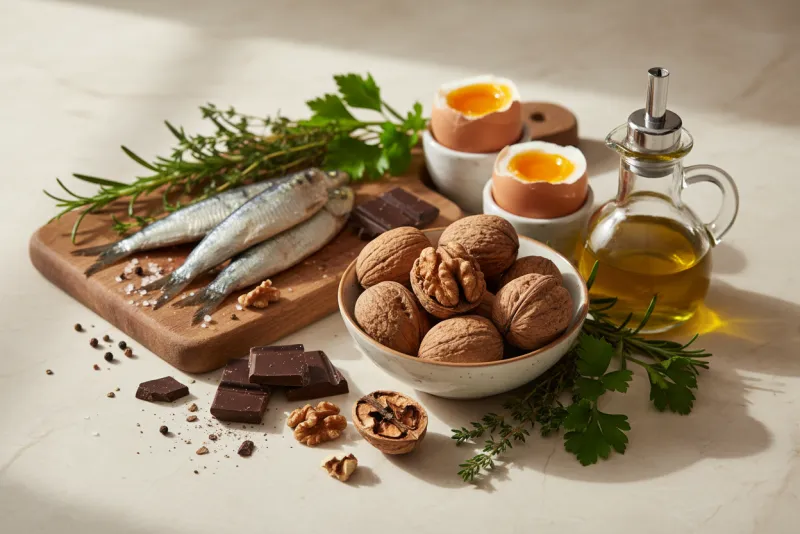
Fatty fish (sardines, mackerel, salmon). In France, fish is eaten at least two to three times a week — more along the coast. The omega-3 fatty acids in cold-water fish have been shown to reduce the intensity of hot flashes, improve mood, support brain function (which can feel foggy during perimenopause), and reduce inflammation that contributes to weight gain.
Olive oil. The foundation of French cooking in the south, olive oil is rich in polyphenols and oleic acid. Research links regular olive oil consumption to lower rates of visceral fat — the deep abdominal fat that increases during perimenopause. It also supports cardiovascular health, which becomes more important as estrogen’s protective effect declines.
Cruciferous vegetables (broccoli, cauliflower, cabbage). French cuisine makes heavy use of these vegetables — think chou-fleur gratin, soupe aux choux, and the ubiquitous salade de chou. These vegetables contain compounds like DIM (diindolylmethane) and I3C (indole-3-carbinol) that support healthy estrogen metabolism. They help your body process and eliminate excess estrogen, which can reduce symptoms like bloating and mood swings.
Lentils and legumes. Lentils are a staple of French home cooking — salade de lentilles, lentilles du Puy with sausage, soupe de lentilles. They are rich in phytoestrogens, which are plant compounds that can gently mimic estrogen’s effects in the body. They are also excellent sources of plant protein and fiber, both of which support stable blood sugar during the years when insulin sensitivity declines.
Dark chocolate. A square or two of dark chocolate after lunch is a deeply French habit. Dark chocolate (70% or higher) contains magnesium, which many perimenopausal women are deficient in. Magnesium supports sleep, reduces muscle cramps, calms anxiety, and helps regulate cortisol. It is also, quite simply, a source of daily pleasure — and pleasure is not optional during perimenopause. It is medicine.
Red wine (in moderation). I include this because it is honestly part of French culture, but with an important caveat: many women find that alcohol tolerance decreases during perimenopause. A glass of red wine with dinner contains resveratrol and other polyphenols that support cardiovascular health. But if wine disrupts your sleep or triggers hot flashes, your body is telling you to reduce. French women listen to these signals. They do not drink on principle.
Herbal tisanes. Every French woman I know over 40 drinks herbal tea in the evening. Tilleul (linden blossom) for calm. Camomille for sleep. Verveine (verbena) for digestion. Sauge (sage) — which is particularly interesting because sage has been studied for its ability to reduce hot flashes by up to 50%. These are not supplement capsules. They are warm, fragrant rituals that signal to your nervous system that the day is ending and rest is coming.
Many of these foods naturally stimulate the same appetite-regulating pathways that medications like Ozempic target. For the full list, see my guide on natural GLP-1 foods and the French approach.
Why Stress Management Is the French Secret Weapon
I need to tell you something that no diet book will emphasize enough: during perimenopause, stress management is more important than what you eat.
I know that sounds extreme. But the science is clear. Cortisol — your primary stress hormone — directly interferes with estrogen, progesterone, and thyroid hormones. When cortisol is chronically elevated, your body stores fat around the midsection, disrupts sleep, increases cravings for sugar and refined carbs, and amplifies every perimenopause symptom.
You cannot out-eat or out-exercise chronic stress. But you can manage it. And French women, perhaps without realizing it, have built stress management into the architecture of their daily lives.
Structured meals are stress management. When you eat at regular times, your body does not experience the blood sugar spikes and crashes that trigger cortisol release. The French three-meal rhythm — breakfast, lunch, dinner, no snacking — is essentially a blood sugar regulation system that keeps cortisol stable throughout the day.
Pleasure is stress management. When you eat food you genuinely enjoy — not “allowed” food, not “diet” food, but food that gives you real pleasure — your body releases dopamine and serotonin. These neurotransmitters directly counteract cortisol. The French insistence on delicious food is not indulgence. It is neurochemistry.
Walking is stress management. As I described above, daily walking reduces cortisol, regulates circadian rhythm, and calms the nervous system. It is perhaps the single most effective stress management tool available, and it costs nothing.
Social meals are stress management. In France, meals are social events. You eat with family, with friends, with colleagues. You talk, you laugh, you linger. This social connection releases oxytocin — the bonding hormone — which directly reduces cortisol. Eating alone in front of your laptop is not just sad. It is physiologically stressful.
Beauty rituals are stress management. The French woman’s evening skincare routine — cleansing, moisturizing, maybe a mask — is a form of self-care that signals to the nervous system that you are safe, that you are cared for, that the demands of the day are over. This is not vanity. It is regulation.
Sleep is stress management. French women prioritize sleep with an almost religious devotion, especially after 40. The light dinner, the herbal tea, the skincare ritual, the cool bedroom, the consistent bedtime — all of it supports the deep, restorative sleep that keeps cortisol in check.
When I work with women who are struggling with perimenopause weight gain, the first thing I address is not their diet. It is their stress. Because until cortisol is managed, no dietary change will produce lasting results.
The French Attitude Toward Aging (Elegance Over Youth)
This section is not about food. It is about something deeper. Something that influences every food choice, every lifestyle habit, every moment of a French woman’s day during perimenopause.
In France, the goal is not to look young. The goal is to look like yourself — the best, most refined version of yourself.
This distinction changes everything.
When the goal is youth, aging is failure. Every wrinkle is a defeat. Every pound is evidence that you are losing a battle against time. This mindset creates chronic psychological stress that manifests physically — in cortisol, in inflammation, in the desperate behaviors that actually accelerate aging.
When the goal is elegance — which is to say, the confident expression of who you have become — aging is refinement. You are not losing something. You are gaining depth, wisdom, self-knowledge. Your style becomes more precise. Your tastes become more discerning. Your presence becomes more commanding.
French women over 40 do not try to dress like they are twenty-five. They do not try to eat like they are twenty-five. They do not try to exercise like they are twenty-five. They dress, eat, and move like women who have spent four decades learning exactly what works for their bodies.
This attitude is profoundly practical. When you accept that your forty-five-year-old body is different from your twenty-five-year-old body — not worse, just different — you can respond to its signals with curiosity instead of frustration.
Your body wants lighter dinners now? Interesting. Let me explore more soups and salads.
Your body needs more sleep now? Understood. Let me adjust my evening routine.
Your body prefers walking to running now? Noted. Let me find more beautiful routes.
This is not resignation. It is intelligence. And it produces far better results than fighting your body’s natural evolution.
I see so many American women trapped in a war with their own aging. They spend thousands on anti-aging supplements, extreme diets, punishing workouts — all in an attempt to maintain a body that no longer exists. The French approach is simpler and more effective: work with the body you have now, not the one you had fifteen years ago.
The women who embrace this philosophy — who approach perimenopause with curiosity instead of combat — are the ones who age gracefully in the truest sense. Not by avoiding age, but by inhabiting it fully.
How to Start the French Perimenopause Approach Today
I do not believe in overhauls. I believe in the next small step. So here is where to begin, depending on where you are right now.
If you are just entering perimenopause (late 30s to early 40s):
Start with meal structure. Establish three real meals a day at consistent times. Make lunch your largest meal. Make dinner lighter. Stop snacking between meals — not through willpower, but by making your meals satisfying enough that you do not need to. This single change will stabilize your blood sugar, reduce cortisol spikes, and give your hormones a calm, predictable environment to work with.
If you are in the thick of it (mid 40s, active symptoms):
Add walking. Every single day, walk for at least twenty minutes. Morning is ideal because natural light helps regulate melatonin production for better sleep. But any time works. Do not call it exercise. Call it your promenade. Make it pleasant — choose a beautiful route, listen to something you enjoy, or simply let your mind wander. This will reduce cortisol, improve sleep, and gently support your metabolism.
If you are approaching menopause (late 40s to early 50s):
Focus on the foods I described above. More fish, more vegetables, more fermented dairy, more olive oil. A square of dark chocolate after lunch. Herbal tea in the evening instead of a second glass of wine. These are not restrictions — they are additions and substitutions that support your body through the final phase of this transition.
For everyone, regardless of stage:
Stop dieting. I mean this with all my heart. Restrictive diets during perimenopause are counterproductive. They increase cortisol, decrease metabolism, disrupt sleep, and create the exact hormonal environment that promotes weight gain. If you have been dieting for years, the most radical thing you can do is stop. Eat real food. Eat enough. Eat with pleasure. Trust that your body, given proper nourishment and calm, will find its healthy weight.
Prioritize sleep above everything else. Above diet, above exercise, above supplements. Sleep is when your body repairs, regulates hormones, processes emotions, and consolidates the metabolic work of the day. If you change nothing else, improve your sleep. Cool bedroom, no screens for an hour before bed, light dinner, herbal tea, consistent bedtime. This alone can transform your perimenopause experience.
Find pleasure in food again. If years of dieting have turned eating into a math problem — calories in, calories out, macros, points, restrictions — you have lost something essential. Food is nourishment, but it is also pleasure, connection, culture, and love. French women never lost this. It is why they can eat butter and bread and cheese and chocolate and still maintain their weight. Because when food is pleasure, you do not need to overeat. You are satisfied — body and soul — with less.
Perimenopause is not a problem to solve. It is a passage to navigate. And like all passages, it goes better when you have a guide who has walked it before you.
I have walked it. My mother has walked it. Her mother before her. And the wisdom we carry is surprisingly simple: eat well, walk daily, sleep deeply, and refuse to panic.
Your body knows what it is doing. Trust it. Support it. And give it the grace that French women have always known it deserves.
If you want to begin your own French approach, I have created a free guide that distills the core principles into something you can start using today. Download “The French Alternative to Ozempic” — your free guide to the French eating habits that naturally support weight management during midlife.
A bientot,
Marion
What's your perimenopause type?
Take the free quiz and get a personalized French approach for your symptoms.
Frequently Asked Questions
Why do French women seem to age better?
French women approach aging as a natural evolution, not a problem to fix. Their focus on pleasure-based eating, daily walking, quality skincare, and stress reduction through structured meals creates a holistic approach to midlife that supports both health and confidence.
How do French women prevent weight gain during perimenopause?
French women adapt their existing habits rather than starting extreme diets. They slightly adjust portion sizes, prioritize protein and vegetables at meals, increase walking, maintain structured meal times, and most importantly — they don't panic. Stress itself contributes to weight gain.
Does the French diet help with menopause symptoms?
Many elements of the traditional French diet — fermented foods, olive oil, omega-3 rich fish, moderate red wine, and phytoestrogen-rich foods — have been shown to help manage menopause symptoms including hot flashes, mood changes, and sleep disruption.
What do French women over 50 eat?
French women over 50 continue eating the same foods but may increase fish, vegetables, and calcium-rich cheese while slightly reducing heavy cream sauces. They prioritize nutrient-dense, high-quality foods and maintain the structured three-meal-a-day pattern that has kept them slim their whole lives.
Related Articles

5 French Habits That Naturally Boost Metabolism After 40
Metabolism slows after 40 but French women stay slim without supplements or gym memberships. These 5 daily habits naturally support your metabolism for life.

The French Perimenopause Approach: What to Eat (and Enjoy) After 40
Discover the French approach to perimenopause eating -- no calorie counting, no deprivation. Real foods, pleasure-based portions, and science-backed habits.

How French Women Over 50 Stay Slim Without Dieting
French women over 50 stay slim without diets, gym memberships, or HRT. Discover the daily cultural habits that keep them naturally lean through midlife.

Why French Women Don't Get Menopause Belly (5 Daily Habits)
5 daily French habits that prevent menopause belly fat naturally -- no supplements, no extreme exercise. Walking, real food, and rituals that actually work.

Perimenopause Weight Gain: The French 3-Meal Rule That Balances Hormones
Stop perimenopause weight gain with the French 3-meal rule. Learn how structured meals regulate insulin and cortisol naturally -- no dieting required.

The First Signs of Perimenopause: What French Women Know (That American Women Don't)
French women navigate perimenopause with food and habits, not panic and supplements. Here's what they notice first—and how they respond.
Perimenopause Brain Fog: Why You Can't Remember Words (And French Foods That Help)
Forgetting words in your 40s? That terrifying blank when a familiar word vanishes? I'll explain why perimenopause brain fog happens, what's really going on in your brain, and the French foods that rebuild cognitive clarity naturally.

Perimenopause Belly Fat: Why French Women Don't Get 'Meno Belly' (And What They Eat Instead)
Discover why French women rarely struggle with perimenopause belly fat — and the meal structure that prevents 'meno belly' without dieting, ab workouts, or supplements.

Why Am I Suddenly Gaining Weight in My 40s? (It's Not What You Think)
If you're suddenly gaining weight at 43, 44, or in your 40s, it's not because you're eating more or moving less. Here's what's actually happening — and why French women navigate this transition without panic or restriction.
9 French Foods That Fight Hot Flashes Naturally (Plus What to Eat Before Bed)
Discover how French women use specific foods to reduce hot flashes naturally. Learn which 9 foods fight night sweats, what to eat before bed, and which foods make symptoms worse.

Perimenopause Anxiety and Mood Swings: Why French Women Handle It Differently
French women experience perimenopause anxiety too—but their approach to managing mood swings is radically different. Here's what actually works.

Why You Look Pregnant in Perimenopause (And How French Women Avoid the Bloat)
That pregnant belly isn't weight gain—it's perimenopause bloating. Discover the French digestion secrets that keep your stomach flat through hormonal changes.

Perimenopause Hair Loss: French Nutrition Secrets for Thicker Hair After 40
Discover why French women rarely experience dramatic hair thinning during perimenopause and the nutrition secrets that protect their hair after 40.

Why You Can't Sleep Through the Night in Perimenopause (French Sleep Secrets)
Waking at 3am drenched in sweat? French women treat perimenopause insomnia differently. Here's what actually works for hormonal sleep disruption.
The Best Diet for Perimenopause: Why French Women Choose Mediterranean (Not Keto)
French women skip keto and choose Mediterranean eating during perimenopause. Here's why this approach works better for hormones, energy, and weight.

The Best Foods for Perimenopause (Starting With a French Breakfast)
French breakfast habits reveal hormone-balancing foods that reduce perimenopause symptoms. Real food, no restriction, actual results.
What Not to Eat During Perimenopause: A French Woman's Honest Guide
The French approach to perimenopause eating: what to reduce, not restrict. Learn why elimination fails and moderation works for hormonal balance.
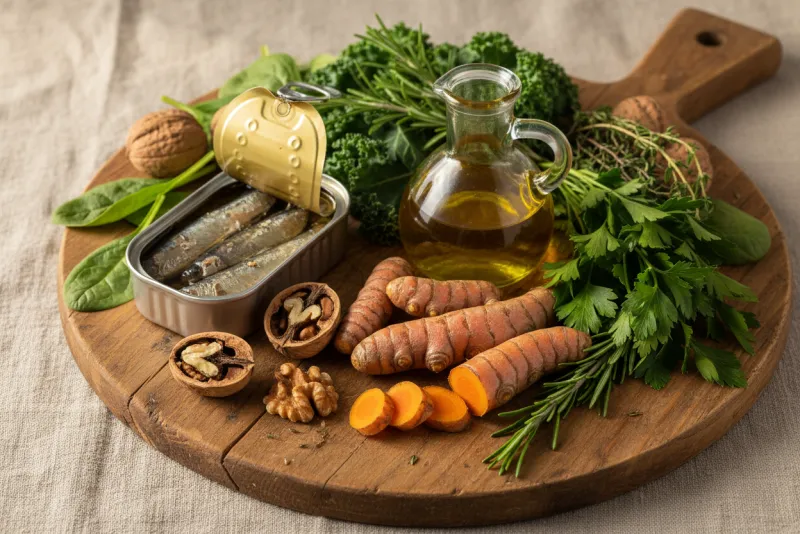
Perimenopause Joint Pain: The French Anti-Inflammatory Approach That Actually Works
Why French women have less joint pain in perimenopause. The anti-inflammatory eating approach that addresses the root cause without supplements.

What Vitamins Should You Take During Perimenopause? (A French Woman's Perspective)
Stop buying every supplement. French women get most vitamins from food. Here's what actually works for perimenopause—and the 3 supplements worth taking.

How to Balance Your Hormones in Perimenopause Naturally (The French Approach)
French women balance hormones in perimenopause through food, rhythm, and pleasure—not restriction. Learn the natural approach that works.

What Does a Hormonal Belly Look Like? The French Way to Lower Cortisol Naturally
Learn to identify hormonal belly fat and discover the French approach to lowering cortisol naturally in perimenopause—no crash diets required.

How to Lose Weight After 40: What French Women Do Differently (No Dieting Required)
French women lose weight after 40 without crash diets. Discover the meal timing, hunger signals & hormonal approach that works with perimenopause.
Does Ozempic Help With Perimenopause Weight Gain? (What French Women Do Instead)
Ozempic targets appetite, not hormones. Here's why French women in perimenopause focus on a different approach that actually addresses the root cause.

How to Speed Up Your Metabolism in Perimenopause (The French Way)
Discover how French women naturally speed up metabolism after 40 without extreme diets. A lifestyle approach that works with your changing body.