Natural GLP-1 Foods: How the French Diet Activates Your Body's Own Appetite Control
Ozempic mimics GLP-1, but your body can produce it naturally. Discover the French foods and eating habits that boost GLP-1 production without a prescription.
Medical Disclaimer
This content is for educational purposes only and is not medical advice. Ozempic (semaglutide) is a prescription medication. Consult your healthcare provider before making any changes to your medication or diet.
Your body already makes its own version of Ozempic. It has been doing it your entire life.
Every time you eat, specialized cells in your gut release a hormone called GLP-1 — the exact same molecule that Ozempic and Wegovy are designed to mimic. The difference is that your body produces it for free, without a prescription, and without the nausea, hair loss, or “Ozempic face” that comes with the injectable version.
So why doesn’t it seem to work as well?
Because the modern American diet has quietly sabotaged your body’s ability to produce GLP-1 effectively. Ultra-processed foods, eating too fast, skipping meals, and a decimated gut microbiome have all conspired to suppress what should be a powerful, natural appetite regulation system.
Here is what fascinates me: in France, we never talked about GLP-1. We had no idea this hormone existed. And yet, the traditional French way of eating — the foods we choose, how we prepare them, how long we sit at the table — turns out to be almost perfectly designed to maximize natural GLP-1 production.
I want to explain the science behind this in the way I wish someone had explained it to me. Not with medical jargon, but with clarity. Because once you understand why these foods and habits work, you will never look at a French meal the same way again.
If you are exploring the broader connection between French eating and weight management medication, I have written a complete guide on the French alternative to Ozempic that puts all of this in context.
What Is GLP-1 and Why Everyone Is Talking About It
GLP-1 stands for glucagon-like peptide-1. It is a hormone produced by L-cells in your small intestine and colon, released within minutes of eating. Its job is beautifully simple: tell your brain you have had enough.
But GLP-1 does more than just signal fullness. It performs three critical functions:
-
It slows gastric emptying. Food stays in your stomach longer, which means you feel satisfied for hours instead of minutes. This is why a proper French lunch — eaten slowly with real ingredients — keeps you comfortable until dinner without snacking.
-
It regulates blood sugar. GLP-1 stimulates insulin release and suppresses glucagon, preventing the blood sugar spikes and crashes that trigger cravings. A 2019 study in Diabetes Care confirmed that higher natural GLP-1 levels correlate with better glucose control and lower body weight over time.
-
It communicates with your brain’s reward centers. GLP-1 receptors exist not just in the gut but in the hypothalamus and brainstem, areas that control appetite and food reward. When GLP-1 is flowing properly, you feel genuinely satisfied by a normal portion. You do not need willpower to stop eating. Your body simply tells you it is done.
This is why the pharmaceutical industry has spent billions developing drugs that mimic GLP-1. Ozempic (semaglutide) is a synthetic version of this hormone, engineered to last much longer in the bloodstream than the natural version. It works. But it was designed for people with Type 2 diabetes, and it comes with a long list of trade-offs.
The question worth asking is: what if you could boost your body’s own GLP-1 production through food?
The research says you can. And the French have been doing it — unknowingly — for centuries.
How Ozempic Works (And What It Can’t Do)
Before we talk about the natural approach, it helps to understand exactly what Ozempic does and where its limits are.
Ozempic is a GLP-1 receptor agonist. It binds to the same receptors as your natural GLP-1, but it has been modified to resist the enzyme (DPP-4) that normally breaks GLP-1 down within minutes. This means a single weekly injection keeps GLP-1 receptors activated around the clock for seven days.
The result is dramatic appetite suppression. Clinical trials show an average weight loss of 15-17% of body weight over 68 weeks. That is significant.
But here is what the headlines leave out:
You have to take it forever. A landmark study published in Diabetes, Obesity and Metabolism (2022) found that participants regained two-thirds of lost weight within one year of stopping semaglutide. Your body did not learn anything new while on the drug. The moment the synthetic GLP-1 disappears, your old patterns return.
Side effects are common and sometimes serious. Nausea affects 40-45% of users. Vomiting, diarrhea, and constipation are reported in 20-30%. More concerning are reports of pancreatitis, gastroparesis (stomach paralysis), and the cosmetic issue now widely known as “Ozempic face” — rapid facial fat loss that adds years to your appearance.
It costs $900-1,350 per month without insurance. And many insurance plans still do not cover it for weight management.
It does not address the root cause. Ozempic overrides your appetite system. It does not repair it. It does not improve your gut microbiome. It does not teach your L-cells to produce more GLP-1. It does not change your relationship with food. It is a powerful band-aid, not a cure.
What the French approach offers is fundamentally different. It is slower, yes. You will not lose 15% of your body weight in a year. But you will retrain your body to do what it was designed to do — produce GLP-1 naturally, in response to real food, in a way that is sustainable for the rest of your life.
For a deeper dive into this comparison, read the full French alternative to Ozempic guide.
The French Foods That Naturally Boost GLP-1
Research has identified specific nutrients and food compounds that stimulate GLP-1 secretion from intestinal L-cells. What strikes me every time I look at this list is how precisely it maps onto a traditional French diet.
Here are the major categories, each backed by published studies:
Protein-Rich Foods
Protein is the single most potent macronutrient for GLP-1 stimulation. A 2006 study in the American Journal of Clinical Nutrition showed that high-protein meals increased GLP-1 secretion by 50-60% compared to high-carbohydrate meals.
French diet staples that deliver this effect:
- Eggs — a cornerstone of French cooking, from omelettes to quiches. Egg protein is particularly effective at triggering GLP-1 because of its amino acid profile, especially leucine.
- Fish and seafood — the French consume significantly more fish than Americans. Salmon, sardines, and mackerel deliver protein alongside omega-3 fatty acids, which independently support GLP-1 production.
- Poultry and lean meats — coq au vin, poulet roti, duck confit. French cuisine treats meat with respect — smaller portions, higher quality, always part of a structured meal rather than eaten on the go.
- Legumes — lentils (the famous lentilles du Puy), white beans (cassoulet), chickpeas. These deliver protein plus fiber, making them double GLP-1 boosters.
For the full breakdown, see our article on French foods that naturally boost GLP-1.
Healthy Fats
Not all fats stimulate GLP-1 equally. Monounsaturated and polyunsaturated fats are the most effective, while saturated fats show a weaker response. This distinction matters because it points directly to the fats the French favor.
A 2013 study in The Journal of Nutritional Biochemistry found that oleic acid — the primary fat in olive oil — stimulated GLP-1 secretion significantly more than palmitic acid (the dominant fat in processed foods and many American cooking fats).
French diet fats that boost GLP-1:
- Extra-virgin olive oil — used generously in salads, cooking, and finishing dishes
- Butter (in moderation) — yes, the French use butter, but in controlled amounts as a flavor agent, not a primary cooking fat
- Walnuts and almonds — common as snacks and in salads
- Duck and goose fat — traditional in southwestern French cooking, higher in monounsaturated fat than you might expect
Bitter and Aromatic Compounds
This one surprised me when I first discovered it. Certain plant compounds found in herbs, spices, and bitter vegetables activate taste receptors in the gut (yes, your gut has taste receptors) that trigger GLP-1 release.
A 2017 paper in Molecular Nutrition & Food Research identified that bitter compounds activate T2R receptors on L-cells, directly stimulating GLP-1 secretion. The French diet is loaded with these:
- Endive and radicchio — bitter salad greens that the French eat regularly
- Artichokes — a beloved French vegetable, rich in bitter compounds
- Herbes de Provence — thyme, rosemary, oregano, savory. These are not just flavor. Their aromatic compounds have measurable effects on gut hormone release.
- Dark chocolate — the French eat more dark chocolate per capita than almost any nation. The polyphenols in 70%+ dark chocolate have been shown to increase GLP-1 in multiple studies.
- Coffee — French adults drink an average of 2-3 cups daily. Chlorogenic acids in coffee stimulate GLP-1, which may explain why a post-meal espresso contributes to that feeling of pleasant satisfaction.
Why Olive Oil Is the French Secret Weapon for Appetite Control
Olive oil deserves its own section because the research here is remarkably strong, and because it illustrates how a single ingredient can have outsized effects on appetite regulation.
A 2018 randomized controlled trial published in Nutrients compared meals prepared with olive oil versus meals prepared with butter or sunflower oil. The olive oil meals produced significantly higher GLP-1 levels at 30, 60, and 120 minutes post-meal.
The mechanism is oleic acid. When oleic acid reaches the small intestine, it activates a receptor called GPR40 (also known as FFAR1) on the surface of L-cells. This receptor triggers a cascade that results in GLP-1 secretion. The effect is dose-dependent — more oleic acid means more GLP-1, up to a saturation point.
But here is the part I find most interesting: the quality of the olive oil matters. Extra-virgin olive oil contains polyphenols (especially oleocanthal and oleuropein) that amplify the GLP-1 response beyond what oleic acid alone would produce. A 2020 study in the European Journal of Nutrition found that high-polyphenol EVOO increased GLP-1 by 30% more than refined olive oil with the same fat content.
In France, we do not just cook with olive oil. We drizzle it on salads, on vegetables, on bread, on soups. A typical French woman might consume 2-3 tablespoons of quality olive oil daily without thinking about it. That is roughly 20-30 grams of oleic acid per day — enough to meaningfully support GLP-1 production at every meal.
This stands in stark contrast to the American dietary pattern, where the dominant added fats are soybean oil, canola oil, and palm oil — none of which have the same GLP-1-stimulating profile.
If you want to make one single change to your diet that would move the needle on natural appetite regulation, switch to extra-virgin olive oil as your primary fat. Use it for salad dressings. Drizzle it on roasted vegetables. Dip good bread in it. This is not a sacrifice. It is an upgrade.
For more on this topic, read our detailed article on olive oil and the French GLP-1 connection.
Fermented Foods and Gut Health: The French GLP-1 Connection
Your gut microbiome — the trillions of bacteria living in your intestinal tract — plays a central role in GLP-1 production. This is one of the most exciting areas of current research, and it helps explain something that has puzzled researchers for decades: why do the French stay slim despite eating cheese, bread, and wine?
The answer, at least in part, is fermentation.
Short-chain fatty acids (SCFAs) — particularly butyrate and propionate — are produced when gut bacteria ferment dietary fiber. These SCFAs bind to receptors on L-cells (GPR41 and GPR43) and directly stimulate GLP-1 secretion. A 2015 study in Gut demonstrated that increasing SCFA production through diet raised GLP-1 levels by 25-30% in human subjects.
But here is where it gets specific to the French diet: fermented foods introduce beneficial bacteria that are especially efficient SCFA producers. And the French consume fermented foods at nearly every meal.
French Fermented Foods That Support GLP-1
Cheese. France produces over 1,600 varieties of cheese. Many are raw-milk, traditionally aged cheeses teeming with living bacteria — Lactobacillus, Bifidobacterium, Propionibacterium. A 2019 study in Nature Medicine found that regular cheese consumption was associated with higher microbial diversity and better metabolic markers, contradicting decades of anti-fat dietary advice.
The key distinction: artisanal French cheeses are alive. Processed American cheese products are not. A slice of Comte or a spoonful of Roquefort delivers millions of beneficial organisms. A slice of Kraft singles delivers none.
Yogurt. French women eat yogurt daily, typically plain and full-fat, often with a drizzle of honey or fresh fruit. The Lactobacillus and Streptococcus thermophilus strains in traditional yogurt have been specifically shown to enhance GLP-1 secretion in a 2016 study published in The British Journal of Nutrition.
Cornichons and pickled vegetables. The small, crunchy pickles served alongside charcuterie and pate are lacto-fermented, not vinegar-pickled. This means they carry living bacteria that colonize the gut.
Mustard. Dijon mustard is traditionally fermented. It is used generously in French cooking — in vinaigrettes, sauces, and marinades.
Wine. This is the controversial one, and I will be careful here. Moderate red wine consumption (one glass with dinner, the French pattern) has been associated with increased gut microbial diversity in a 2019 study from King’s College London. The polyphenols in red wine — not the alcohol — appear to act as prebiotics, feeding beneficial gut bacteria. But this is not a recommendation to start drinking. If you do not drink wine, do not start for gut health. There are better sources of polyphenols.
For more detail on how fermented foods fit into the French gut health picture, read our article on fermented foods and French gut health.
The Role of Fiber in Natural Appetite Regulation
If protein is the most potent GLP-1 trigger, fiber is the most important long-term support system for sustained GLP-1 production. And this is where the gap between the French diet and the standard American diet becomes a canyon.
The average American woman consumes 15 grams of fiber per day. The average French woman consumes 22-25 grams. The recommended minimum is 25-30 grams. This difference of 7-10 grams may sound small, but its downstream effect on GLP-1 is significant.
Here is why: fiber does not stimulate GLP-1 directly. Instead, it feeds your gut bacteria, which produce those short-chain fatty acids (SCFAs) that activate L-cells. The more fiber you eat, the more SCFAs your gut produces, and the more GLP-1 flows. It is an indirect but powerful mechanism.
A 2020 meta-analysis in Appetite reviewed 28 studies and concluded that dietary fiber intake was positively associated with GLP-1 levels, with the strongest effects seen from viscous soluble fiber (the kind found in oats, legumes, and certain vegetables).
French Fiber Sources That Support GLP-1
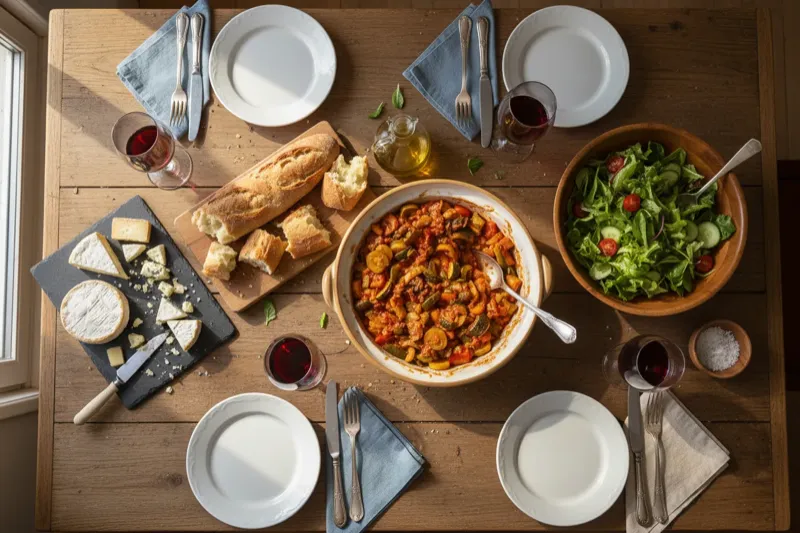
Vegetables at every meal. In France, lunch and dinner almost always include vegetables — raw in salads, cooked as side dishes, or integrated into the main course. A simple French dinner might be grilled fish, ratatouille (zucchini, eggplant, tomatoes, peppers, onions), and a green salad. That is easily 10-12 grams of fiber in a single meal.
Legumes. Lentils (lentilles), white beans (haricots blancs), and chickpeas appear regularly in French home cooking. A classic salade de lentilles with Dijon vinaigrette is a fiber powerhouse — about 15 grams per serving.
Whole grain bread. The French eat bread daily, but increasingly, traditional varieties like pain complet (whole wheat) and pain de campagne (country bread with a mix of flours) are making a comeback. These deliver 3-4 grams of fiber per slice, compared to less than 1 gram in white American sandwich bread.
Fruits as dessert. The French tradition of ending a meal with fresh fruit — a pear, an apple, a handful of berries — adds 3-5 grams of fiber at the exact moment when your L-cells are most active and receptive to stimulation.
The structural advantage of the French approach is that fiber is distributed across multiple meals, not consumed in a single high-fiber breakfast cereal or a supplement. This steady supply keeps gut bacteria consistently fed and SCFA production steady throughout the day, supporting sustained GLP-1 levels rather than spikes and crashes.
For our detailed breakdown, see the article on fiber-rich French foods for appetite control.
Why Eating Slowly Doubles Your GLP-1 Response
This is where the French approach moves beyond what you eat to how you eat — and the science here is just as compelling.
A groundbreaking 2009 study published in the Journal of Clinical Endocrinology & Metabolism measured GLP-1 levels in participants who ate the same meal at two different speeds: one group finished in 5 minutes, the other took 30 minutes. The results were striking.
The slow-eating group produced nearly double the GLP-1 compared to the fast-eating group. They also reported significantly greater feelings of fullness and had lower levels of ghrelin (the “hunger hormone”) for hours afterward.
Why does speed matter so much? Three reasons:
First, GLP-1 release is triggered sequentially as food moves through your digestive tract. When you eat slowly, food reaches different sections of the small intestine gradually, activating L-cells along the entire length of the gut. When you eat fast, food arrives in a bolus that overwhelms the proximal L-cells and moves too quickly through the rest.
Second, chewing matters. Thorough mastication breaks food into smaller particles, increasing the surface area available for nutrient detection by gut receptors. A 2013 study in Obesity found that chewing each bite 40 times (vs. 15 times) increased GLP-1 levels by 15-20% and reduced caloric intake by 12%.
Third, the cephalic phase response. When you smell, see, and taste food mindfully, your brain initiates hormone production before food even reaches your intestine. Fast eating short-circuits this preparatory phase.
Now consider French meal culture. The average French meal lasts 33 minutes (INSEE national survey, 2019). Many family dinners stretch to 45-60 minutes. Meals are structured in courses — entree (starter), plat (main), fromage (cheese), dessert — which naturally paces consumption and creates breaks between eating.
This is not cultural affectation. It is inadvertent GLP-1 optimization.
Compare this to the American average of 11 minutes for lunch and 13 minutes for dinner (USDA Economic Research Service). At those speeds, you are getting perhaps half the GLP-1 response from the same food. You finish before your brain receives the satiety signal, which takes about 20 minutes to arrive. So you eat more, feel less satisfied, and reach for a snack an hour later.
The fix is not complicated, but it requires intention. Sit down. Put your fork down between bites. Have a conversation. Take at least 20 minutes for every meal. This single habit change — without altering what you eat at all — can meaningfully increase your natural GLP-1 production.
For more on how French eating habits differ from American ones and why it matters, explore our guide to French eating habits.
A Day of French Eating for Maximum Natural GLP-1
Theory is useful. Practice is better. Here is what a day of eating looks like when you structure it for natural GLP-1 support, French-style. This is not a “diet plan.” It is how millions of French women eat every day without thinking about hormones, calories, or macros.
Petit-dejeuner (Breakfast) — 7:30 AM
- A bowl of plain full-fat yogurt with a handful of fresh berries and a drizzle of honey
- A slice of whole grain bread with butter
- Coffee (espresso or cafe au lait)
GLP-1 triggers: protein from yogurt, fiber from berries and bread, bitter compounds from coffee, healthy fat from butter. Eating time: 15-20 minutes.
Dejeuner (Lunch) — 12:30 PM
- Green salad with walnuts, dressed in EVOO and Dijon vinaigrette
- Grilled chicken thigh with herbes de Provence
- Lentils cooked with shallots and a bay leaf
- A small piece of Comte cheese
- An apple or a few slices of pear
GLP-1 triggers: protein from chicken and lentils, oleic acid from olive oil, fiber from lentils, salad, and fruit, aromatic compounds from herbs, fermented bacteria from cheese. Eating time: 30-40 minutes with conversation.
Gouter (Afternoon snack, optional) — 4:00 PM
- Two squares of dark chocolate (70%+)
- A handful of almonds
- Herbal tea or water
GLP-1 triggers: polyphenols and bitter compounds from dark chocolate, protein and healthy fat from almonds. Eating time: 10 minutes.
Diner (Dinner) — 7:30 PM
- Leek and potato soup (homemade, not from a can)
- Pan-seared salmon with a squeeze of lemon
- Roasted seasonal vegetables drizzled with olive oil
- A small glass of red wine (optional)
- Fresh fruit or a small portion of creme caramel
GLP-1 triggers: omega-3s and protein from salmon, fiber from vegetables and soup, oleic acid from olive oil, polyphenols from wine and vegetables, slow eating pace. Eating time: 35-45 minutes.
What This Day Delivers
Notice what is not here: no protein bars, no meal replacement shakes, no diet soda, no “100-calorie snack packs.” Every single item is a real food that your great-grandmother would recognize.
Total estimated fiber: 28-32 grams (double the American average). Olive oil servings: 2-3 tablespoons. Fermented food servings: 2-3 (yogurt, cheese, optional wine). Protein at every meal: yes. Average meal duration: 25-40 minutes.
This is a day optimized for GLP-1 production. Not through supplements, not through medication, but through the accumulated effect of real food, eaten properly, in a structure that gives your body time to do what it already knows how to do.
This is also, quite simply, a day of eating well. There is no deprivation in this picture. There is pleasure at every meal. And that matters, because the approach that works is the one you actually want to follow for the rest of your life.
The Bottom Line: Your Body Knows What to Do
The pharmaceutical industry has spent billions of dollars creating a synthetic version of a hormone your body already makes. That is not a criticism of the science — GLP-1 receptor agonists are a genuine breakthrough for people with diabetes and severe obesity. They have helped millions.
But for the rest of us — for women who want to manage their weight sustainably, who want to feel satisfied after meals without a prescription, who want to stop the cycle of restriction and binging — the answer is not in a syringe. It is on your plate.
The French have not cracked some mystical code. They have simply preserved eating habits that the rest of the developed world abandoned in the rush toward convenience. Olive oil instead of seed oils. Fermented foods instead of processed ones. Vegetables at every meal. Slow meals instead of fast ones. These are not trendy biohacks. They are ancestral patterns that happen to align perfectly with what modern science tells us about GLP-1 and appetite regulation.
Here is what I want you to take away from this:
You do not need to overhaul your life. Start with one change. Switch to extra-virgin olive oil. Or add a serving of yogurt to your morning. Or commit to 20-minute meals. Each of these adjustments nudges your body’s GLP-1 system in the right direction. Stack them over weeks and months, and the cumulative effect is real and measurable.
You do not need to eat perfectly. The French eat bread, cheese, chocolate, and wine. They enjoy pastries and butter and cream. The difference is structure, quality, and pace — not perfection.
Your body is not broken. It has just been fed the wrong inputs. Give it the right ones, and it will respond. It was designed to.
If you want to start putting this into practice today, I have created a free guide that walks you through the first seven days of the French approach. It is not a meal plan or a calorie chart. It is the seven principles that French women absorb from childhood — the ones that keep GLP-1 flowing without them ever knowing it.
Download the free guide here and see what happens when you let your body do what it already knows how to do.
Ready to start your French transformation?
Get my free guide: "The 7 Habits That Naturally Trigger GLP-1"
Frequently Asked Questions
What foods naturally increase GLP-1?
Foods high in fiber (vegetables, legumes, whole grains), healthy fats (olive oil, nuts, avocado), fermented foods (yogurt, cheese, sauerkraut), lean protein, and certain spices have been shown to stimulate natural GLP-1 production. These are all staples of the traditional French diet.
Can you produce GLP-1 naturally without Ozempic?
Yes. Your body produces GLP-1 naturally in response to eating. Certain foods, eating slowly, and proper meal structure can enhance this natural production. While the effect is more gradual than Ozempic injection, it's sustainable, free, and without side effects.
What is GLP-1 and why does it matter for weight loss?
GLP-1 (glucagon-like peptide-1) is a hormone your gut produces after eating. It signals your brain to feel satisfied, slows stomach emptying, and helps regulate blood sugar. Ozempic works by mimicking this hormone. The French diet naturally optimizes GLP-1 through food choices and eating habits.
Does eating slowly increase GLP-1?
Yes. Research shows that eating slowly — taking 20-30 minutes per meal — significantly increases GLP-1 release compared to eating quickly. This is one reason French women, who typically spend 30+ minutes per meal, naturally maintain better appetite control.
Is olive oil good for GLP-1 production?
Yes. Studies show that olive oil, particularly extra-virgin olive oil rich in oleic acid, stimulates GLP-1 secretion. French and Mediterranean cooking relies heavily on olive oil, which may partly explain the appetite-regulating effects of these traditional diets.
Related Articles
French Fiber Traditions: The 'Poor Man's Ozempic' Your Grandmother Already Knew About
Discover why French staples like lentils du Puy, artichokes, and leeks are called the 'poor man's Ozempic' — fiber-rich foods that naturally control appetite and boost GLP-1.
The French Fermented Foods Guide: How Cheese, Wine, and Yogurt Support Weight Loss
French women eat cheese, drink wine, and enjoy yogurt daily -- and stay slim. The science of fermented foods, GLP-1, and natural weight management explained.
7 French Foods That Work Like Ozempic (Without the Side Effects)
These 7 French kitchen staples naturally boost GLP-1 — the same hormone Ozempic mimics. Science-backed, delicious, and available at your grocery store.
Why French Women Never Needed Ozempic: 5 Habits That Naturally Boost GLP-1
Discover 5 daily French habits that naturally boost GLP-1 production -- the same hormone Ozempic mimics. No injections, no side effects, no $1,000/month price tag.

How to Increase GLP-1 Naturally: The French Foods That Boost Your Satiety Hormone
Learn how to increase GLP-1 naturally with French foods. Discover which everyday French ingredients trigger your body's own satiety hormone -- no injections needed.