Intuitive Eating the French Way: How French Women Eat Without Rules and Stay Slim
French women have practiced intuitive eating for centuries — long before it had a name. Discover how the French approach to food combines pleasure, structure, and body trust.

I want you to imagine something.
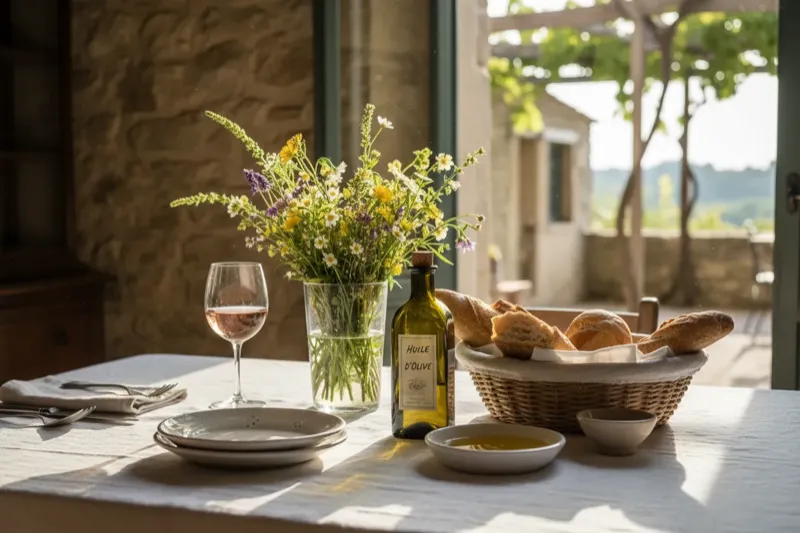
You sit down at a small table in Paris. A basket of crusty bread appears. Then butter — real butter, unsalted, slightly cool. You tear off a piece, spread it slowly, and take a bite. You feel nothing but pleasure. No mental math. No guilt. No promise to “make up for it later.”
Now imagine doing that every single day of your life.
That is what eating looks like for most French women. Not because they have superhuman willpower or better genetics. But because they never learned to be afraid of food in the first place.
If you are reading this, you probably have a very different relationship with food. You have counted calories, tracked macros, labeled foods “good” and “bad,” and felt genuine shame after eating a piece of cake at your own birthday party. You are not alone. Roughly 75% of American women report disordered eating behaviors, and most have been on some form of diet since their twenties.
Here is the thing that took me years to articulate after moving between France and the United States: French women have been practicing intuitive eating for centuries. They just never needed a name for it, because it was never broken in the first place.
This guide is my attempt to bridge those two worlds — the formal framework of intuitive eating developed by Evelyn Tribole and Elyse Resch, and the lived, embodied, everyday relationship with food that French women absorb from childhood. Not because one is better than the other, but because together, they offer something neither can alone: a clear path out of diet culture that actually feels like living.
If you have been searching for a way to stop counting calories and start trusting yourself around food, you are in the right place.
What Is Intuitive Eating (And Why French Women Were First)
Intuitive eating was formalized in 1995 by two American dietitians, Evelyn Tribole and Elyse Resch. They outlined ten principles designed to help people reject diet mentality, reconnect with hunger and fullness cues, and rebuild a healthy relationship with food. The framework was revolutionary in the American context because it pushed back against decades of calorie restriction, food moralizing, and the $72 billion diet industry.
But here is what has always struck me: every single one of those ten principles already existed in French food culture. Not as a program or a method — just as the way people ate.
French women eat when they are hungry. They stop when they are satisfied, not stuffed. They never describe chocolate as “sinful” or salad as “virtuous.” They eat bread every day and feel nothing but enjoyment about it. They do not own bathroom scales. They do not track macros on an app.
This is not a coincidence. France never experienced the same industrialization of diet culture that reshaped American eating in the 1970s, ’80s, and ’90s. While Americans were being told to fear fat, then fear carbs, then fear sugar, French women were eating butter on baguettes and having wine with dinner. They were not rebelling against diet culture — they simply never adopted it.
When I talk about “intuitive eating the French way,” I am not suggesting that French women invented something. I am pointing out that the principles American dietitians had to formally reconstruct in 1995 never needed reconstructing in France because they were never dismantled.
That distinction matters. Because it means there is an entire living culture — with real meals, real habits, and real women — that demonstrates what intuitive eating looks like when it is not a recovery program but simply the way you live. And that is extraordinarily useful if you are trying to get there yourself.
For a deeper dive into how this plays out in daily meals, read my guide on French eating habits that keep women slim without dieting.
The 10 Principles of Intuitive Eating Through a French Lens
Tribole and Resch’s ten principles are powerful. But when you look at them through a French lens, they stop feeling like therapeutic instructions and start feeling like common sense. Let me walk you through each one.
1. Reject the diet mentality. In France, there is no diet mentality to reject. “Going on a diet” is considered slightly bizarre — like announcing you will start breathing differently. French women do not buy diet books, do not follow “meal plans,” and would find the concept of a “cheat day” genuinely confusing. Food is food. There is nothing to cheat on.
2. Honor your hunger. French women eat when hungry. Full stop. Skipping meals is frowned upon. If you are hungry at noon, you eat lunch — a real lunch, sitting down, with courses. The idea that hunger is something to override or ignore would be considered strange, even unhealthy.
3. Make peace with food. This one is fascinating because French women never went to war with food. They eat croissants, cheese, bread, chocolate, cream sauces, and pastries. They eat them regularly, in normal amounts, without drama. There is no peace to make because there was never a conflict.
4. Challenge the food police. The “food police” — that inner voice saying you are “bad” for eating carbs — barely exists in French culture. No one at a French dinner table will comment on what you are eating or suggest you “should” have ordered the salad instead. Food guilt is simply not part of the French experience.
5. Discover the satisfaction factor. This is perhaps the most French principle of all. Pleasure is the entire point of eating in France. Not fuel. Not nutrition. Not optimization. Pleasure. A meal that does not taste good is a failed meal, regardless of how “healthy” it is. French women choose foods they genuinely want, prepare them with care, and sit down to enjoy them. Satisfaction is not a bonus — it is the baseline.
6. Feel your fullness. French portions are naturally smaller. Meals are eaten slowly, over conversation. There is a pause between courses. All of this means French women feel their fullness signals clearly because they are not eating fast enough to override them.
7. Cope with emotions with kindness. French women experience stress, sadness, and boredom like everyone else. But food is not their default coping mechanism because meals already occupy a structured, pleasurable role in their day. Eating is for eating. When emotions arise, they are handled differently.
8. Respect your body. French women are not immune to body image pressure, but the cultural relationship with bodies is different. There is less emphasis on a single “ideal” body type and more emphasis on carrying yourself well — your posture, your confidence, your style. You work with your body, not against it.
9. Movement — feel the difference. Exercise in France is woven into daily life. French women walk — to the bakery, to the market, to work. They take stairs. They move not to “burn calories” but because walking is pleasant and practical. The gym-as-punishment model has far less traction.
10. Honor your health with gentle nutrition. French women eat nutrient-dense food — fresh vegetables, quality proteins, whole grains — but they do it because it tastes good, not because a nutrition label told them to. They trust that a diet built on pleasure and variety will naturally be balanced. And the data overwhelmingly confirms they are right.
Why French Women Never Feel Guilty About Food
This is the question I get asked more than any other: How do French women eat bread, cheese, butter, chocolate, and wine every single day without feeling guilty?
The answer is disarmingly simple: they never learned that they should.
Guilt around food is not a natural human emotion. It is a learned response, and it is learned from diet culture. Every time a magazine calls a dessert “sinful,” every time a friend says she needs to “earn” her dinner through exercise, every time a product is labeled “guilt-free” (as though the regular version should make you feel guilty) — your brain absorbs the message that eating is a moral act. That some foods make you “good” and others make you “bad.”
French culture never delivered that message. Food in France is categorized by taste, quality, season, and origin. Not by calories, macros, or moral value. A croissant is a croissant. It is not “bad” or “an indulgence” or “a cheat.” It is breakfast.
This absence of food moralizing has a profound downstream effect. When you do not feel guilty about eating, you do not binge. When you do not binge, you do not restrict. When you do not restrict, you do not develop the feast-or-famine cycle that drives most weight gain in America. The entire dysfunctional loop simply never starts.
I wrote more about this in why French women never feel food guilt, but here is the practical takeaway: guilt does not make you eat less. It makes you eat more. It makes you eat in secret, eat quickly, eat past fullness, and then eat even more to cope with the shame of having eaten. Removing guilt is not “giving up” — it is removing the single biggest driver of overeating.
How French Structure Actually Supports Intuitive Eating
Here is where I need to address a common misunderstanding. Many Americans hear “intuitive eating” and interpret it as “eat whatever you want, whenever you want, in any quantity.” That is not what intuitive eating is, and it is definitely not what French eating looks like.
French eating is intuitive within a structure. And that structure is what makes it work.
The structure looks like this:
-
Three meals a day, at roughly the same times. Breakfast around 7-8, lunch around 12:30-1, dinner around 7:30-8. These are not rigid rules — they are rhythms. Your body learns when to expect food, and your hunger cues become clearer and more reliable.
-
Meals are composed, not assembled. A French lunch is not a random collection of snacks grabbed on the go. It has a shape: a starter or salad, a main course, perhaps cheese or fruit. This composition naturally creates variety and satisfaction.
-
Snacking is minimal. Not because snacking is “bad,” but because meals are satisfying enough that you do not need to eat between them. When French women do snack, it is a deliberate gouter (afternoon snack) — not mindless grazing.
-
Eating happens at a table. Not at a desk, not in front of a screen, not standing over the kitchen counter. Sitting at a table signals to your brain that a meal is happening. It activates your attention and your satiety mechanisms.
This structure might seem restrictive at first glance. But it is actually the opposite. Structure creates freedom. When your meals have rhythm and composition, you do not spend the entire day making food decisions. You do not wonder if you should eat, what you should eat, or whether you have “earned” the right to eat. You simply sit down at mealtime and enjoy your food.
This is one of the biggest differences between French eating and the way intuitive eating is sometimes practiced in America — and I explore it in detail in my guide on French eating habits.
The Difference Between French Eating and American “Intuitive Eating”
I want to be careful here because I deeply respect the intuitive eating framework. It has helped millions of women recover from eating disorders and make peace with food. But I have observed some differences between how intuitive eating is often practiced in America and how the same principles manifest naturally in France.
American intuitive eating often begins as a reaction. It is a recovery from diet culture. Many women come to it after years or decades of restriction, bingeing, calorie counting, and body shame. The early stages of intuitive eating can feel chaotic — eating large amounts of previously “forbidden” foods, struggling with fullness cues that have been suppressed for years, feeling terrified without the guardrails of a diet plan.
French eating never needed to react because it never had a diet culture to recover from. The principles are the same, but the starting point is different. French women did not need to learn to “give themselves unconditional permission to eat” because that permission was never revoked.
This difference matters for a practical reason: if you are transitioning out of diet culture, you need more than just principles. You need a model. You need to see what intuitive eating looks like when it is not a recovery process but a settled, sustainable, everyday way of living. French food culture provides that model.
Here are the key differences I have observed:
Pleasure vs. permission. American intuitive eating often emphasizes permission — giving yourself permission to eat foods you previously restricted. French eating emphasizes pleasure — choosing foods specifically because they bring enjoyment. Permission is the first step. Pleasure is the destination.
Individual vs. cultural. In America, intuitive eating is a personal practice, often supported by a therapist or dietitian. In France, it is a shared cultural practice. You eat intuitively because everyone around you eats intuitively. The social environment reinforces the behavior.
Recovery vs. default. American intuitive eating is often framed as healing. French eating is simply normal. This is not a criticism of the American approach — healing is necessary when harm has been done. But it helps to know what “healed” looks like, and French women offer a clear picture.
For a detailed exploration of what intuitive eating looks like in daily French life, I wrote a full article on the topic.
How to Stop Counting Calories (The French Transition)
If you have been counting calories for years, the idea of stopping can feel genuinely frightening. I understand that. The numbers gave you a sense of control, even if that control was an illusion — even if the counting made you miserable and never actually gave you lasting results.
Here is how French women navigate food without ever counting a single calorie. And here is how you can begin to do the same.
Step 1: Replace numbers with sensations. Instead of asking “how many calories is this?” start asking “how does this taste? Am I enjoying it? Am I still hungry?” French women make food decisions based on physical sensation, not arithmetic. This takes practice. Your hunger and fullness signals may be muted after years of overriding them with calorie targets. They will come back.
Step 2: Eat real food that satisfies. One reason calorie counting feels necessary is that highly processed foods do not trigger proper satiety signals. When you eat a meal made from real ingredients — fresh vegetables, quality proteins, good fats, proper bread — your body knows when it has had enough. French meals are built from these ingredients not because of nutrition ideology but because they taste better.
Step 3: Sit down and pay attention. You cannot feel your fullness if you are eating while driving, working, or scrolling. Eating at a table, without screens, with your attention on the food — this is non-negotiable in France and it should become non-negotiable for you. Attention is the calorie counter you actually need.
Step 4: Trust the process. Your body is not stupid. It has sophisticated mechanisms for regulating energy intake that have been refined over millions of years of evolution. Calorie counting overrides those mechanisms. Stopping calorie counting allows them to function again. It takes time — often weeks or months — but the signals do return.
Step 5: Let go of the scale too. French women do not weigh themselves regularly. Your weight fluctuates daily based on water retention, hormones, digestion, and a dozen other factors that have nothing to do with fat. The scale, like the calorie counter, gives you data that feels meaningful but mostly just fuels anxiety.
I wrote a full article on how to stop counting calories using the French approach if you want a more detailed transition plan.
Emotional Eating: The French Solution
Let me tell you something that might surprise you: French women experience emotional eating too. They are human. They sometimes reach for chocolate after a hard day or eat a bit more than usual when stressed.
The difference is in the aftermath.
An American woman who eats chocolate after a bad day often spirals: I shouldn’t have eaten that. I have no self-control. I’ll start over tomorrow. I’ve already ruined today, so I might as well keep eating. The emotional eating triggers guilt, which triggers more eating, which triggers more guilt. It becomes a cycle.
A French woman who eats chocolate after a bad day thinks: That was nice. And then she moves on. There is no guilt spiral because there is no guilt. There is no “starting over tomorrow” because there is nothing to start over from. The chocolate was not a failure. It was chocolate.
This difference is not about willpower. It is about the framework you operate within. When food is moralized — when eating chocolate is “bad” — then eating chocolate becomes an emotional event in itself. When food is neutral — when chocolate is just chocolate — then eating it is a small, pleasant moment in your day. Nothing more.
The French “solution” to emotional eating is not a technique or a strategy. It is a complete reframing:
Food is allowed to be comforting. A warm bowl of soup on a cold day. A piece of dark chocolate with your afternoon coffee. A slice of cake at a celebration. These are normal, healthy, human responses to food. Comfort eating only becomes a problem when it is your only coping mechanism and when it is followed by shame.
Pleasure prevents deprivation. When your everyday meals are genuinely pleasurable — when you eat food you love, prepared well, enjoyed slowly — you are less likely to seek emergency pleasure from food during emotional moments. You cannot binge on pleasure you already have.
Structure contains the moment. Because French meals happen at regular times, emotional eating does not spiral into all-day grazing. You might eat a bit extra at dinner because you had a terrible afternoon. But dinner ends. The kitchen closes. Tomorrow’s meals will arrive on schedule. The structure absorbs the moment without breaking.
For a deeper exploration of this topic, read my article on how French women handle emotional eating differently.
Making Peace With Bread, Cheese, and Chocolate
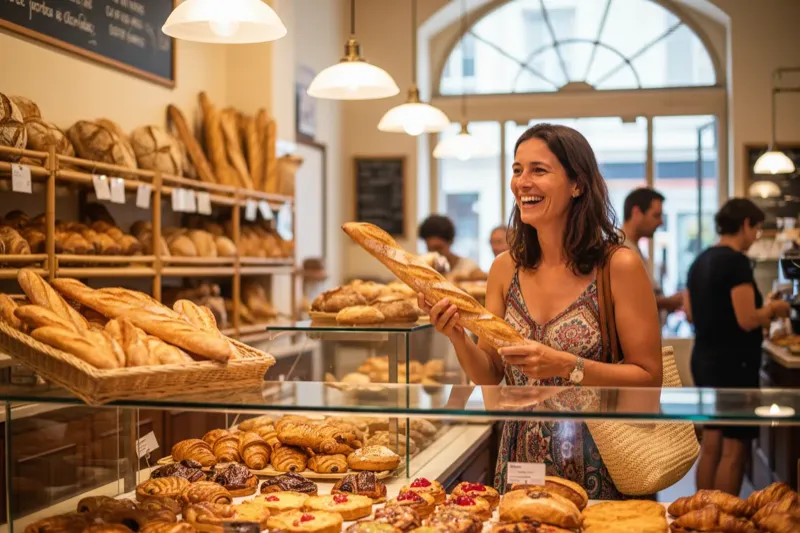
If there is one image that captures the French approach to food, it is a woman tearing off a piece of baguette, placing a slice of Comte cheese on top, and eating it with absolute, uncomplicated enjoyment. No internal debate. No guilt. No “I’ll have to run an extra mile tomorrow.”
Bread, cheese, and chocolate are the three foods American diet culture fears the most. They are also the three foods French women eat the most.
This is not a paradox. It is proof that the problem was never the food — it was the fear.
When you restrict a food, you give it power. Forbidden chocolate becomes infinitely more appealing than available chocolate. The moment you “break” your restriction, you do not eat one square — you eat the entire bar, because some part of your brain is not sure when you will “allow” yourself to have it again. This is the restriction-binge cycle, and it is the engine of most weight gain in America.
French women never enter this cycle because they never restrict. Bread is at every meal. Cheese is after every dinner. Chocolate is an afternoon ritual. These foods are so normal, so available, so unremarkable that there is no urgency around them.
Here is what making peace with food actually looks like in practice:
-
Buy the good version. French women do not eat diet chocolate or low-fat cheese. They eat the real thing — a small amount of excellent quality. A single square of 70% dark chocolate provides more satisfaction than an entire bar of diet candy. When you eat quality, you need less quantity.
-
Eat it every day. Scarcity creates obsession. Abundance creates calm. When you know you can have bread tomorrow, and the day after, and every day for the rest of your life, the urgency disappears. You eat what you want, and you stop when you have had enough.
-
Eat it at the table. Not hiding in the pantry. Not standing at the fridge at midnight. At the table, on a plate, with a napkin. This is not about formality — it is about bringing food out of the shadows and into the light. Food you eat openly, without shame, is food you eat normally.
-
Pair it with other foods. The French do not eat a block of cheese by itself. They eat it after a meal, with perhaps a walnut or a piece of fruit. Chocolate comes with coffee. Bread comes with a composed meal. Context changes the experience entirely.
If you are currently afraid of any food — if there is something in your kitchen that feels “dangerous” — I encourage you to read my full guide on the French alternative to Ozempic. Because the solution to food obsession is not a drug that suppresses your appetite. It is a culture that never made food the enemy.
How to Start Eating Intuitively the French Way
You have read this far, which tells me something important: you are ready for a different approach. You are tired of the calorie apps, the food guilt, the Sunday night “fresh start” promises that fall apart by Wednesday. You want what French women have — a relationship with food that is simple, pleasurable, and sustainable.
Here is how to begin. Not with a 30-day plan or a list of rules — but with small, genuine shifts that rewire your relationship with food from the inside out.
Week 1: Eat at a table. That is it. Every meal, at a table, without your phone. This single change will transform your eating more than any diet ever has. You will taste your food. You will notice fullness. You will start to experience meals as events, not interruptions.
Week 2: Add one composed meal per day. Choose lunch or dinner and give it structure: a starter or side salad, a main course with protein and vegetables, and something small to finish — fruit, a square of chocolate, a piece of cheese. You are not adding calories. You are adding composition, which creates satisfaction.
Week 3: Remove the food labels. Stop calling foods “good” or “bad.” Stop calling dessert “a treat” (implying your regular food is a punishment). Stop calling anything “guilt-free” (implying the alternative should make you guilty). Language shapes experience. When you stop moralizing food with words, you stop moralizing it with emotions.
Week 4: Eat what you actually want. This is the hardest step for women coming out of diet culture. When you sit down to eat, ask yourself: What do I actually want right now? Not what you “should” eat. Not what has the fewest calories. What sounds genuinely appealing. And then eat that. This is not reckless — it is the foundation of a sustainable relationship with food.
Ongoing: Embrace the rhythm. Three meals a day. Roughly the same times. Real food, well prepared, enjoyed slowly. This is not a diet. It is a lifestyle — one that millions of French women live every day without ever thinking about it.
The goal is not to eat like a French woman. The goal is to eat like a woman who was never taught to be afraid of food. French women happen to be the most visible example of what that looks like, but the capacity is in you too. It was always in you. Diet culture just buried it.
You do not have to figure this out alone. I created a free guide that walks you through the first steps of eating the French way — no calorie counting, no food rules, just a clear, gentle path back to trusting your body.
Download “The 7 Habits That Naturally Trigger GLP-1” — it is free, and it is yours.
This guide is part of my series on French eating habits and the French alternative to Ozempic. If you are exploring mindful eating the French way, start with the free guide above — it is the perfect first step.
Ready to start your French transformation?
Get my free guide: "The 7 Habits That Naturally Trigger GLP-1"
Frequently Asked Questions
What is intuitive eating?
Intuitive eating is an approach to food that rejects diet mentality and instead trusts your body's internal hunger and fullness cues. It was formalized in 1995, but French women have practiced its core principles — eating when hungry, stopping when satisfied, and rejecting food guilt — for centuries.
Do French women practice intuitive eating?
Yes, although they wouldn't call it that. French women eat when hungry, stop when satisfied, never label foods as 'good' or 'bad', and focus on pleasure rather than nutrition metrics. These are the core principles of intuitive eating, embedded in French food culture for generations.
Can you lose weight with intuitive eating?
Intuitive eating is not a weight loss diet — it's an approach that helps your body find its natural weight. French women demonstrate that when you eat with pleasure, without restriction, and with proper structure, your body tends to settle at a healthy, sustainable weight.
How do I stop feeling guilty about food?
French women never developed food guilt because their culture doesn't moralize food. Start by removing 'good' and 'bad' labels from foods, eating what you truly want (not what you 'should' eat), savoring every bite, and giving yourself unconditional permission to enjoy meals.
Related Articles
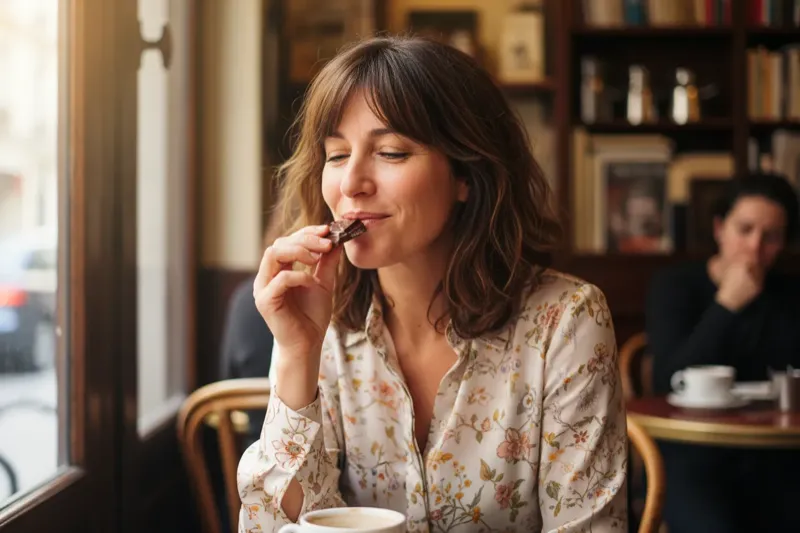
Eating Without Guilt: What Americans Can Learn From French Women
Food guilt is cultural, not personal. Discover why French women eat bread, cheese, and chocolate without an ounce of guilt -- and how you can unlearn the shame.

Diet Culture Detox: 7 French Habits That Replace Restriction
Diet culture keeps you trapped in restriction and shame. These 7 French habits replace the rules with a pleasure-based system that actually works.
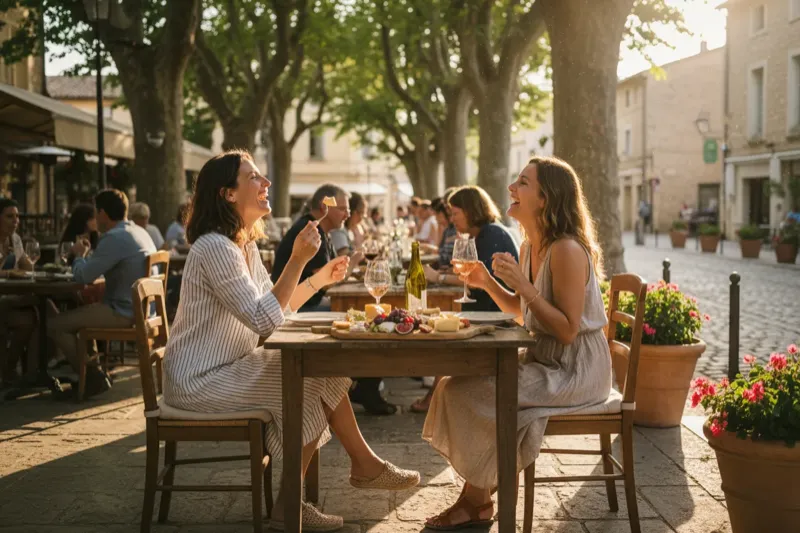
Emotional Eating vs. Pleasure Eating: Why French Women Eat Chocolate Every Day
Emotional eating and pleasure eating look the same but feel completely different. Learn the French distinction that lets you enjoy chocolate daily without guilt or weight gain.
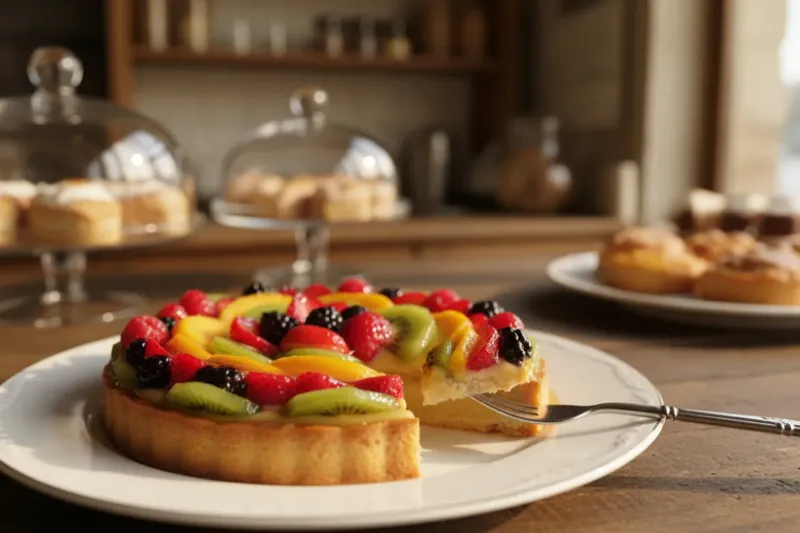
The French Dessert Secret: How to Enjoy Sweets Without Food Guilt
French women eat chocolate and pastry daily without guilt or weight gain. The secret is HOW they eat it -- the psychology of pleasure, not restriction.
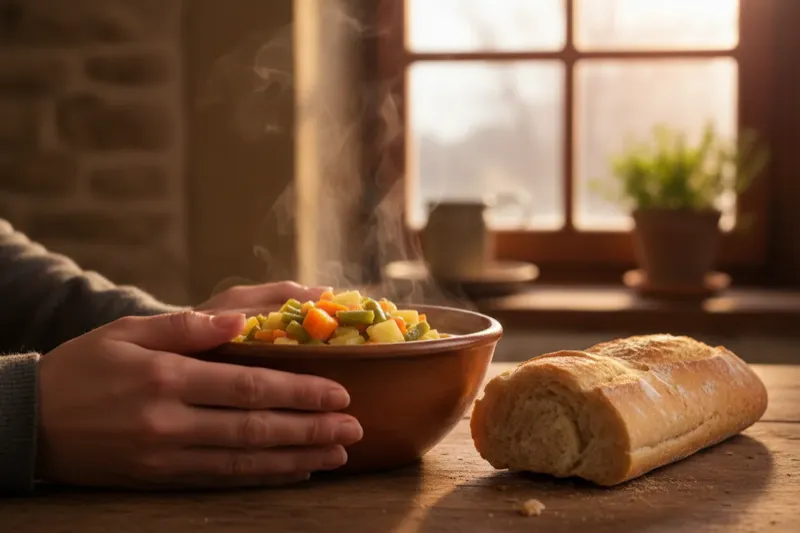
Food Noise vs. Real Hunger: How to Tell the Difference (The French Way)
Why does your brain want food when you're not hungry? Learn to distinguish food noise from real hunger using the French framework of 4 types of hunger.
Mindful Eating vs. Intuitive Eating: What French Women Have Always Known
French dining rituals are the original mindful eating. Discover how French women combine structure and intuition — no programs or workbooks needed.

How to Stop the Yo-Yo Diet Cycle: Lessons from French Women
The yo-yo diet cycle is a restriction-binge loop that French women never enter. Learn the French framework that permanently breaks the cycle without willpower.
Why French Women Don't Diet (And Still Stay Slim)
95% of diets fail within 5 years. French women never needed them. Discover why diets don't work and what the French do instead for lasting results.

Why French Women Never Count Calories (And the Science That Proves They're Right)
French women never count calories, track macros, or weigh food. The science shows their intuitive approach works better than tracking. Here's why.