French Eating Habits: The Complete Guide to How French Women Really Eat
A deep dive into the real eating habits of French women — from structured meals and no snacking to the art of savoring every bite. Learn the daily rituals behind the French Paradox.
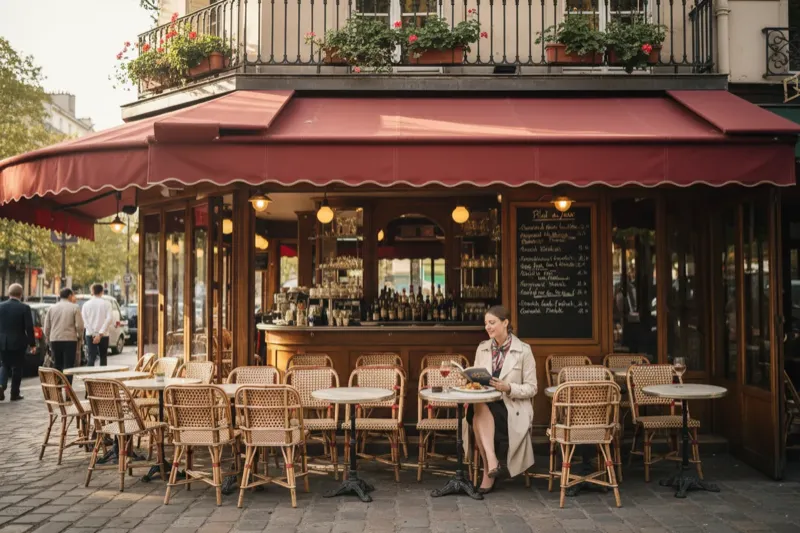
Every morning of my childhood in Lyon, my mother would tear a piece from a fresh baguette, spread it with real butter, and hand it to me with a bowl of hot chocolate. She did this without a shred of guilt. There was no label-reading, no “cheat day” negotiation, no internal math about carbs or calories. It was just breakfast.
She also ate cheese almost every day. Drank wine with dinner most nights. Enjoyed cream-based sauces on weekends. And she stayed slim her entire life.
If you grew up in America, this probably sounds impossible. Bread, butter, cheese, wine — and no weight gain? It sounds like a fairy tale, or worse, a genetic lottery that only French women won.
But it is not genetics. It is not a secret metabolism trick. It is a completely different relationship with food — one built on structure, pleasure, and trust in your own body. And after years of watching my American friends suffer through diet after diet, I want to share exactly how it works.
This guide is everything I know about how French women really eat, drawn from three decades of living it. Not the Instagram fantasy. Not the tourist version. The real, daily, sometimes messy truth of French eating habits that keep French women slim without ever dieting.
What French Women Really Eat in a Day
Let me walk you through a typical day of eating for a French woman. Not a supermodel. Not a food blogger. Just a regular woman living in France.
Breakfast (le petit-dejeuner) — around 7:30 AM. This is the lightest meal of the day. A tartine — a slice of baguette or toast with butter and jam. Maybe a croissant on the weekend. Always coffee or tea. Sometimes a small yogurt or a piece of fruit. That is it.
No protein shakes. No egg-white omelets. No acai bowls with seventeen toppings. French breakfast is intentionally small because the body does not need a huge meal first thing in the morning.
Lunch (le dejeuner) — around 12:30 PM. This is the main event. A proper, sit-down meal that lasts at least 30 minutes, often longer. It typically includes an entree (a starter — maybe a small salad or soup), a plat principal (a main course with protein and vegetables), and either cheese or dessert. Not both. One or the other.
Lunch is sacred. Offices empty. Shops close. People sit at actual tables with actual plates. This is not a sad desk salad eaten while scrolling emails. For a deeper look at the full daily rhythm, read my article on what French women eat in a day.
Le gouter — around 4:00 PM. This is the only “snack” that exists in French culture, and it is mostly for children. A piece of chocolate, a small cookie, or some fruit. Adults might have a coffee. The key point is that this is not grazing. It is a defined moment, at a defined time, and then it is over.
Dinner (le diner) — around 7:30-8:00 PM. Lighter than lunch. A soup with bread in winter. A salad with some cheese in summer. Maybe a simple omelet with herbs. A glass of wine. The principle is that your body is winding down, so the food should wind down too.
Total food consumed in a day? Probably less than what many Americans eat in a single meal at a chain restaurant. But nothing was restricted. Nothing was “off limits.” The French woman ate bread, butter, cheese, chocolate, and wine. She just ate appropriate amounts at appropriate times.
The French Meal Structure Explained
The single biggest difference between French and American eating is not what we eat. It is when and how we eat.
France operates on a three-meal structure with almost no snacking. Breakfast, lunch, dinner. That is it. The spaces between meals are meant to be empty. Your body digests, your hunger builds naturally, and by the time the next meal arrives, you are genuinely ready to eat.
This is radically different from the American pattern of constant grazing — a granola bar here, a handful of nuts there, a latte with syrup at 3 PM, crackers before dinner. In the US, many people are eating almost continuously from morning to night without ever experiencing true hunger.
In France, snacking between meals is culturally frowned upon. It is not a rule anyone consciously follows. It is just how things are. The French word for snacking — grignotage — has a mildly negative connotation. It implies a lack of self-control, or worse, a lack of something interesting to do. I wrote about this cultural norm in detail in why French women don’t snack.
The magic of this structure is that it creates natural hunger rhythms. When you eat three proper meals with nothing in between, your body learns to get hungry at meal times and satisfied after them. You stop thinking about food all day because there is nothing to decide. The next eating moment is predetermined.
Compare that to the exhausting mental load of constant food decisions: Should I eat this? Is it too early for a snack? Am I really hungry or just bored? How many calories was that? Should I skip dinner now?
French women do not have this inner dialogue. The structure removes it entirely.
Le gouter deserves a special mention. This afternoon snack, traditionally at 4 PM, is not a free-for-all. It is a cultural institution mostly designed for children coming home from school. Adults who take a gouter keep it small — a square of dark chocolate, a piece of fruit, a small biscuit. It lasts five minutes. Then it is over, and dinner is three to four hours away.
The structure also means that each meal can be genuinely satisfying. When you know you are not eating again for five hours, you give yourself permission to eat well now. A proper lunch with bread and cheese does not trigger guilt because it is the meal. There is no mental negotiation about “saving calories for later.”
Why French Women Don’t Count Calories
I did not learn what a calorie was until I was in my twenties, and only because American friends told me about it. This is not unusual. Most French women could not tell you the calorie count of a croissant. And they genuinely do not care.
This is not ignorance. It is a fundamentally different philosophy about food.
In French culture, food is assessed by taste, quality, freshness, and satisfaction — not by numerical value. When a French woman chooses what to eat, she asks herself: What do I actually want? What sounds good? What will satisfy me? She does not open an app to check if she “has room” for it.
The result is counterintuitive but backed by research: people who do not count calories often eat less than people who do. Why? Because calorie counting disconnects you from your body’s own signals. You eat because the app says you can, not because you are hungry. You stop because you hit a number, not because you are satisfied. You feel deprived all day, then binge at night.
French women eat until they are comfortably satisfied — what we call cale in French. Not stuffed. Not still hungry. Just… done. It is a subtle feeling that you can only detect when you are paying attention to your body instead of a spreadsheet. For more on this intuitive approach, see French women don’t count calories.
This trust in internal signals is taught from childhood. French children are served structured meals with no alternatives. They learn to eat what is in front of them, to taste new things, and to stop when they have had enough. No one hovers with portion measurements. No one warns them about “bad foods.” Food is food. Some of it is for every day, some of it is for special occasions, but none of it is morally charged.
By the time a French girl becomes a French woman, she has decades of practice listening to her body. She does not need an app because she already has the most sophisticated calorie-regulation system ever designed: her own hunger and satiety signals.
The Art of Eating Slowly
Time yourself at your next meal. I am serious. Set a timer and see how long it takes you to finish.
If you are like most Americans, the answer is somewhere between 7 and 15 minutes. Some people finish a full meal in under 5 minutes. In the car. Standing at the counter. Walking between meetings.
In France, a proper meal lasts a minimum of 20 to 30 minutes. Lunch at a restaurant can easily stretch to 90 minutes. Family dinners on weekends might last two hours. And no one is eating continuously for two hours — there are pauses, conversations, moments of just sitting with a glass of wine.
This is not about willpower or discipline. It is about how the meal is culturally constructed. A French meal unfolds in courses. The starter arrives. You eat it. The plate is cleared. There is a pause. The main course arrives. You eat it. Another pause. Then cheese or dessert. Each transition creates a natural break that slows everything down.
Why does speed matter? Because your brain needs approximately 20 minutes to register that your stomach is full. If you eat a massive plate in 8 minutes, you have consumed far more than you needed before your brain even gets the message. Then the fullness hits all at once, and you feel bloated, uncomfortable, and regretful.
When you eat slowly, you experience something remarkable: you get full on less food. Not because you are restricting. Not because you are exercising willpower. Simply because your brain and stomach have time to communicate.
Slow eating also transforms the experience of food. When you take a bite and actually taste it — the salt, the texture, the warmth, the interplay of flavors — you extract more pleasure from less volume. A single square of excellent dark chocolate eaten slowly is more satisfying than an entire bag of candy-coated chocolates eaten in a rush.
This is the French secret hiding in plain sight. We do not eat less because we are disciplined. We eat less because we eat slowly enough to actually enjoy the food and notice when we have had enough.
My grandmother had a phrase: On mange avec les yeux d’abord. We eat with our eyes first. Look at your food. Smell it. Appreciate the plate. Then eat. This is not pretentious. It is practical. It slows you down and shifts your attention from consuming to experiencing.
French Portion Sizes vs. American
The first time I ordered a meal in an American restaurant, I thought they had brought me a serving meant for three people. I genuinely looked around the table to see who else was supposed to share it.
The portion gap between France and America is staggering. And it is one of the most significant factors in the weight difference between the two countries. I put together a detailed comparison in French portion sizes vs. American.
Here are some concrete examples:
A croissant in Paris weighs about 50-60 grams. A croissant at an American bakery chain weighs 110-130 grams. Same food. More than double the size.
A dinner plate in France is about 9 inches in diameter. A standard American dinner plate is 11-12 inches. That two-inch difference translates to roughly 40% more surface area, and studies consistently show that people fill their plates regardless of size.
A serving of pasta in France is about 80 grams dry (roughly one cup cooked). An American restaurant serves 200-300 grams dry. That is a three-to-four-fold difference.
A glass of wine in France is about 125ml. An American “pour” is 175-250ml. Even alcohol follows the portion inflation pattern.
A coffee in France is an espresso (30ml) or a petit creme (about 150ml). An American “medium” coffee drink is 475ml, often loaded with syrups and whipped cream.
The French do not think of these as “small” portions. They think of them as normal portions. It is the American sizes that are abnormal — inflated by decades of supersizing culture and restaurant competition to offer “value.”
The critical insight is that French portions are not restrictive. They are satisfying. Because the food is high quality (real butter, fresh ingredients, proper seasoning) and eaten slowly, a smaller plate delivers genuine satisfaction. You do not finish a French meal feeling deprived. You finish feeling just right.
This is the difference between a French diet and an American diet that most people miss. It is not about willpower to eat less. It is about a food environment that naturally calibrates toward sufficiency instead of excess.
The French Paradox: Why Butter and Bread Don’t Make You Fat
The French Paradox has baffled researchers since the term was coined in the 1980s. The data is clear: French people eat more saturated fat than Americans yet have significantly lower rates of obesity and heart disease. How?
The standard American nutritional wisdom says that butter, cheese, cream, and bread should make you fat. And yet here are 67 million French people eating all of these things daily and largely staying slim. Something does not add up.
The answer, as I have been explaining throughout this guide, is that the French Paradox is not really about food. It is about eating behavior. For a full breakdown, see my article on the French Paradox explained.
Consider butter. A French woman uses real butter on her morning tartine. Maybe a tablespoon. An American “health-conscious” woman uses a butter substitute or avoids butter entirely — but then eats a giant muffin loaded with vegetable oil and sugar that contains three times the calories of that tablespoon of butter.
Consider bread. A French woman eats a piece of baguette with lunch. Fresh, crusty, made that morning from four ingredients (flour, water, salt, yeast). An American woman avoids bread entirely because “carbs are bad” — and then stress-eats a sleeve of crackers at 10 PM because she has been restricting all day.
The French approach is paradoxical only if you believe that individual foods make you fat. They do not. What makes you fat is a pattern — eating too much, too fast, too often, of foods that do not satisfy you. The French pattern protects against all of these things.
There is also a biochemical element worth noting. Real, whole foods — including full-fat dairy and fresh bread — trigger satiety hormones more effectively than processed substitutes. Your body recognizes real butter. It registers it, processes it, and sends you the “enough” signal. Ultra-processed low-fat alternatives often fail to trigger these same signals, leading you to eat more overall.
This is why French women eat bread, cheese, and wine and stay slim. Not because they have magical metabolisms. Because they eat real food in reasonable amounts and their bodies respond the way bodies are designed to respond.
Walking as the French Secret Exercise
French women do not “work out” the way American women do. There are no 5 AM boot camps. No punishing CrossFit sessions as penance for yesterday’s dessert. No “earning your food” through exercise.
The French approach to movement is radically simple: walk. Walk to the bakery. Walk to the market. Walk to the metro. Walk through the park. Walk after dinner. Just walk.
The average French woman walks between 7,000 and 10,000 steps per day as part of her normal routine — not as an exercise goal tracked by a fitness watch, but as a natural byproduct of how French cities and towns are designed. Errands are done on foot. Parking is difficult and expensive, so people walk or take public transit. Weekend leisure involves strolling, not sitting.
This low-intensity, consistent daily movement is more effective for long-term weight management than intense exercise. Research consistently shows that NEAT (non-exercise activity thermogenesis) — the calories you burn through everyday movement — has a greater impact on weight than formal exercise sessions.
A French woman who walks 8,000 steps a day, every day, for thirty years is going to be leaner than an American woman who does intense 45-minute workouts three times a week but drives everywhere and sits the rest of the day. The consistency of gentle movement beats the intensity of occasional exercise.
There is also a mental health dimension. Walking is meditative. It reduces cortisol. High cortisol promotes fat storage, especially around the midsection. So the simple act of a 20-minute walk after dinner does double duty: it burns calories and reduces the stress hormone that causes weight gain.
When I talk about how French women stay thin, walking is always part of the answer. Not because it is dramatic or exciting. Because it is sustainable, pleasant, and woven into daily life rather than bolted on as an obligation.
The Role of Pleasure in Weight Management
This is the part that shocks Americans the most. And it is the most important part of this entire guide.
Pleasure is not the enemy of weight management. It is the foundation of it.
In American diet culture, pleasure is suspect. If you are enjoying your food too much, you must be doing something wrong. Healthy food should be boring, bland, and virtuous. Dessert is a “cheat.” Wine is a “guilty pleasure.” Butter is an “indulgence.”
This framing creates a toxic cycle. You restrict pleasure, build up deprivation, eventually break and binge, feel guilty, restrict harder, break again. The cycle repeats forever. No one ever reaches the destination because the approach itself generates the problem.
French food culture takes the opposite stance. Pleasure is built into every meal, every day. There is no deprivation to recover from. There is no guilt to process. You ate chocolate today? Of course you did. It is Tuesday. You had wine with dinner? Naturally. You enjoyed a beautiful piece of Comte cheese? Why would you not?
When pleasure is normalized, something interesting happens: you stop craving it compulsively. You do not dream about chocolate because you had some yesterday and you will have some tomorrow. It is not special. It is not forbidden. It is just food, available whenever you want it. And because it is always available, you do not need to eat the whole bar “while you can.”
This is the psychological mechanism behind the so-called French Paradox. It is not that French women have more willpower. It is that they need less willpower because their relationship with food does not create the tension that requires willpower to manage.
Pleasure also slows you down. When you genuinely enjoy your food — when you savor a ripe peach, a piece of dark chocolate, a perfectly dressed salad — you eat more slowly and mindfully. You notice the texture. You appreciate the flavor. You register satisfaction sooner. All of this leads to eating less, without effort.
This does not mean “eat whatever you want in unlimited quantities.” It means eat real, beautiful, well-prepared food that you genuinely enjoy, pay attention while you eat it, and stop when you have had enough. That is the entire French approach to food in one sentence.
How to Start Eating Like a French Woman Today
You cannot transplant yourself to Paris overnight. But you can begin adopting the habits that make French eating work. Here is where to start, one step at a time.
Week 1: Establish three meals, no snacking. This is the foundation. Eat breakfast, lunch, and dinner at roughly the same times each day. Between meals, have only water, coffee, or tea. If this feels hard at first, it is because your body is accustomed to constant grazing. Give it a week. Your hunger signals will recalibrate.
Week 2: Slow down. Set a timer for 20 minutes and do not finish your meal before it goes off. Put your fork down between bites. Chew. Talk to someone. Look out the window. Do anything except shovel food in as fast as possible. You will be amazed at how much less you eat when you eat slowly.
Week 3: Upgrade your ingredients. Buy real butter instead of margarine. Get bread from a bakery instead of a plastic bag. Choose one beautiful piece of cheese instead of a block of processed slices. Eat a smaller amount of something excellent instead of a large amount of something mediocre. Quality replaces quantity naturally.
Week 4: Add a daily walk. Not a workout. A walk. Twenty to thirty minutes after dinner. No fitness tracker needed. No heart rate zone to hit. Just walk. Look at the trees. Breathe the air. Let your food digest. This single habit will change your body and your mind.
Week 5: Remove the moral judgments. Stop calling food “good” or “bad.” Stop calling yourself “good” or “bad” for eating it. Food is food. Some of it nourishes your body more directly. Some of it nourishes your soul. Both are necessary. Both are valid.
The deeper shift takes longer. Undoing years of diet culture programming does not happen in five weeks. But these five steps will give you a visceral experience of a different way of eating — one where food is a source of pleasure rather than anxiety, where your body is trusted rather than overridden, and where “discipline” is replaced by structure and enjoyment.
If this resonates with you, I put together a free guide that goes deeper into the specific French habits you can adopt starting today. It is called “The 7 Habits That Naturally Trigger GLP-1” and you can download it here for free.
This guide is part of the French Eating Habits series. For more, explore these related articles:
- What French Women Eat in a Day — a detailed look at real daily meals
- Why French Women Don’t Snack — the cultural roots of structured eating
- French Portion Sizes vs. American — side-by-side comparisons that will surprise you
- The French Paradox Explained — the science behind butter, bread, and slim waistlines
- How French Women Stay Thin — the full picture of lifestyle, not just diet
- French Women Don’t Count Calories — why intuitive eating is the French default
- French School Lunch vs. American — how these habits are taught from childhood
Ready to start your French transformation?
Get my free guide: "The 7 Habits That Naturally Trigger GLP-1"
Frequently Asked Questions
What do French women eat in a day?
A typical French woman's day includes a light breakfast (coffee with bread, butter, and jam), a full sit-down lunch with a starter, main course, and cheese or fruit, a small afternoon snack (goûter) only if needed, and a lighter dinner. No snacking between meals.
Why don't French women get fat?
French women stay slim through portion control (smaller plates, no supersizing), structured meal times, slow eating, walking as daily transportation, prioritizing food quality over quantity, and a cultural attitude that treats food as pleasure rather than fuel to be optimized.
Do French women count calories?
No. Calorie counting is virtually unknown in French food culture. Instead, French women rely on internal cues — eating when hungry, stopping when satisfied (not stuffed), and focusing on the sensory experience of food rather than its nutritional metrics.
What is the French Paradox?
The French Paradox refers to the observation that French people have relatively low rates of heart disease and obesity despite consuming a diet rich in saturated fat from butter, cheese, and cream. The explanation lies not in what they eat, but in how they eat — smaller portions, slower meals, and structured eating times.
Related Articles
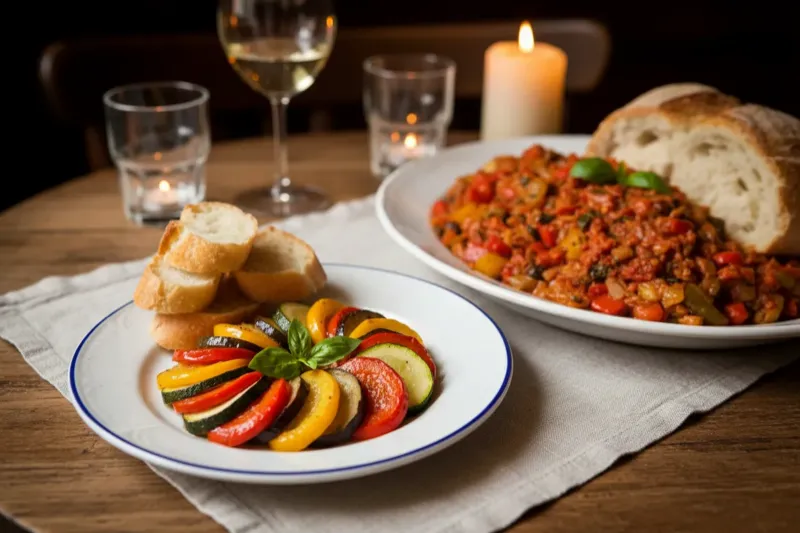
French Diet vs American Diet: Why the French Stay Thin Eating Butter, Bread, and Wine
French diet vs American diet compared: portions, meals, snacking, food quality, and movement. Why the French stay lean eating foods Americans fear.
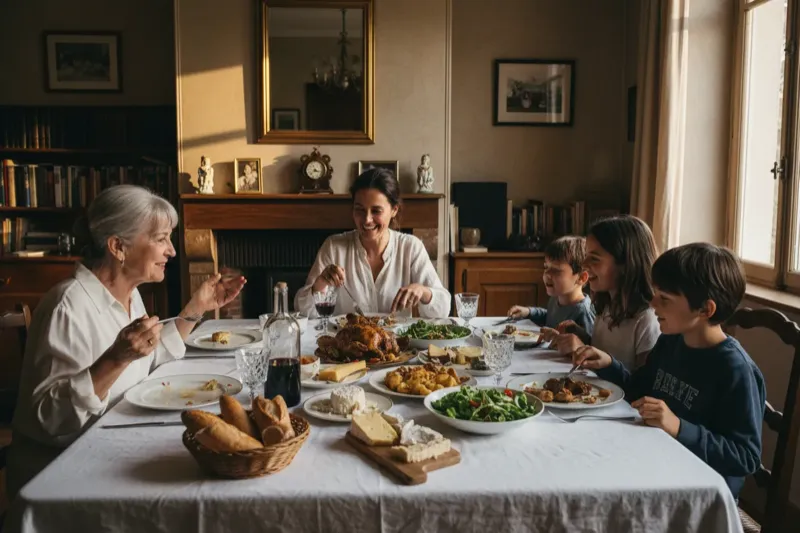
The French Meal Structure That Eliminates Snacking and Cravings
The French meal structure -- entrée, plat, fromage, dessert -- is a natural portion control system. Learn why it eliminates snacking and cravings.
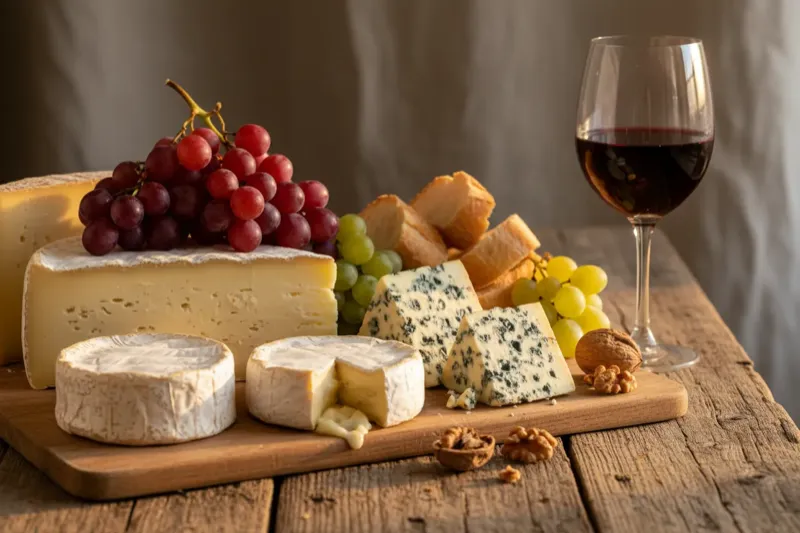
The French Paradox, Explained: Why French Women Eat Butter, Cheese, and Wine — And Stay Slim
The French Paradox isn't a paradox — it's a lifestyle system. Updated science explains why butter, cheese, and wine don't make French women fat.
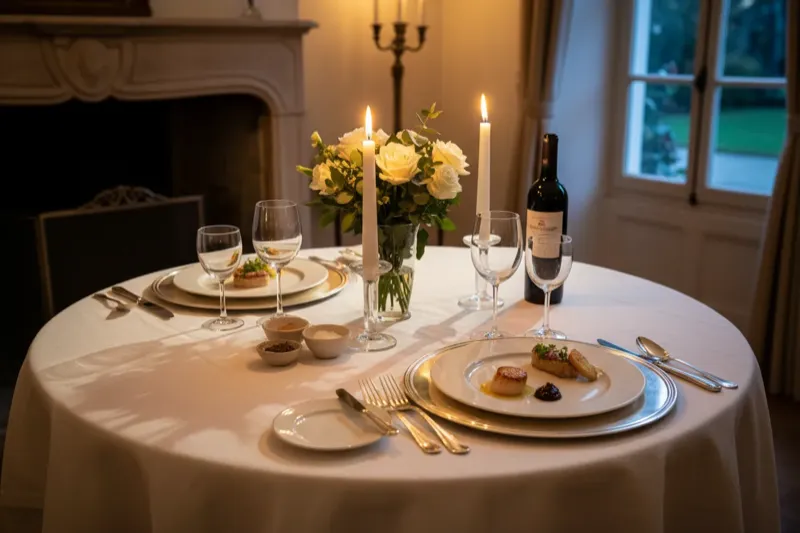
The French Weight Loss Trick That Has Nothing to Do With Dieting
The French weight loss trick isn't a hack or a supplement. It's a pleasure-based relationship with food that naturally regulates your appetite. Here's exactly how.
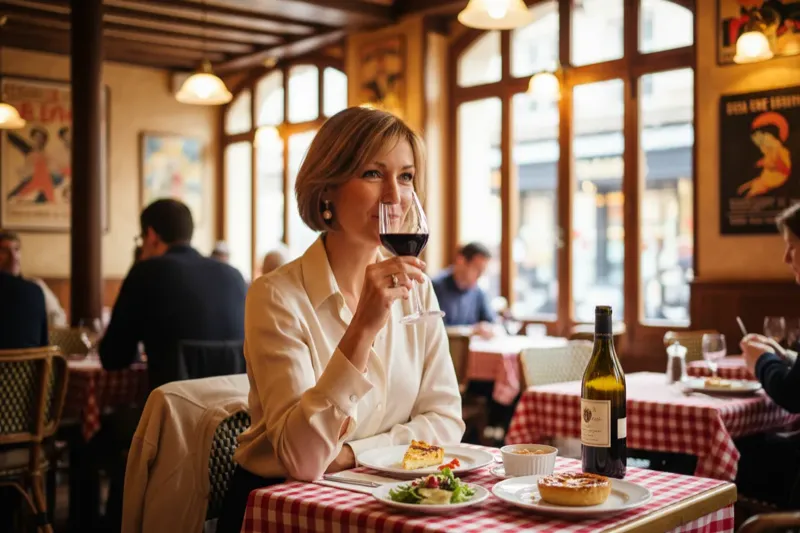
How French Women Stay Slim Without Dieting: The Complete Guide
Discover why French women have 3x lower obesity rates without dieting. The complete guide to French meal structure, portion philosophy, and pleasure-based eating.

The Science of Slow Eating: How the French Lunch Hour Keeps You Thin
Eating slowly boosts satiety hormones by 30%. The science behind the French lunch hour and how to adopt slow eating for natural weight loss.
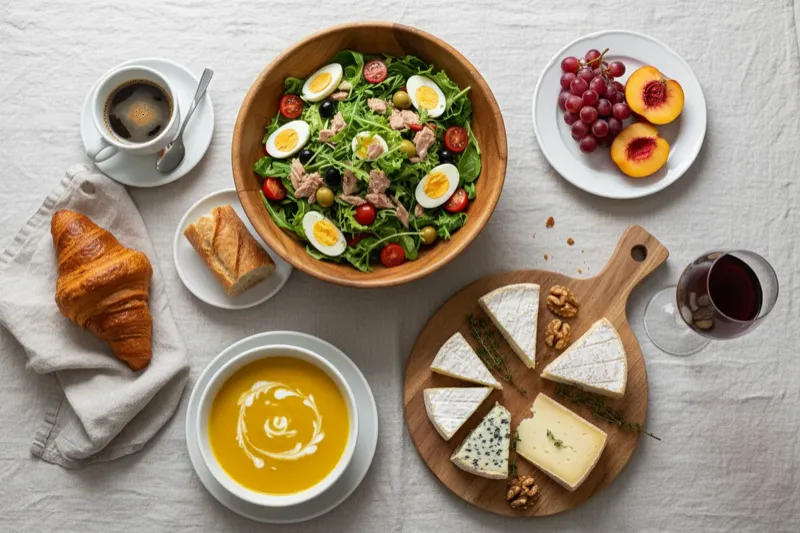
What French Women Really Eat in a Day (No Calorie Counting Required)
A real day of eating in a French woman's life -- breakfast, lunch, gouter, dinner. No tracking, no restriction, just beautiful food and natural satisfaction.