The French Alternative to Ozempic: How French Women Stay Slim Without Medication
Discover the natural French approach to appetite control and weight management that delivers Ozempic-like results without the $1,200/month price tag or side effects.
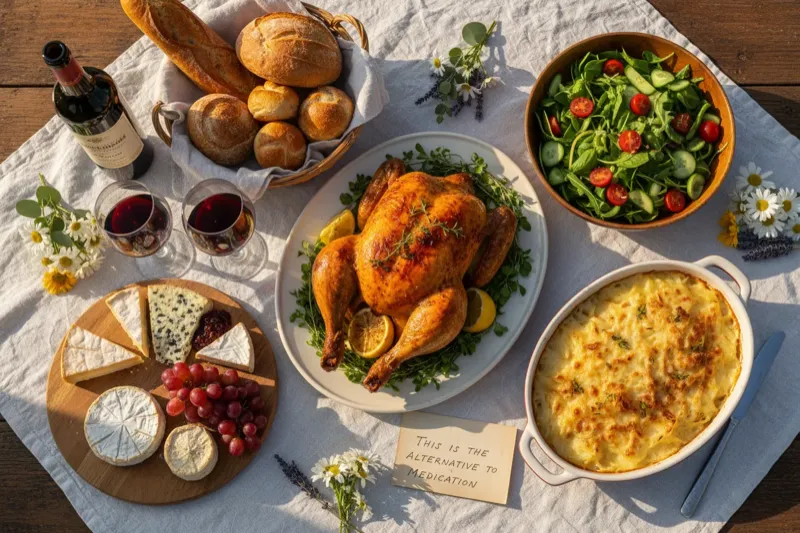
Medical Disclaimer
This content is for educational purposes only and is not medical advice. Ozempic (semaglutide) is a prescription medication. Consult your healthcare provider before making any changes to your medication or diet.
The French alternative to Ozempic is not a pill, a shot, or a prescription. It is a way of living that has kept French women at healthy weights for generations — long before anyone had heard of semaglutide. And right now, as millions of American women pay $1,200 a month for a weekly injection that may or may not be covered by insurance, the French approach is sitting there, free, waiting to be discovered.
I am Marion. I grew up in Lyon, France, surrounded by women who ate croissants, drank wine, savored cheese at every dinner, and never once stepped on a scale with dread. When I moved to the United States, I was stunned. Not by the food — by the fear. Fear of bread. Fear of butter. Fear of enjoying a meal without calculating its caloric cost.
And now I watch the same women who feared butter line up for a diabetes drug that costs more per month than a flight to Paris. A drug that works beautifully — until you stop taking it. A drug that suppresses your appetite so effectively that food loses its taste, its pleasure, its meaning.
There is another way. It does not require a prescription. It does not cost $1,200 a month. It does not make your face hollow or your hair fall out. And it has been working, quietly, in a country where the obesity rate is 17% compared to America’s 42%.
This guide will show you exactly what that way looks like — and how to start living it today.
Why French Women Don’t Need Ozempic
Let me tell you something that will sound almost rude in its simplicity: French women do not need Ozempic because they never broke their relationship with food in the first place.
In America, food is a problem to be solved. Every decade brings a new villain — fat in the ’90s, carbs in the 2000s, sugar in the 2010s, and now appetite itself in the 2020s. Ozempic is the logical conclusion of a culture that believes the only way to eat less is to chemically remove the desire to eat.
In France, food is not a problem. It is one of life’s great pleasures, right alongside love and conversation and a good walk along the river. French women eat with pleasure, and that pleasure is precisely what keeps them slim.
This is not magical thinking. It is biology.
When you eat slowly, savoring each bite, your body has time to produce the hormones that tell your brain you are satisfied. When you eat in a panic — standing at the counter, scrolling your phone, shoveling forkfuls between meetings — those hormones never get the chance to do their work.
French women are not more disciplined than American women. They are not genetically blessed. They are simply operating inside a food culture that works with the body’s natural appetite regulation instead of against it.
The irony is thick: Ozempic mimics a hormone your body already produces. The French approach helps your body produce it naturally. One costs $1,200 a month. The other costs nothing.
The Science Behind the French Approach: Natural GLP-1 Production
Here is where the story gets fascinating, because the science completely validates what French grandmothers have known for centuries.
GLP-1 (glucagon-like peptide-1) is the hormone Ozempic is designed to mimic. Your body produces it naturally in your gut every time you eat. Its job is elegant: it tells your brain you are full, slows the emptying of your stomach, and helps regulate blood sugar.
Ozempic is a synthetic version of GLP-1 that lasts much longer than the natural hormone. That is why it works. But here is what the pharmaceutical companies do not emphasize: you can significantly increase your body’s own GLP-1 production through specific eating behaviors and foods.
Research published in The Journal of Clinical Endocrinology & Metabolism has shown that the speed at which you eat directly affects GLP-1 release. Eating slowly — taking 20 to 30 minutes for a meal instead of 7 — leads to substantially higher GLP-1 levels. This is exactly how French women eat. Every meal. Every day. Without thinking about it.
A study in Appetite found that fiber-rich foods stimulate GLP-1 production by up to 30% more than processed alternatives. The traditional French diet is built on vegetables, lentils, whole grains, and fruits — all naturally rich in the fibers that trigger GLP-1.
Other research has shown that olive oil, fermented foods, and protein consumed early in a meal all boost natural GLP-1 secretion. Walk into any French kitchen and you will find all three: a salad dressed in olive oil to start, a cheese course with naturally fermented fromage, and a protein-centered main dish.
The French did not design their eating culture around GLP-1 research. They did not need to. They built a way of eating that happens to optimize every single pathway the body uses to regulate appetite naturally. For a deeper look at the specific foods involved, read our guide on foods that naturally boost GLP-1 production.
The science is not saying French eating is “kind of like” Ozempic. It is saying that French eating habits activate the exact same biological mechanism — just through behavior and food instead of a syringe.
7 French Habits That Work Like Natural Ozempic
These are not vague lifestyle suggestions. These are specific, concrete habits practiced daily by French women — each one backed by research showing it enhances natural appetite regulation. Think of them as your natural Ozempic protocol.
1. The 30-Minute Meal
French women do not eat fast. A weekday lunch in France is 30 to 45 minutes. Dinner often stretches to an hour or more. This is not indulgence — it is biology.
Eating slowly gives your gut time to release GLP-1 and other satiety hormones. Studies show that fast eaters produce significantly less GLP-1 than slow eaters consuming the exact same food. Same calories, same nutrients, completely different hormonal response.
Put your fork down between bites. Chew thoroughly. Talk to someone. The French consider eating alone in front of a screen slightly tragic — and the science agrees with them. For more on how this single habit changes your appetite hormones, see our article on slow eating and GLP-1 production.
2. The Structured Three-Meal Day
In France, there is breakfast, lunch, and dinner. Perhaps a small gouter (afternoon snack) around 4 PM, usually for children. That is it. No grazing. No snack drawer. No protein bar at 10 AM and another at 3 PM.
This matters enormously for appetite regulation. When you eat every two to three hours, your body never fully completes a digestive cycle. Insulin stays elevated. GLP-1 never peaks properly. Your hunger and fullness signals become muddled, like a radio stuck between stations.
Three structured meals with space between them allows your hormones to cycle properly — rising with meals, falling between them, giving your brain clear signals about when you are truly hungry and when you are truly full.
3. The Salad Starter
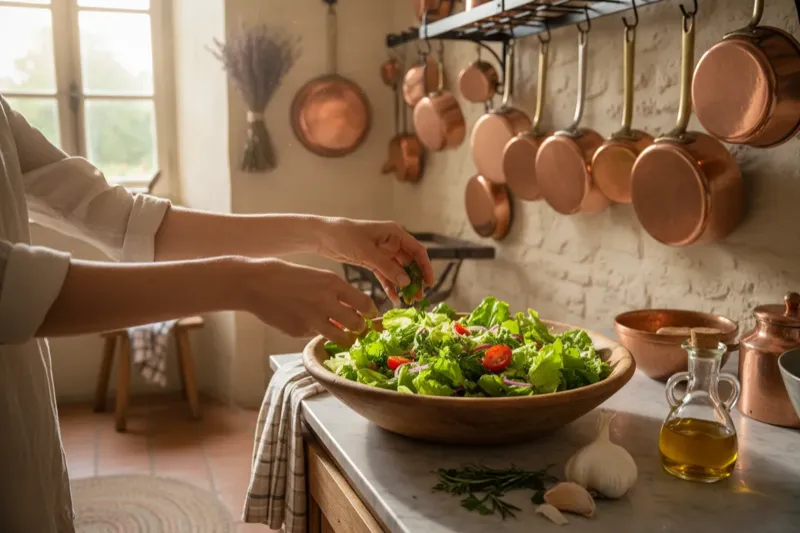
Nearly every French lunch and dinner begins with a small salad or vegetable dish, dressed in olive oil and vinegar. This is not a health trend. It is a tradition so old no one remembers who started it.
But the science is striking: starting a meal with fiber and olive oil primes your gut to produce more GLP-1 for the entire meal. A study in Diabetes Care found that consuming vegetables before carbohydrates reduced post-meal blood sugar by 37% and increased GLP-1 secretion.
The French salad starter is not about filling up on low-calorie food. It is about telling your gut to turn on its appetite-regulation machinery before the main course even arrives.
4. The Daily Walk
French women walk. Not power-walk in matching athleisure. Not track their steps obsessively. They simply walk — to the bakery, to the market, along the Seine, through the park after dinner.
This gentle daily movement has a profound effect on GLP-1. Research shows that moderate walking after meals enhances GLP-1 production and improves insulin sensitivity. You do not need a gym membership or a HIIT class. You need a pair of comfortable shoes and a willingness to leave the car at home.
The average French woman walks 30 to 60 minutes per day, spread across the ordinary activities of living. It is not exercise. It is transportation. And it is one of the most underrated components of the French approach to weight management.
5. Real Food, Not Processed Food
This one sounds obvious, but the gap between French and American food processing is staggering. The average American gets 60% of daily calories from ultra-processed foods. In France, that number is closer to 30%.
Ultra-processed foods are engineered to bypass your body’s natural satiety signals. They are designed to be eaten fast, in large quantities, without satisfaction. They suppress GLP-1 production while simultaneously making you crave more.
French women eat butter, cream, cheese, bread — foods Americans consider “bad.” But these are real foods, made from real ingredients, that interact normally with your digestive system. Your body knows what to do with butter. It has no idea what to do with hydrogenated soybean oil and maltodextrin.
The shift from processed to real food alone can transform your appetite regulation. For specifics on which French foods have the strongest impact, read our guide on natural appetite suppressants the French way.
6. Pleasure Without Guilt
This is the habit Americans find hardest to adopt, and it may be the most important one.
French women enjoy food without guilt. They eat a square of dark chocolate after dinner and feel satisfied. They drink a glass of wine with lunch and do not spend the afternoon calculating how many extra minutes on the treadmill it will cost them.
Why does this matter for appetite? Because guilt and anxiety around food trigger cortisol, the stress hormone. Elevated cortisol increases appetite, promotes fat storage (especially around the midsection), and interferes with GLP-1 signaling. The stress of worrying about what you ate can literally make you hungrier than the food itself.
When you eat with pleasure and without guilt, your cortisol stays low, your GLP-1 functions normally, and your brain receives accurate signals about satisfaction. The French do not eat less because they restrict more. They eat less because they enjoy more.
7. Small Portions, Beautiful Presentation
A French dessert is three perfect bites on a beautiful plate. An American dessert is a slab the size of a paperback novel served on a platter.
Portion size in France is naturally smaller — not because of willpower, but because of culture. Plates are smaller. Servings are designed for satisfaction, not for stuffing. And the food is presented beautifully, which slows you down and makes each bite feel more significant.
Research on portion size is unambiguous: people eat more when given more, regardless of hunger. The French food culture simply gives less to begin with — but makes every bite count. This is not deprivation. It is curation.
What Happens When You Stop Ozempic vs. the French Way
This is the question no one wants to ask, but everyone needs to hear the answer to.
When you stop taking Ozempic, the weight comes back. A landmark study published in Diabetes, Obesity and Metabolism found that participants regained approximately two-thirds of their lost weight within one year of discontinuing semaglutide. Their appetite returned to pre-treatment levels within weeks.
This is not a flaw in the drug. It is the nature of the drug. Ozempic does not teach your body anything. It overrides your natural appetite system with a synthetic hormone. When you remove the synthetic hormone, your natural system — which has not changed at all — takes back over. And it takes over hungry.
The French approach works differently because it changes the system itself.
When you spend six months eating slowly, your stomach adjusts to smaller portions. Your gut microbiome shifts toward bacteria that produce more natural GLP-1. Your brain recalibrates its hunger and fullness signals. Your cortisol drops as guilt around food dissolves.
These changes persist because they are structural, not chemical. You do not “stop” the French approach the way you stop a medication. It becomes how you eat, how you live, how you relate to food. There is nothing to quit because there is nothing artificial to maintain.
For the full picture of what Ozempic withdrawal looks like, and how to protect yourself, read our article on what happens when you stop Ozempic. If you are currently on Ozempic and considering a transition, our quit Ozempic plan provides a step-by-step framework.
The French Meal Structure: Breakfast, Lunch, Dinner
Let me walk you through what an actual day of eating looks like in France. Not a “French diet plan” — just a normal Tuesday.
Le Petit Dejeuner (Breakfast)
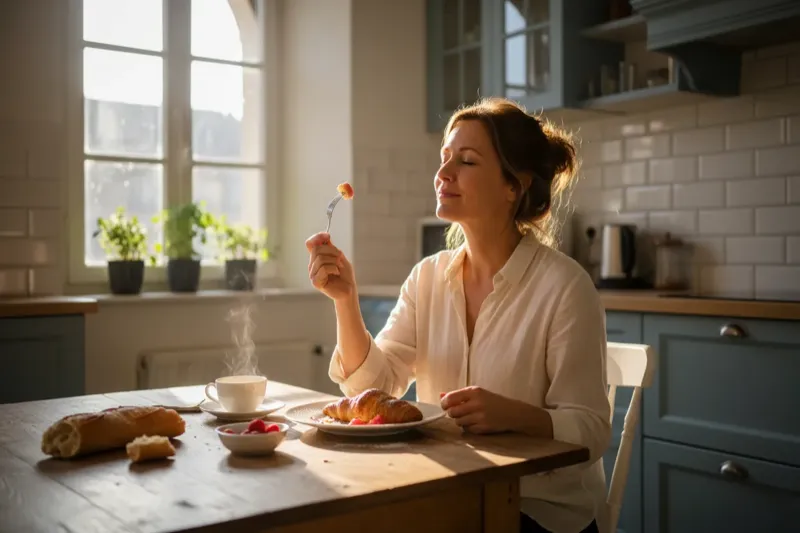
French breakfast is light. A tartine — a slice of good bread with butter and jam. A bowl of coffee with hot milk, or tea. Perhaps a piece of fruit or a small yogurt. That is all.
There is no egg-white omelet. No protein shake. No acai bowl with seventeen toppings. French breakfast is simple, satisfying, and small. It provides enough energy to begin the day without triggering the kind of insulin spike that leads to a 10:30 AM crash and craving.
The simplicity is the point. Your digestive system is just waking up. A gentle breakfast respects that. For specific breakfast strategies that control appetite all day long, see our guide on French breakfast for appetite control.
Le Dejeuner (Lunch)
Lunch is the main meal in France. It is eaten between noon and 1:30 PM, seated, often with colleagues or family. A typical lunch:
- A small salad or vegetable soup to start
- A main course with protein, vegetables, and a starch (often bread)
- A small piece of cheese or a piece of fruit
- An espresso
This meal is substantial. French women do not eat sad desk salads for lunch. They eat real food, enough to feel genuinely satisfied, and then they do not eat again until dinner — usually around 7:30 or 8 PM.
The key is the structure: starter, main, ending. This three-part rhythm naturally slows the meal down and gives your gut time to produce GLP-1 throughout the eating experience. Each course acts as a check-in point — am I still hungry? Do I need the cheese course, or am I satisfied?
Le Diner (Dinner)
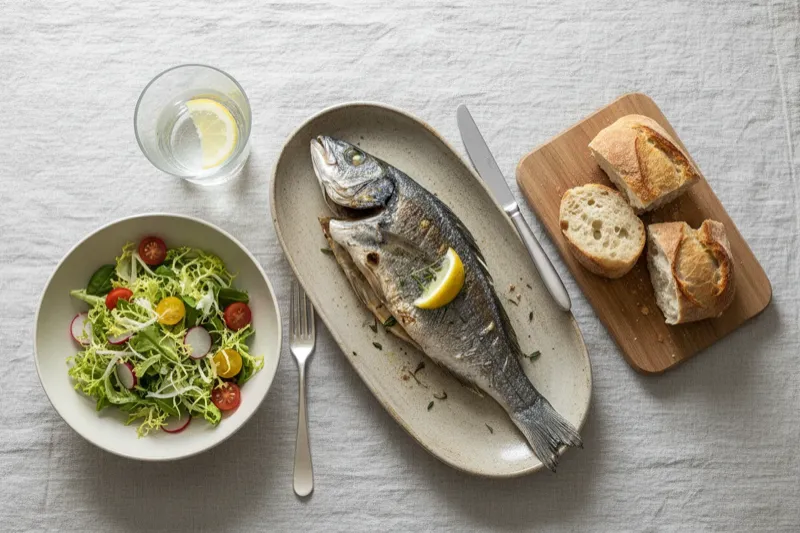
Dinner in France is lighter than lunch. Often a soup, a simple fish or vegetable dish, bread, and perhaps a yogurt or small dessert. It is eaten early enough — 7:30 to 8:30 PM — to allow full digestion before sleep.
No French woman eats a 1,200-calorie dinner at 9 PM and then wonders why she cannot sleep. The lighter evening meal respects the body’s circadian rhythm. Your digestive system is winding down, your insulin sensitivity is dropping, and your body is preparing for rest. A light dinner works with that rhythm rather than against it.
What is Missing: The Snacks
Notice what is absent from this day. No mid-morning snack. No afternoon grazing. No post-dinner chips in front of the television.
The spaces between meals are not a hardship in France. They are simply normal. And in those spaces, your body does extraordinary things: it completes digestion, processes insulin, burns stored energy, and resets its hunger signals for the next meal.
American snack culture has convinced women that going three hours without eating is dangerous. It is not. It is how the human body was designed to work. French women prove it every single day.
Foods French Women Eat That Naturally Suppress Appetite
You do not need to move to France to eat like a French woman. You need to understand which foods — many of them available at any American grocery store — naturally support your body’s appetite regulation. Here are the staples of French kitchens that double as natural appetite suppressants.
Olive oil. Used in nearly every salad, every vinaigrette, every vegetable dish. Research shows olive oil stimulates GLP-1 production and promotes satiety. French women use it generously and without guilt.
Lentils and legumes. Lentil soup, lentil salad, white beans with lamb — pulses are a staple of French home cooking. They are among the most powerful natural GLP-1 stimulators thanks to their combination of fiber and protein.
Fermented dairy. Yogurt, fromage blanc, aged cheeses. The probiotics in fermented dairy support a gut microbiome that produces more appetite-regulating hormones. A French woman without her evening yogurt is like an American without her morning coffee — unthinkable.
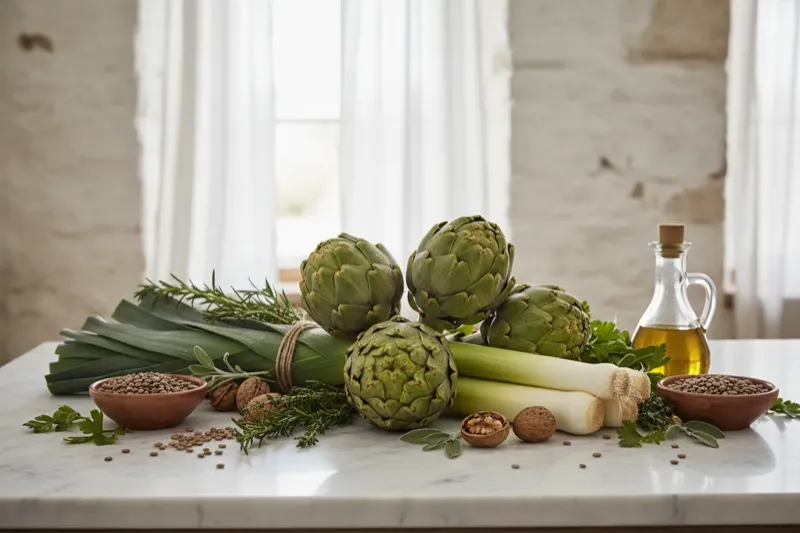
Leeks, artichokes, and bitter greens. The French adore vegetables Americans ignore. Leeks are rich in prebiotic fiber that feeds GLP-1-producing gut bacteria. Artichokes contain inulin, one of the most potent prebiotics known. Endive, radicchio, and arugula stimulate digestive enzymes that improve satiety signaling.
Dark chocolate. A square or two after dinner, savored slowly. Dark chocolate (70%+) contains compounds that slow gastric emptying — the same mechanism Ozempic uses. But instead of a side effect, it is a pleasure.
Wine in moderation. A glass of red wine with dinner is standard in France. Moderate wine consumption has been associated with improved insulin sensitivity. The key word is moderate — one glass, with food, savored. Not a bottle on the couch.
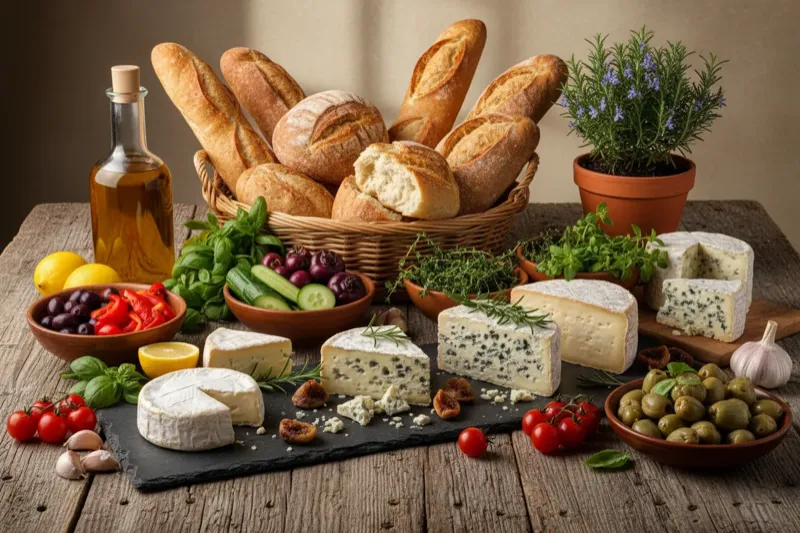
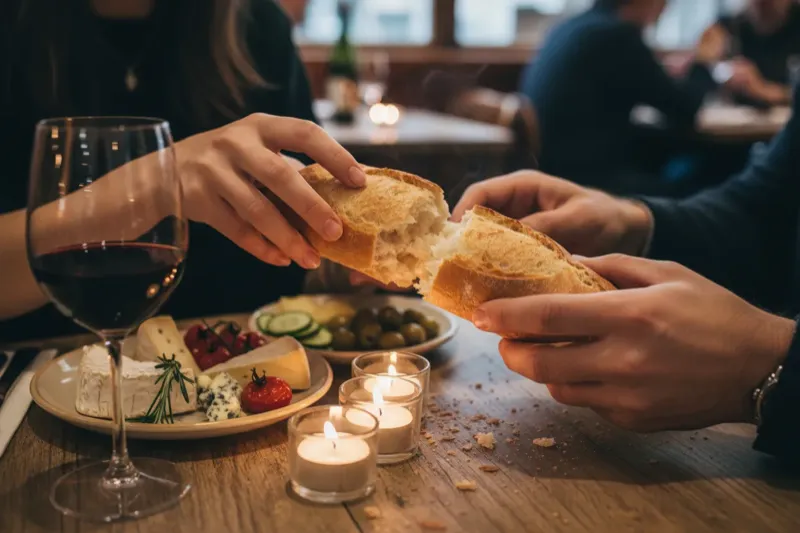
Good bread. Real French bread contains flour, water, salt, and yeast. Nothing else. It has a high glycemic index but is always eaten with fat (butter, olive oil, cheese) and as part of a complete meal, which dramatically blunts the blood sugar response. The slow fermentation process in traditional French bread also creates compounds that support gut health.
Soups. French women eat soup constantly, especially in cooler months. Research shows that consuming calories in soup form leads to greater satiety than consuming the same ingredients in solid form. A bowl of leek and potato soup before dinner is one of the most effective natural appetite suppressants you can find.
For a comprehensive list of GLP-1-boosting foods and how to incorporate them into your meals, explore our detailed guide on foods that boost GLP-1 naturally.
The Real Cost: Ozempic vs. the French Approach
Let’s talk about money, because the financial reality of Ozempic is something the glossy before-and-after photos do not show you.
Ozempic costs between $900 and $1,350 per month without insurance. Even with insurance, copays can run $25 to $500 monthly, and many plans are dropping or limiting coverage as demand explodes. Some women pay full price because their BMI does not qualify for insurance coverage, or because they are using it off-label for weight loss rather than diabetes.
Over one year, that is $10,800 to $16,200 — roughly the cost of a used car, a semester of community college, or two weeks in Paris.
Over five years — and the current medical guidance suggests Ozempic may need to be taken indefinitely to maintain results — that is $54,000 to $81,000.
Now add the hidden costs: blood work every three to six months. Doctor’s visits for prescription renewals. Over-the-counter remedies for side effects — nausea medication, laxatives, heartburn treatments. Time off work for the days the side effects hit hardest.
The French approach costs nothing.
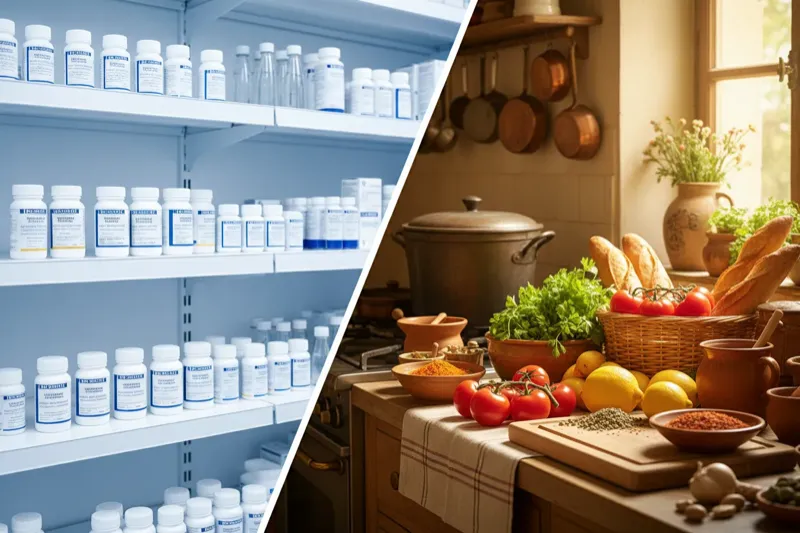
There is no subscription. No prescription. No copay. No pharmacy visit. The “equipment” is a table, a chair, a plate, and a willingness to sit down and eat without rushing. The foods involved — vegetables, olive oil, lentils, yogurt, bread, cheese — are everyday groceries. In fact, because the French approach emphasizes quality over quantity, many women find their grocery bills actually decrease when they stop buying processed snacks, protein bars, meal replacement shakes, and the other expensive accessories of American diet culture.
For a side-by-side breakdown of both approaches across twelve dimensions, see our complete Ozempic vs. French diet comparison.
The Side Effect Question
This matters. It matters a lot.
Ozempic’s known side effects include: nausea (affecting up to 44% of users), vomiting, diarrhea, constipation, stomach pain, hair loss, muscle loss, and a gaunt facial appearance so common it has earned its own name — “Ozempic face.” More serious but rarer risks include pancreatitis, gallbladder problems, and potential thyroid concerns.
Many women accept these side effects because the alternative — the endless cycle of dieting and regaining — feels worse. And I understand that. I truly do. The desperation that leads someone to accept nausea as a daily companion is the desperation of a woman who has been failed by every diet she has ever tried.
But the French approach has no side effects. None. Because it is not a drug. It is a way of eating that your body was designed for. If anything, the “side effects” are positive: better digestion, clearer skin, more energy, improved sleep, a healthier relationship with food, and the quiet confidence that comes from knowing your wellbeing does not depend on a monthly injection.
If you are concerned about specific side effects, our article on Ozempic side effects and alternatives covers what to watch for and how to transition safely. And if “Ozempic face” is a concern, learn how French women avoid this problem entirely.
How to Start the French Alternative Today
You do not need to overhaul your entire life. You do not need to move to Paris. You do not need to speak French or buy a beret. You need to start with one habit and build from there.
Week 1: Slow Down
For your first week, change nothing about what you eat. Change only how fast you eat it.
Set a timer for 20 minutes at dinner. Do not finish before the timer goes off. Put your fork down between bites. Chew each bite 15 to 20 times. If you finish too fast, sit with your plate and wait. Drink water. Breathe.
This single change — eating at a pace that allows GLP-1 to do its work — can reduce how much you eat by 15 to 20% without any feeling of deprivation. You will be amazed at how much less food it takes to feel genuinely satisfied when you give your body time to register it.
Week 2: Add the Starter
Begin every lunch and dinner with a small salad or a cup of soup. Dress the salad with olive oil and vinegar. Make the soup with vegetables — leek and potato, carrot and ginger, whatever you enjoy.
This starter course primes your GLP-1 production for the entire meal. It also adds a natural pause between sitting down and eating your main course, which further slows the meal.
Week 3: Eliminate Snacking
This will feel radical. It is not. It is how most of the world eats.
Stop eating between meals. If you get hungry at 3 PM, drink a glass of water or a cup of tea and wait for dinner. Your body is not starving. It is just accustomed to constant grazing. Within a few days, the between-meal hunger will fade as your hormones recalibrate.
If you need support during this transition, a small piece of dark chocolate or a few almonds at 4 PM is acceptable — this is the French gouter, and it is the only sanctioned between-meal eating.
Week 4: Upgrade Your Ingredients
Start replacing processed foods with real ones. Buy real butter instead of margarine. Use olive oil instead of vegetable oil. Choose bread from a bakery instead of a bag. Buy yogurt with five ingredients instead of fifteen.
You do not need to spend more money. You may need to spend more time, especially at first. But the act of choosing real ingredients is itself a form of the mindfulness that makes the French approach work.
Beyond Week 4: Build the Lifestyle
Over the following months, continue adding French habits one at a time. Start walking more. Make lunch your bigger meal and dinner lighter. Learn to cook simple French dishes — not elaborate restaurant food, but the everyday home cooking that French women actually eat. Embrace pleasure at the table. Stop counting calories. Start tasting your food.
The transformation is gradual. And that is exactly why it lasts. Unlike Ozempic, which works immediately and stops working immediately, the French approach builds slowly and sustains indefinitely. There is no “stopping” because there is nothing artificial to stop. You are simply becoming someone who eats well.
For a more detailed transition plan, especially if you are coming off Ozempic, see our quit Ozempic plan and our guide on preventing weight regain after Ozempic.
Your Free Guide: The French Appetite Reset
If this resonates with you — if you are tired of paying $1,200 a month to suppress an appetite that was never the real problem — I have written something for you.
The French Appetite Reset is a free guide that distills the core principles of the French approach into an actionable plan you can start this week. It covers the specific foods, the meal structure, the habits, and the mindset shifts that French women absorb from childhood — translated for American women who are ready for something that actually lasts.
No prescription required. No side effects. No monthly fee.
Just a different way of eating — the way women in France have eaten for centuries — that happens to do naturally what Ozempic does with a needle.
Download your free copy here and begin your French Appetite Reset today.
Marion is the founder of French Girl Diet, helping American women discover the French approach to eating well, living well, and maintaining a healthy weight without medication or restriction. Her work bridges the gap between French food culture and modern nutritional science.
Ready to start your French transformation?
Get my free guide: "The 7 Habits That Naturally Trigger GLP-1"
Frequently Asked Questions
Is there a natural alternative to Ozempic?
Yes. French women have maintained healthy weights for centuries using specific eating habits that naturally regulate appetite hormones including GLP-1 — the same hormone Ozempic mimics. These include slow, mindful eating, structured meal timing, and specific foods rich in fiber and healthy fats.
How do French women stay slim without dieting?
French women stay slim through a combination of structured meals (no snacking), slow eating (20-30 minutes per meal), high-quality ingredients over quantity, daily walking, and a cultural relationship with food based on pleasure rather than restriction.
Can you boost GLP-1 naturally without medication?
Research shows that certain eating behaviors — including eating slowly, consuming fiber-rich foods, olive oil, fermented foods, and protein at meals — can naturally stimulate GLP-1 production. These are core elements of the traditional French diet.
What happens when you stop taking Ozempic?
Studies show that most people regain two-thirds of lost weight within a year of stopping Ozempic, because the drug doesn't teach sustainable eating habits. The French approach focuses on building lasting habits that maintain results without ongoing medication.
How much does Ozempic cost compared to the French approach?
Ozempic costs $900-$1,350 per month without insurance. The French approach costs nothing — it's a set of eating habits and lifestyle practices anyone can adopt. The food itself may actually cost less, as the French emphasize quality over quantity.
Related Articles
Berberine vs the French Diet: Which Is the Real 'Nature's Ozempic'?
Berberine went viral as 'nature's Ozempic' -- but does it actually work like semaglutide? Compare berberine supplements to the French lifestyle approach for natural appetite control.
The French Alternative to Ozempic: How French Women Control Appetite Without Medication
French women have controlled appetite naturally for centuries. Discover the lifestyle science calls 'the original GLP-1 system' — no prescription needed.
How to Quiet Food Noise Naturally: The French Woman's Secret
Discover how French women silence food noise without medication. Learn the natural eating rituals that stop constant food thoughts — no Ozempic required.
The $12,000/Year Question: What If You Didn't Need Ozempic?
Ozempic costs $1,000/month with no end date. Discover the French lifestyle approach that naturally controls appetite for free — no needles, no nausea, no co-pay.

Ozempic Face: How French Women Avoid It With Food and Skincare
Ozempic face ages you by destroying facial fat. French women lose weight naturally while keeping their faces full and glowing -- with food and skincare.

Life After Ozempic: The French Approach to Keeping Weight Off Forever
2/3 of Ozempic users regain weight after stopping. The French eating system gives you a natural 'soft landing' to maintain results without the prescription.
The Ozempic Trap: Why 2/3 of Users Regain Weight (And What French Women Do Instead)
Studies show 67% of Ozempic users regain weight after stopping. Discover why this happens biologically and how the French lifestyle prevents the cycle.

Ozempic Side Effects Women Should Know About (And a French Alternative)
Nausea, hair loss, muscle loss, 'Ozempic face' -- the side effects women experience on semaglutide are real. Discover the French lifestyle alternative with zero side effects.
Ozempic Withdrawal: What No One Tells You (And the French Exit Strategy)
Stopping Ozempic brings withdrawal symptoms no one warns you about — rebound hunger, weight regain, emotional changes. The French lifestyle approach offers a gentle off-ramp.
Ozempic vs Wegovy vs Mounjaro: Why None of Them Solve the Real Problem
Ozempic, Wegovy, and Mounjaro suppress appetite but none change your relationship with food. Compare all three plus the French alternative.
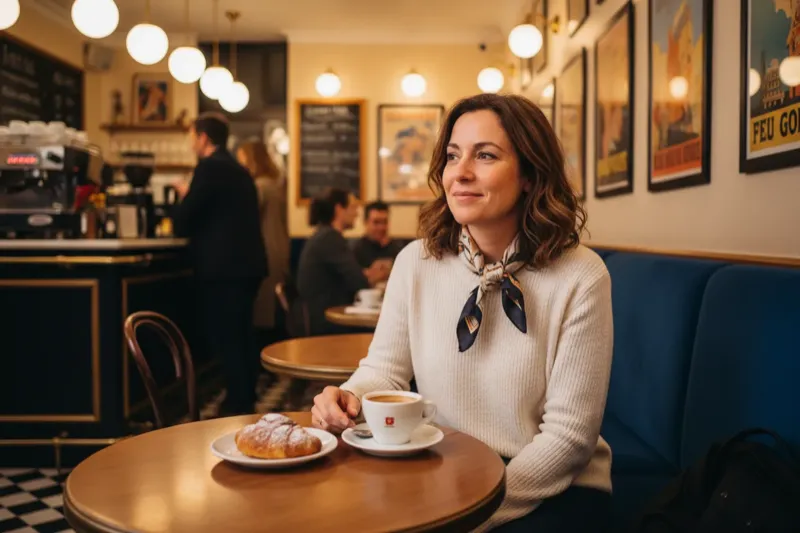
What Is Food Noise? A French Woman's Explanation (Not the Clinical One)
Food noise is that constant mental chatter about eating. A French woman explains why it doesn't exist in France -- and what that reveals about how to stop it.
What Happens When Ozempic Stops Working -- And What French Women Do Instead
Ozempic plateaus are common. Learn why the medication loses effectiveness, what the research says about tolerance, and the French approach that never stops working.