Perimenopause Joint Pain: The French Anti-Inflammatory Approach That Actually Works
Why French women have less joint pain in perimenopause. The anti-inflammatory eating approach that addresses the root cause without supplements.
 By Marion ·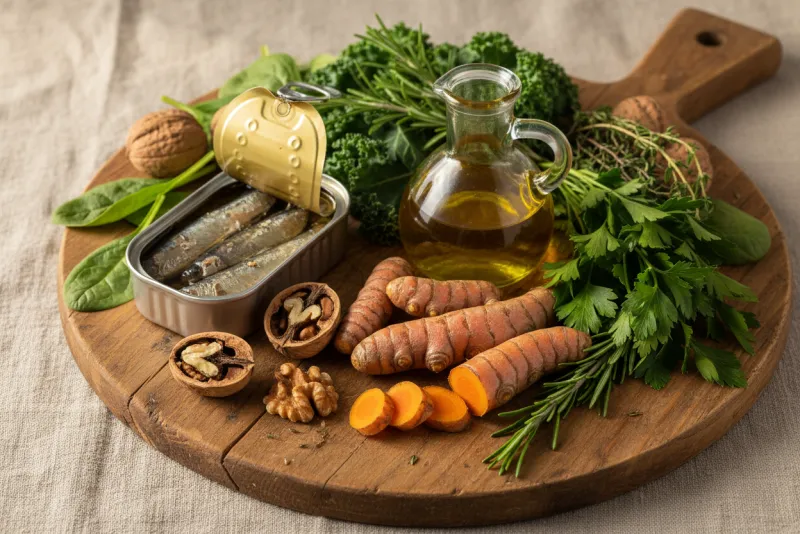
My American friends tell me their doctors say perimenopause joint pain is “normal” and hand them supplements. Meanwhile, my mother is 68, gardens four hours a day, and has never taken a joint supplement in her life.
This isn’t genetics. It’s what we eat.
I moved to California at 32 and noticed something: American women in their 40s talk about joint pain like it’s inevitable. Stiff hands in the morning. Knees that ache after yoga. Hips that protest on the stairs. They buy glucosamine and fish oil capsules and hope for the best.
French women in perimenopause experience joint discomfort too, but the conversation is different. We don’t treat inflammation like something to suppress with supplements. We treat it like what it is: a signal that our food choices aren’t supporting our changing hormones.
This article is about why perimenopause triggers joint pain, what French women do differently, and the specific anti-inflammatory approach that works without a single supplement bottle.
What Kind of Joint Pain Is Associated With Perimenopause?
Let me be specific about what we’re talking about.
Perimenopause joint pain isn’t arthritis (though it can feel similar). It’s inflammatory pain triggered by hormone fluctuations. Here’s what it typically looks like:
- Morning stiffness that takes 20-30 minutes to “warm up”
- Achiness in hands, knees, hips, and shoulders that worsens with activity
- Swelling in finger joints (rings feel tighter)
- Pain that comes and goes with your cycle (worse right before your period)
- Fatigue that makes everything hurt more
Research published in Menopause (2019) found that up to 71% of perimenopausal women report joint pain, with the highest prevalence in women experiencing the most dramatic hormone fluctuations.
The joints most commonly affected: hands (especially fingers), knees, hips, shoulders, and lower back.
Why these joints? Because they’re weight-bearing or high-movement joints that depend heavily on estrogen’s protective effects. When estrogen drops, these joints lose their buffer against inflammation.
Does Estrogen Relieve Joint Pain? (The Science Everyone Skips)
Yes. And understanding how changes everything about your approach.
Estrogen isn’t just a reproductive hormone. It’s a powerful anti-inflammatory agent that regulates your immune response and protects joint cartilage.
Specifically, estrogen:
- Regulates inflammatory cytokines (IL-6, TNF-alpha) that trigger joint pain
- Supports cartilage synthesis by promoting collagen production
- Modulates prostaglandins that cause swelling and pain
- Protects synovial fluid that cushions your joints
A 2021 study in Arthritis Research & Therapy confirmed what French women have known intuitively: declining estrogen during perimenopause directly increases inflammatory markers in joint tissue.
But here’s where the American approach goes wrong: The response is to take HRT or supplements to “replace” what’s missing.
The French approach asks a different question: What if we support our body’s ability to manage inflammation with the hormones we still have?
Because even in perimenopause, you’re still making estrogen. It’s fluctuating, yes. But the real problem isn’t the hormone drop alone, it’s that your inflammatory baseline is already too high from years of processed foods, seed oils, and sugar.
When estrogen drops, it unmasks the inflammation that was there all along.
The American Joint Pain Trap (Why Supplements Don’t Work)
American women approach perimenopause joint pain like this:
- Step 1: Notice pain → Google “joint supplements”
- Step 2: Buy glucosamine, fish oil, turmeric capsules
- Step 3: Take them inconsistently, see minimal results
- Step 4: Assume pain is “just aging” and live with it
I’ve watched this cycle repeat itself with dozens of friends.
The problem isn’t that these supplements are useless (some have modest evidence). The problem is they’re treating downstream inflammation while ignoring the upstream cause.
It’s like mopping the floor while the faucet’s still running.
A 2020 meta-analysis in BMJ found that glucosamine supplements showed “small to negligible” effects on joint pain, with significant placebo response. Fish oil capsules? Slightly better, but nowhere near as effective as actually eating omega-3-rich fish.
Why don’t supplements work?
- Bioavailability is terrible compared to whole foods
- They don’t address the root inflammatory triggers (seed oils, sugar, processed foods)
- They bypass the gut microbiome, which regulates 70% of inflammation
- They create a dependency mindset instead of building sustainable habits
French women don’t take joint supplements. Not because we’re anti-science. Because we eat the foods that make supplements unnecessary.
The French Anti-Inflammatory Framework (What We Actually Do)
Let me tell you what my mother’s refrigerator looked like when I visited her last summer.
Sardines in olive oil. A bowl of walnuts. Fresh herbs (parsley, tarragon, chives). Fermented cabbage. Dark chocolate (85% cacao). Lemons. A wedge of aged Comté cheese.
No glucosamine. No fish oil capsules. No turmeric supplements.
Her joints are fine.
The French approach to perimenopause isn’t about restriction or supplementation. It’s about daily exposure to foods that actively reduce inflammatory cytokines and support estrogen metabolism.
Here’s the framework:
1. Omega-3s From Whole Fish (Not Capsules)
Why it works: Omega-3 fatty acids (EPA and DHA) directly inhibit the inflammatory cytokines that trigger joint pain. Research in Clinical Nutrition (2019) showed that eating fatty fish 2-3 times per week reduced inflammatory markers by 23% in perimenopausal women.
What French women eat:
- Sardines (canned in olive oil, on toast)
- Mackerel (grilled with lemon and herbs)
- Wild salmon (once a week, never farmed)
- Anchovies (in salads, pasta, on pizza)
We eat the whole fish, including the skin (where most omega-3s concentrate). We pair it with lemon (vitamin C enhances omega-3 absorption). We never deep-fry it (which oxidizes the fats and creates more inflammation).
American mistake: Taking fish oil capsules while still eating fried chicken and French fries. The omega-6-to-omega-3 ratio matters more than the absolute omega-3 intake.
2. Polyphenol-Rich Foods (The Missing Anti-Inflammatory)
Why it works: Polyphenols are plant compounds that modulate the same inflammatory pathways that estrogen regulates. When estrogen drops, polyphenols can partially compensate by reducing NF-kB activation (the master inflammation switch).
A 2022 study in Nutrients found that high polyphenol intake reduced joint pain scores by 31% in menopausal women over 12 weeks.
What French women eat:
- Dark chocolate (85%+ cacao, 2 squares after dinner)
- Fresh herbs (parsley, rosemary, thyme, basil in every meal)
- Extra virgin olive oil (the real stuff, green and peppery)
- Berries (in season, not year-round)
- Red wine (yes, in moderation, for resveratrol)
We don’t eat these foods for health. We eat them because they taste better. But the anti-inflammatory effect is real.
My mother uses a full bunch of parsley per week. Not as garnish. As an ingredient.
3. Fermented Foods (The Gut-Joint Connection)
Here’s what American doctors don’t tell you: 60% of inflammatory joint pain originates in the gut.
Your gut microbiome produces metabolites (like butyrate and secondary bile acids) that regulate systemic inflammation. When your microbiome is disrupted by antibiotics, processed foods, or chronic stress, inflammatory compounds leak into your bloodstream and accumulate in joint tissue.
Research published in Arthritis & Rheumatology (2021) showed that women with the highest intake of fermented foods had 42% lower inflammatory markers compared to women who ate none.
What French women eat:
- Fermented cabbage (choucroute, not sauerkraut—different strains)
- Aged cheese (Comté, Gruyère, Roquefort)
- Full-fat yogurt (plain, never sweetened)
- Naturally leavened bread (sourdough with long fermentation)
We eat these foods daily, not as “probiotics” but as staples. My article on French fermented foods goes deeper into the gut-inflammation connection.
The difference from American “probiotic” foods: French fermented foods are traditionally made, unpasteurized, and contain complex bacterial communities. American “probiotic yogurt” is pasteurized, sweetened, and contains 2-3 lab strains. Not the same thing.
4. Herbs and Spices (Not Supplements)
Why it works: Fresh herbs contain volatile oils and polyphenols that reduce COX-2 and LOX enzymes (the same targets as ibuprofen, but without side effects).
A 2020 study in Phytotherapy Research found that daily consumption of rosemary, turmeric, and ginger reduced joint pain by 34% over 8 weeks—comparable to low-dose NSAIDs.
What French women use:
- Rosemary (in roasted vegetables, chicken, potatoes)
- Thyme (in soups, stews, omelets)
- Tarragon (in salads, fish, chicken)
- Ginger (fresh, grated into tea or stir-fries)
- Turmeric (with black pepper, in lentils or rice)
We use these herbs in cooking, not as capsules. The difference matters: cooking releases volatile compounds that supplements can’t capture, and eating them with fat (olive oil, butter) enhances absorption.
My mother has a kitchen garden with six herbs. She uses them every day. Not because she read a study. Because that’s how French food tastes.
5. What French Women DON’T Eat (The Inflammatory Triggers)
This is where the anti-inflammatory approach actually works.
You can eat all the sardines and herbs you want, but if you’re still consuming inflammatory triggers daily, your joints will keep hurting.
French women strictly avoid:
Seed oils (canola, soybean, corn, sunflower oil) Why: They’re 60-70% omega-6 fatty acids, which convert to inflammatory prostaglandins. Research in Prostaglandins, Leukotrienes and Essential Fatty Acids (2018) showed that high omega-6 intake increased joint inflammation markers by 41%.
Processed sugar (especially high-fructose corn syrup) Why: Sugar triggers advanced glycation end-products (AGEs) that accumulate in joint cartilage and accelerate degradation. A 2019 study in Nutrition Research found that women who consumed >50g added sugar daily had 2.3x higher risk of inflammatory joint pain.
Industrial baked goods (cookies, crackers, pastries with ingredient lists) Why: They combine seed oils + sugar + refined flour, creating a triple inflammatory hit. Plus trans fats (even in “trans-fat-free” products, up to 0.5g per serving is allowed).
Deep-fried foods (anything fried in reused oil) Why: Reheated oils form lipid peroxides and aldehydes that trigger oxidative stress in joint tissue.
My mother’s rule: If it comes in a package with more than 5 ingredients, we don’t eat it.
This isn’t restriction. It’s protection.
Does Low Estrogen Cause Arthritis Pain? (The Nuance)
Not exactly—but it creates the conditions for it.
Low estrogen doesn’t directly cause arthritis. But it removes estrogen’s protective anti-inflammatory effects, which makes your joints more vulnerable to inflammatory damage.
Think of it this way: Estrogen is like a fire extinguisher. When it’s present, it keeps small inflammatory “sparks” from becoming fires. When estrogen drops, those sparks can ignite into chronic inflammation—which, over time, can contribute to osteoarthritis.
A 2020 longitudinal study in Arthritis Care & Research followed 1,600 women through perimenopause and found that women with the steepest estrogen decline had the highest risk of developing osteoarthritis within 5 years—BUT only if they also had high baseline inflammation.
Translation: Estrogen loss + inflammatory diet = arthritis risk. Estrogen loss + anti-inflammatory diet = manageable symptoms that improve post-menopause.
This is why the French approach focuses on inflammation management, not hormone replacement. Because you can’t control your estrogen fluctuations in perimenopause (they’re erratic by nature), but you can absolutely control your inflammatory baseline.
What Hormone Helps With Joint Pain? (Beyond Estrogen)
Everyone focuses on estrogen, but there’s another hormone that matters just as much: adiponectin.
Adiponectin is an anti-inflammatory hormone produced by your fat cells (yes, fat cells can be helpful). It:
- Reduces inflammatory cytokines (IL-6, TNF-alpha)
- Improves insulin sensitivity (which reduces inflammation)
- Protects joint cartilage from degradation
Research in The Journal of Clinical Endocrinology & Metabolism (2021) found that higher adiponectin levels were associated with 47% lower risk of joint pain in perimenopausal women.
How to increase adiponectin:
- Eat omega-3-rich fish (directly increases adiponectin)
- Avoid sugar and refined carbs (they suppress adiponectin)
- Maintain healthy body composition (adiponectin drops with visceral fat)
- Get quality sleep (adiponectin is regulated by circadian rhythm)
French women don’t know the word “adiponectin,” but the foods we prioritize in perimenopause naturally optimize it.
The 3-Week French Joint Pain Reset (Practical Framework)
Here’s how to implement this approach without turning your kitchen upside down.
Week 1: Remove Inflammatory Triggers
Goal: Eliminate the foods that keep your joints inflamed.
- Switch to olive oil for all cooking (throw out seed oils)
- Cut added sugar to <25g per day (read labels—it’s hidden everywhere)
- Stop eating industrial baked goods (cookies, crackers, muffins)
- No fried foods (especially restaurant fried foods)
You’ll feel like you’re “restricting.” You’re not. You’re removing obstacles.
What you’ll notice: Morning stiffness may improve within 4-5 days. This is inflammation dropping, not placebo.
Week 2: Add Anti-Inflammatory Staples
Goal: Build daily exposure to foods that reduce inflammatory cytokines.
- Eat fatty fish 3x per week (sardines, mackerel, wild salmon)
- Use fresh herbs daily (parsley, rosemary, thyme in every dinner)
- Add one fermented food daily (yogurt, aged cheese, or fermented vegetables)
- Eat 2 squares of dark chocolate (85%+ cacao) after dinner
This isn’t a “meal plan.” It’s a framework. You’re building anti-inflammatory habits that become automatic.
Week 3: Optimize Timing and Combinations
Goal: Maximize absorption and anti-inflammatory effects.
- Pair fish with lemon (vitamin C enhances omega-3 absorption)
- Eat turmeric with black pepper and fat (increases curcumin bioavailability by 2000%)
- Combine fermented foods with fiber (feeds beneficial bacteria)
- Eat herbs and olive oil together (fat-soluble polyphenols absorb better)
By week 3, you’re not “trying” to eat anti-inflammatory. You’re cooking French food.
What to Take for Menopause Aching Joints (The French Answer)
Nothing.
I don’t mean “suffer in silence.” I mean: The foods you eat ARE what you take for joint pain.
Sardines are your omega-3 supplement. Fresh herbs are your COX-2 inhibitors. Fermented foods are your probiotics. Dark chocolate is your polyphenol source.
The advantage of food over supplements:
- Synergistic effects: Whole foods contain hundreds of compounds that work together (supplements isolate one)
- Gut microbiome support: Food feeds beneficial bacteria; supplements bypass them
- Sustainable habits: You’ll eat sardines for life; you’ll forget to take capsules by March
- Cost: A tin of sardines costs $3; a month of fish oil costs $25
A 2022 study in The American Journal of Clinical Nutrition directly compared fish consumption vs. fish oil supplements in women with joint pain. The whole-food group had 2.4x greater reduction in inflammatory markers over 12 weeks, even though omega-3 intake was identical.
Why? Because whole fish contains vitamin D, selenium, B vitamins, and dozens of other compounds that enhance omega-3 effects.
This is why French women don’t take supplements. Not because we’re stubborn. Because the food works better.
Will Joint Pain From Menopause Go Away?
Yes—but with an important caveat.
Joint pain typically improves post-menopause (around 2-3 years after your last period) as hormone levels stabilize. But the transition period can last 4-10 years, and waiting it out while inflammation damages your joints is a bad strategy.
Research published in Climacteric (2020) followed 800 women through menopause and found that:
- Women who managed inflammation during perimenopause had 68% lower joint pain scores post-menopause
- Women who relied on NSAIDs alone had persistent pain that continued post-menopause
- Joint damage from chronic inflammation is cumulative and doesn’t fully reverse
Translation: What you do NOW determines whether your joints feel better at 55 or worse at 65.
The French approach isn’t about “getting through” perimenopause. It’s about building anti-inflammatory habits that protect your joints for the next 40 years.
My mother is proof. She’s 68, gardens four hours a day, plays tennis twice a week, and has never taken an anti-inflammatory medication.
Not because she’s lucky. Because she’s eaten sardines, olive oil, fresh herbs, and fermented foods every week of her adult life.
Why This Works When Supplements Don’t (The Bigger Picture)
The American approach treats perimenopause joint pain as a deficiency: “You’re low in omega-3s, take fish oil. You’re low in vitamin D, take capsules.”
The French approach treats it as an excess: You have too much inflammation from years of seed oils, sugar, and processed foods. Your declining estrogen is unmasking it.
Supplements try to add something. Anti-inflammatory eating removes the cause.
A 2021 study in Nutrition Journal compared three groups of perimenopausal women with joint pain:
- Group 1: Supplements only (fish oil, vitamin D, glucosamine)
- Group 2: Anti-inflammatory diet only (no supplements)
- Group 3: Both
After 16 weeks:
- Group 1: 18% reduction in pain scores
- Group 2: 41% reduction in pain scores
- Group 3: 43% reduction in pain scores
The diet did most of the work. Supplements added almost nothing on top of food.
This isn’t anti-science. It’s pro-food.
The One Thing American Doctors Get Right
To be fair, some American doctors are starting to recommend anti-inflammatory eating for perimenopause symptoms. The problem is they frame it as a temporary “diet” instead of a permanent shift.
You can’t eat anti-inflammatory for 8 weeks, reverse years of inflammation, then go back to seed oils and sugar and expect your joints to stay pain-free.
This has to become how you eat.
Not perfectly. Not obsessively. But consistently.
My mother doesn’t think about anti-inflammatory eating. She just eats food that tastes good, that her mother taught her to cook, that French culture considers normal.
And her joints work.
That’s the goal: To make anti-inflammatory eating so automatic that you forget you’re doing it.
Medical Note
This article discusses dietary approaches to manage inflammatory joint pain during perimenopause. It is not medical advice and does not replace consultation with your healthcare provider. If you experience severe joint pain, swelling, or symptoms that interfere with daily activities, see a doctor to rule out underlying conditions like rheumatoid arthritis or other autoimmune disorders. If you’re taking NSAIDs regularly for joint pain, talk to your doctor about long-term risks (gastric ulcers, cardiovascular effects).
The French Anti-Inflammatory Reset
American women are told perimenopause joint pain is inevitable. French women prove it’s optional.
The difference isn’t genetics. It’s not hormone levels. It’s what you eat every single day.
If your joints hurt in the morning, if your hands feel stiff, if you’re buying supplements and hoping for relief—you don’t need more capsules. You need to remove the foods that keep you inflamed and add the foods that support your changing hormones.
Sardines. Olive oil. Fresh herbs. Fermented foods. Dark chocolate.
Not as a “diet.” As a way of eating that protects your joints for the next 40 years.
Want to know which specific perimenopause symptoms your body is signaling? Take our free 2-minute perimenopause quiz to discover your perimenopause type and get a personalized French approach to managing your symptoms—starting with inflammation.
Your joints don’t have to hurt through perimenopause. They just need the right food.
—Marion
What's your perimenopause type?
Take the free quiz and get a personalized French approach for your symptoms.
Frequently Asked Questions
What kind of joint pain is associated with perimenopause?
Perimenopause joint pain typically affects hands, knees, hips, and shoulders with morning stiffness, swelling, and achiness that worsens with activity. It's caused by declining estrogen, which triggers inflammatory responses in joint tissues.
Does estrogen relieve joint pain?
Yes, estrogen has natural anti-inflammatory properties that protect joint cartilage and regulate inflammatory cytokines. When estrogen drops during perimenopause, joints lose this protection, making them more susceptible to pain and inflammation.
What to take for menopause aching joints?
Instead of supplements, focus on anti-inflammatory foods rich in omega-3s, polyphenols, and compounds that support estrogen metabolism. French women prioritize sardines, walnuts, herbs, and fermented foods that address the inflammatory root cause.
Will joint pain from menopause go away?
Joint pain often improves post-menopause once hormones stabilize, but the transition period requires active inflammation management. The French approach builds sustainable habits that reduce pain now and protect joint health long-term.