How French Women Eat Cheese Every Day and Stay Slim
French women eat 27 kg of cheese per year -- more than almost any country. Yet they stay slim. The secret is not the cheese itself but how they eat it.
 By Marion ·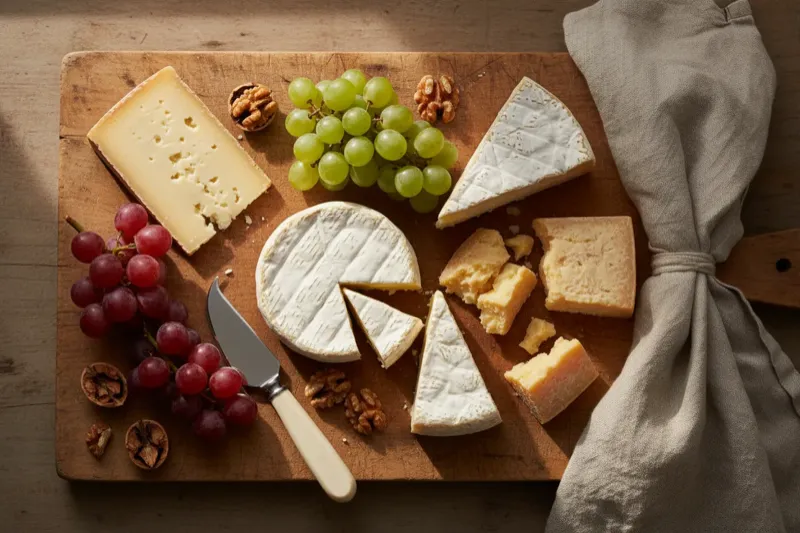
French women eat 27 kilograms of cheese per year — roughly 60 pounds — and have an obesity rate less than half of America’s. This is not a contradiction. It is a lesson in how the way you eat matters infinitely more than what you eat. In American diet culture, cheese is feared, avoided, and replaced with pale, rubbery substitutes that satisfy nobody. In France, cheese is a sacred ritual — served as its own course, selected with care, eaten in small amounts with absolute pleasure. And it is one of the reasons French women stay slim, because cheese, eaten the French way, is not the enemy of a healthy body. It is one of its greatest allies. This is part of the complete French eating system that American women are only beginning to discover.
My name is Marion, and I want to tell you about how I eat cheese. Not a clinical explanation. Not a nutritional breakdown. Just the truth of what cheese means in a French woman’s life — because I think if you understood it, you would never fear cheese again.
The Cheese Course: A Ritual, Not a Snack
In France, cheese is not something you eat standing in front of the refrigerator at 10pm. It is not something you melt onto nachos or slice onto a sandwich without thinking. Cheese has its own moment in the meal — le fromage — and that moment has rules.
Cheese is served after the main course and before dessert. This is non-negotiable in French dining tradition. The meal is winding down. You have eaten your entree, your plat principal. You are nearing satisfaction. And then the cheese arrives — usually a small plate with two or three varieties, accompanied by a piece of bread.
You select a piece. Perhaps a wedge of Comte, aged and nutty. Perhaps a sliver of Roquefort, sharp and complex. Perhaps a spoonful of fresh chevre with herbs. You place it on your bread. You eat it slowly. You might have a sip of wine.
The portion is small. Thirty to fifty grams — about the size of two or three dice. This is not self-control. This is cultural norm. Nobody in France eats a half-pound block of cheddar in a sitting. The thought is almost comical. You eat a small piece of extraordinary cheese because a small piece of extraordinary cheese is enough.
And here is what American diet culture completely misunderstands: that small piece of magnificent cheese does more for your satiety than a pound of low-fat cheese substitute ever could. Because satisfaction is not about volume. It is about quality, attention, and pleasure.
The Science: Why Cheese Supports (Not Sabotages) Your Body
Let me address the science, because I know many American women have been told that cheese is “unhealthy” or “fattening,” and that simply is not what the research shows.
Fermented dairy and body weight
A 2021 meta-analysis published in Advances in Nutrition examined 27 studies involving over 500,000 participants and found that fermented dairy consumption (including cheese) was consistently associated with lower body weight and reduced risk of obesity. Not neutral — inversely correlated. The more fermented dairy people ate, the less likely they were to be obese.
How is this possible? Several mechanisms.
First, cheese is a GLP-1 trigger. The combination of fat, protein, and fermented compounds in cheese stimulates the release of GLP-1 — the same satiety hormone that Ozempic mimics. A small amount of cheese at the end of a meal amplifies and extends the satiety signal from the entire meal. I wrote about the broader connection between French fermented foods and natural GLP-1 production — cheese is one of the most potent natural sources.
Second, cheese contains conjugated linoleic acid (CLA). CLA is a naturally occurring fatty acid found in highest concentrations in grass-fed dairy. Research published in The American Journal of Clinical Nutrition found that CLA improves body composition by reducing fat mass and increasing lean mass. French cheese, often made from grass-fed cattle, is particularly rich in CLA.
Third, cheese is rich in vitamin K2. Vitamin K2 directs calcium into bones and away from arteries, supporting cardiovascular health. Fermented cheeses are among the best dietary sources of K2 — and the French consume more K2 from cheese than nearly any other population.
Fourth, cheese feeds your gut. Fermented cheese contains live bacteria that support microbial diversity. A 2020 study in Nature Medicine found that greater gut microbial diversity was associated with lower body weight, better metabolic health, and improved appetite regulation. Every bite of Roquefort or Camembert is delivering billions of beneficial organisms to your digestive system.
The calcium paradox
Here is an irony that should make every American woman who replaced real cheese with fat-free cheese shake her head.
Research from the University of Tennessee found that adequate calcium intake from dairy is associated with lower body fat, particularly abdominal fat. The mechanism involves calcium’s role in fat metabolism — dietary calcium reduces the production of calcitriol, a hormone that promotes fat storage.
Full-fat cheese is rich in calcium. Fat-free cheese substitutes often have less calcium and dramatically less satisfaction value. American women removed the food (real cheese) and lost the benefit (calcium-mediated fat metabolism) while gaining nothing in return except dissatisfaction.
How I Actually Eat Cheese
Let me take you through a real evening in my life, because I think the specificity will help.
It is a Tuesday. I have cooked a simple dinner: a roasted chicken thigh with Dijon mustard, haricots verts sauteed in a little butter, and a small salad dressed with olive oil and red wine vinegar.
I eat slowly. I enjoy the meal. I feel satisfied but not stuffed.
Then I go to the refrigerator and take out the cheese. Tonight I have three cheeses wrapped in paper from the fromagerie: a piece of Saint-Nectaire (soft, earthy, with a slight mushroom flavor), a wedge of aged Comte (firm, with tiny crystals and a caramelized sweetness), and a small portion of Roquefort (blue, intense, crumbling).
I cut a small piece of the Saint-Nectaire and place it on a piece of baguette. I eat it. I close my eyes and taste the creaminess, the way the earthy rind balances the mild interior. I cut a thin slice of Comte. The crystals crunch slightly. It is like savory candy. I take a sip of wine.
The entire cheese course takes perhaps five minutes. The total amount of cheese I eat is maybe 40 grams — the weight of a small egg.
And then I am done. Not done because I have reached some portion limit. Done because the experience was complete. The pleasure was delivered. My body and brain received the signals — fat, protein, fermented compounds, sensory variety — and the meal is finished. Truly, peacefully finished.
This is the experience that most American women have never had with cheese. Because when cheese is forbidden, and then you “give in,” you eat it with guilt, in large quantities, standing up, in private. That is not cheese. That is the aftermath of restriction.
When cheese is never forbidden, it becomes just food. Magnificent, wonderful, pleasurable food. But just food. And when it is just food, a small piece is enough.
The Cheeses French Women Eat Most
Not all cheese is created equal, and French women are extremely particular about quality. Here are the cheeses that appear most often on a French table, and why.
Comte
France’s most popular cheese. A firm, aged cow’s milk cheese from the Jura mountains. Rich in CLA, vitamin K2, and protein. Aged varieties develop amino acid crystals that give it a complex, almost sweet flavor. A 30-gram piece of Comte contains 10 grams of protein — more than a boiled egg.
Roquefort
The king of blue cheeses. Made from raw sheep’s milk and aged in the limestone caves of Roquefort-sur-Soulzon. Intensely flavored, which means you need very little to feel satisfied. Rich in the anti-inflammatory compound spermidine and in beneficial Penicillium roqueforti bacteria.
Camembert
The iconic soft French cheese. When properly made (from raw milk, in Normandy), Camembert has a complex, mushroomy flavor and a creamy interior. American versions are pasteurized and lack much of the flavor and bacterial diversity of the original.
Chevre (goat cheese)
Fresh, tangy, and lower in lactose than cow’s milk cheese. French women use chevre on salads, spread it on bread, or bake it with herbs. It is one of the most digestible cheeses and an excellent source of short- and medium-chain fatty acids that are metabolized quickly for energy rather than stored.
Brie and its relatives
Brie de Meaux, Brie de Melun, Coulommiers — these soft-ripened cheeses are eaten in France at room temperature, when they are runny and deeply flavored. The true versions made from raw milk are unfortunately illegal to import into America because they do not meet FDA aging requirements. This is a genuine loss. If you ever travel to France, eat Brie de Meaux. It will change your understanding of what cheese can be.
The Four Principles of French Cheese Eating
If you take nothing else from this article, take these four principles.
1. Cheese is a course, not a topping
Stop melting cheese on everything. Start eating it as its own moment. After dinner, select one or two small pieces and eat them with bread, with attention. You will eat less cheese overall but enjoy it infinitely more.
2. Quality over quantity, always
One ounce of real, aged Gruyere gives you more satisfaction than half a pound of pre-shredded, processed “cheese.” Your brain knows the difference. Your satiety hormones know the difference. Spend a little more on real cheese from a specialty counter or fromagerie. The per-serving cost is actually similar when you account for how much less you eat.
3. Room temperature, always
Take your cheese out of the refrigerator 30-60 minutes before eating. Cold cheese has muted flavor. Room-temperature cheese releases its full aromatic complexity. When you can taste all the nuances, a small piece satisfies completely. When it is cold and muted, you need more to get the same experience.
4. With bread, with wine, with conversation
Cheese in France is social. It is shared. It arrives at the table when the mood is relaxed, the meal is winding down, and conversation is flowing. This context matters. When you eat cheese in a state of relaxation and pleasure, your parasympathetic nervous system is active, which optimizes digestion and nutrient absorption. When you eat cheese anxiously — standing up, in secret, feeling guilty — your stress hormones are elevated, digestion is impaired, and the experience feeds the cycle of shame.
Your French Cheese Ritual: A Starter Guide
This week: Buy real cheese
Go to a good cheese counter (Whole Foods, a specialty shop, a local fromagerie if you are lucky enough to have one). Ask for recommendations. Buy two or three small pieces — perhaps a firm cheese, a soft cheese, and a blue. Spend $8-$12 total. This will last you most of the week.
Tomorrow night: Create the cheese course
After dinner, place your cheeses on a small plate or board. Cut a few pieces of good bread (a baguette is ideal but any real bread works). Pour a glass of wine or sparkling water. Sit down. Take your time.
Cut a small piece of cheese. Put it on bread. Eat it slowly. Notice the texture. Notice the flavor. Notice how it evolves as it warms in your mouth. Have one or two more pieces if you want. Then stop — not because you are restricting, but because the experience was complete.
Next week: Repeat and observe
Do this every evening for a week. By the end of the week, notice something remarkable: you will probably eat less total food in the evening. The cheese course caps the meal with such a profound sense of completion that the kitchen closes in your mind. No rummaging. No grazing. No 9pm snack attack.
This is not a trick. This is what happens when you eat food that genuinely satisfies you.
The Permission You Have Been Waiting For
I know what many of you are thinking, because I have heard it a thousand times from American women: “But cheese is fattening.”
It is not. Not the way French women eat it. Not in the amounts French women eat it. Not as part of a structured, satisfying meal that includes real food, genuine pleasure, and enough time to actually taste what you are eating.
What is fattening is the cycle of denying yourself cheese, then binge-eating cheese, then feeling terrible, then denying yourself again. That cycle adds up — in quantity consumed, in hormonal disruption, in the emotional burden of treating a beautiful food like a moral failure.
French women eat cheese every single day and do not gain weight from it. Not because they are genetically different from you. Because they eat it differently. In small amounts. With great pleasure. As part of a complete meal. Without a single moment of guilt.
You can do the same. Starting tonight.
This is the heart of why French women stay slim without dieting: they never eliminated the foods that make eating worth doing. And cheese — glorious, ancient, deeply satisfying cheese — is perhaps the most important food they never gave up.
As we say in France: a meal without cheese is like a day without sunshine. And the French paradox is no paradox at all once you understand that pleasure and health have always been on the same side.
Want to learn the complete French eating framework — including how to eat cheese, bread, wine, and chocolate while naturally regulating your appetite and body weight? Download my free guide: “The French Alternative to Ozempic”. It walks you through every principle, every meal, every ritual. Because you were never meant to eat food you do not love. And you were never meant to fear the foods you do.
Bisous, Marion
Want the full French approach?
Get my free guide: "The 7 Habits That Naturally Trigger GLP-1"
Frequently Asked Questions
Is eating French cheese healthy?
Yes, when eaten the French way — a small portion after the main course, savored slowly, as part of a complete meal. French cheeses like Comté, Roquefort, and Brie are rich in conjugated linoleic acid (CLA), vitamin K2, and beneficial bacteria that support gut health. Studies show that fermented dairy consumption is associated with lower body weight and better metabolic markers.
Why do the French eat so much cheese?
Cheese is a cultural institution in France, not a guilty indulgence. It is served as its own course — after the main dish, before dessert — in small, deliberate portions. The average French person consumes about 27 kg of cheese per year, yet France's obesity rate remains among the lowest in the developed world.
Is there a cheese diet to lose weight?
There is no cheese diet — and you do not need one. The French approach is not about using cheese as a weight loss tool. It is about including cheese as a pleasurable, satisfying part of a well-structured meal. The combination of protein, fat, and fermented bacteria in cheese actually supports satiety and gut health when eaten mindfully.
Why is brie de meaux illegal in the US?
Brie de Meaux is made from raw (unpasteurized) milk and aged less than 60 days, which violates FDA import regulations. American food safety rules require either pasteurization or 60+ days of aging for cheese. This means Americans miss out on many traditional French cheeses that have been safely consumed in France for centuries.