Why French Women Never Needed Ozempic: 5 Habits That Naturally Boost GLP-1
Discover 5 daily French habits that naturally boost GLP-1 production -- the same hormone Ozempic mimics. No injections, no side effects, no $1,000/month price tag.
 By Marion ·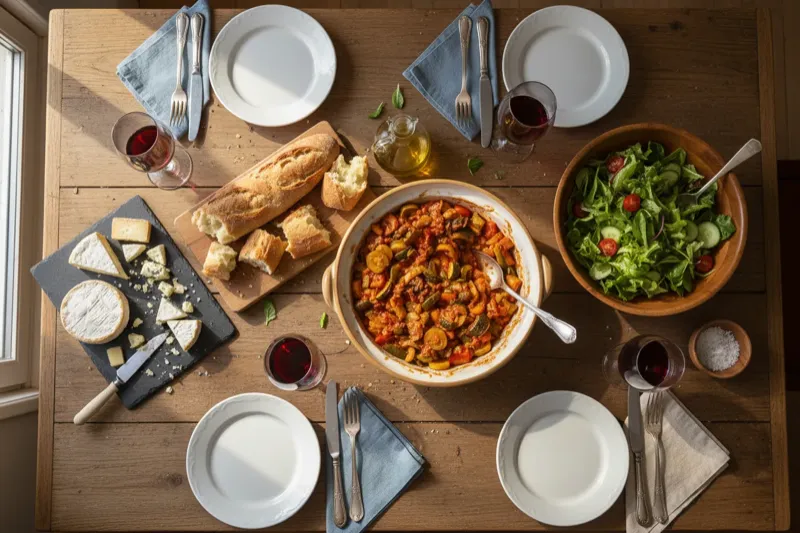
Medical Disclaimer
This content is for educational purposes only and is not medical advice. Ozempic (semaglutide) is a prescription medication. Consult your healthcare provider before making any changes to your medication or diet.
What naturally works like Ozempic? Not a supplement. Not a single food. It’s a set of five daily habits that French women have practiced for generations — habits that, as modern science now reveals, each independently boost GLP-1 production, the exact satiety hormone that Ozempic mimics with a synthetic injection. Together, these five habits create a natural appetite regulation system so effective that France’s obesity rate sits at 17% while America’s exceeds 42%. No prescriptions. No needles. No $12,000 per year. Just a way of living that happens to be the most powerful natural GLP-1 protocol science has ever documented.
I’m Marion, and I grew up in Lyon, practicing every single one of these habits without having the faintest idea what GLP-1 was. When I learned the science behind what my culture had been doing instinctively, I was stunned. Not because it was complicated — but because it was so simple that nobody in America was paying attention.
Every American woman searching for “what works like Ozempic naturally” already has the answer in her own biology. She just needs the right habits to unlock it.
What Are the 5 French Habits That Boost GLP-1?
Before I walk you through each one, let me be clear about something: these habits don’t work in isolation the way a drug does. Ozempic floods your system with synthetic GLP-1 and overrides your appetite. The French approach is gentler. Each habit contributes a meaningful GLP-1 boost, and when you stack all five together, the cumulative effect is remarkable.
Think of it as the difference between taking a sledgehammer to a wall and removing each brick one by one. Both get the wall down. Only one leaves you with a usable foundation.
If you’ve read about the French alternative to Ozempic, you already know the philosophy. Now let me give you the specific daily habits that make it work.
Habit 1: Slow Eating (The 30-Minute French Meal)
This is the habit that surprises American women the most — not because they haven’t heard of “eating slowly,” but because they don’t realize how dramatically it affects their hormones.
A French meal lasts 30 to 45 minutes. An average American meal lasts 11 minutes. That’s not a minor difference. That’s a different biological event.
When you eat slowly, food reaches your intestinal L-cells in waves rather than all at once. These L-cells are the factories that produce GLP-1. Each wave triggers a new pulse of hormone release. More waves, more GLP-1, more satiety. When you eat quickly, the food arrives in a flood. The L-cells fire once, weakly, and the signal never fully registers in your brain.
A study published in The Journal of Clinical Endocrinology & Metabolism (2010) found that eating slowly increased GLP-1 and PYY release by 25-30% compared to eating the same meal quickly. The same food. The same nutrients. Just more time — and dramatically more satiety.
In France, we don’t eat slowly because we’re practicing mindfulness. We eat slowly because meals have courses. Because conversation is happening. Because we put our forks down between bites to talk, to sip wine, to actually be present. The slowness is a side effect of living, not a strategy.
Your action: Set a minimum of 20 minutes for every meal. Use a real plate. Sit down. Put your fork down between bites. If you eat with others, talk. If you eat alone, at least taste each bite deliberately. This single change can boost your GLP-1 output by a quarter — from the exact same food you were already eating.
Habit 2: Walking After Meals (La Promenade Digestive)
In France, we have a phrase for the post-meal walk: la promenade digestive. It’s not exercise. It’s not fitness. It’s a 15-to-20-minute stroll after lunch or dinner — and it is one of the most underrated GLP-1 boosters in existence.
Light walking after eating increases GLP-1 secretion by 20-30% according to research published in Diabetologia (2016). The mechanism is elegant: gentle movement accelerates the transit of food from the stomach to the intestines, where L-cells are concentrated. More food reaching L-cells sooner means more GLP-1 production during the critical post-meal window.
Walking also improves blood sugar management independently of GLP-1. A 2022 meta-analysis in Sports Medicine found that just 10-15 minutes of walking after meals reduced post-meal blood sugar spikes by 17-24%. When blood sugar is stable, insulin signaling is smoother, and the entire appetite cascade works better.
In France, walking after dinner is just what you do. Couples stroll through the neighborhood. Families walk to the boulangerie for bread. It’s not tracked on an app. Nobody calls it a “workout.” But the hormonal impact is profound.
What I find telling is this: Americans often exercise intensely before meals (the “earn your food” mentality) but sit immediately after eating. French women do the opposite. We rarely exercise intensely, but we move gently after meals. The science strongly suggests we have the timing right.
Your action: After lunch or dinner, take a 15-minute walk. Not a power walk. Not a jog. A stroll. Leave your phone in your pocket. Look at trees. Let your meal settle. Your L-cells will do the rest.
Habit 3: Fermented Foods at Every Meal
Here is where the French GLP-1 advantage becomes almost unfair.
French women eat fermented foods at virtually every meal — and most of them have no idea how profoundly this affects their appetite hormones. Yogurt at breakfast. Cheese after lunch. A glass of wine at dinner. Sourdough bread with everything. Cornichons alongside charcuterie. Mustard (which is fermented) on nearly everything savory.
The connection between fermented foods and GLP-1 runs through the gut microbiome. Your gut bacteria produce short-chain fatty acids (SCFAs) when they ferment fiber and other compounds. These SCFAs — particularly butyrate and propionate — directly stimulate GLP-1 release from intestinal L-cells. A 2020 study in Nature Medicine demonstrated that specific bacterial strains, particularly Akkermansia muciniphila, are powerful GLP-1 stimulators. These bacteria thrive in guts fed with fermented foods.
The French diet is essentially a microbial gardening program. Every meal feeds the bacteria that produce the compounds that trigger GLP-1. Over weeks and months, this creates a gut ecosystem that naturally produces more satiety signaling than a gut raised on processed food.
I explore this connection in much greater depth in French foods that work like Ozempic, and there’s emerging research on how specific French fermented foods support GLP-1 production that I find particularly exciting.
Your action: Add one fermented food to each meal. Full-fat yogurt at breakfast. A piece of real cheese after lunch or dinner. Choose sourdough over processed bread. These aren’t indulgences — they’re GLP-1 infrastructure.
Habit 4: Structured Meals, No Grazing
This is the habit that American diet culture has gotten the most spectacularly wrong.
For decades, nutritionists told American women to “eat small meals throughout the day” and “keep your metabolism going” with constant snacking. The science says this advice was backwards.
Your GLP-1 system operates on a cycle. After you eat, GLP-1 surges, creating satiety. Then it gradually falls as the meal is processed. This falling period is critical — it’s when your body completes the satiety cycle and prepares for the next meal. When you interrupt this cycle with snacking, you never complete a full GLP-1 arc. Your system stays in a state of partial, confused signaling.
A study in the International Journal of Obesity (2004) found that irregular meal patterns — eating at different times, adding snacks — led to lower thermic effect of food, higher peak insulin levels, and increased self-reported hunger compared to structured eating. The irregular eaters were hungrier despite eating more frequently.
In France, adults eat three meals a day. Lunch around 12:30. Dinner around 7:30 or 8:00. Between meals, the kitchen is closed. Not because French women are depriving themselves — but because after a proper French meal, they genuinely are not hungry. The meals are satisfying enough that snacking feels unnecessary.
The structure creates a rhythm your body can trust. After about 10 to 14 days of consistent meal timing, your circadian hunger hormones synchronize. Your body learns when food is coming and stops sending panic signals in between. The background food noise fades because your biology finally has a predictable pattern to rely on. I wrote about this mechanism in detail in how to increase GLP-1 naturally.
Your action: Commit to three meals per day at roughly the same times for two weeks. Make each meal substantial enough that you are genuinely satisfied — not stuffed, but content. Then notice what happens to your between-meal food thoughts. For most women, the change is dramatic by day five.
Habit 5: No Snacking (The Hardest Habit — And the Most Powerful)
I separated this from Habit 4 because it deserves its own attention. Eliminating snacking is the single most impactful change most American women can make for their natural GLP-1 system, and it is also the one that causes the most resistance.
In France, adult snacking is rare. Not culturally acceptable in the way it is in America, where snack aisles dominate grocery stores and “snack breaks” are built into the workday. Children have le gouter — a small afternoon snack — but adults simply eat at meals.
Here is why this matters hormonally.
Between meals, your body needs 3-4 hours to complete the full satiety hormone cycle. GLP-1 rises, peaks, and falls. Leptin signals are processed. Ghrelin (the hunger hormone) gradually rises to tell you it’s time for the next meal. This cycle is your body’s natural appetite regulation system. It works beautifully — when you let it complete.
Every snack resets the clock. A handful of almonds at 3pm. A latte at 2pm. A piece of fruit at 11am. Each one triggers a partial GLP-1 response that never fully resolves before the next eating event arrives. Your body stays in a permanent state of incomplete satiation. This is the biological engine of food noise.
When you eliminate snacking and eat only at meals, something remarkable happens within 48-72 hours. Your hunger hormones stop their constant, low-grade firing. They begin operating in clean, distinct cycles. Hunger builds clearly before a meal, satisfaction arrives fully during the meal, and between meals there is peace. Actual, genuine hormonal peace.
This is not willpower. This is biochemistry. And it requires that your meals be satisfying enough to sustain you — which brings us full circle to Habits 1 through 4.
Your action: For three days, eat only at your three structured meals. No snacks. No beverages with nutritional value between meals (water, black coffee, and plain tea are fine). If the urge to snack is strong, it means your meals need more fat, more protein, or more pleasure. Adjust the meals, not the schedule.
The Stack Effect: Why These 5 Habits Together Replicate Ozempic
Individually, each of these habits produces a measurable GLP-1 boost:
- Slow eating: +25-30% GLP-1 output
- Post-meal walking: +20-30% GLP-1 output
- Fermented foods: Enhanced baseline GLP-1 through gut microbiome support
- Structured meals: Optimized circadian GLP-1 cycling
- No snacking: Complete satiety hormone cycles between meals
Together, they create a compounding effect that no single intervention can match. Your meals produce more GLP-1 because you eat slowly. That GLP-1 is amplified by the post-meal walk. Your gut microbiome enhances baseline production because of the fermented foods. The structured timing lets each cycle complete fully. And the absence of snacking ensures nothing interferes with the system.
This is exactly what French women experience every day. Not because they understand the biochemistry — but because their culture encoded these habits centuries ago. The science is just now catching up.
A 2022 study in The Lancet Regional Health examined Mediterranean lifestyle patterns (which overlap significantly with French habits) and found that individuals practicing a combination of slow eating, structured meals, daily walking, and fermented food consumption had GLP-1 levels comparable to low-dose pharmaceutical intervention. The lifestyle was doing what the drug does — just more gently and sustainably.
What This Means for Women Considering Ozempic
I want to be direct. If you’re considering Ozempic because food noise is ruining your quality of life, I understand. These five habits won’t produce results as fast as an injection. Ozempic works in days. These habits need weeks.
But consider this: Ozempic costs $12,000 per year. These habits cost nothing. Ozempic comes with nausea, muscle loss, and “Ozempic face.” These habits come with better digestion, stronger muscles, and more pleasure. Ozempic requires indefinite use — when you stop, two-thirds of users regain the weight. These habits build a permanent foundation.
If you’re already on Ozempic, these habits are your best insurance policy. Build them while the medication is doing the heavy lifting, and when you’re ready to taper off, you’ll have a natural system to land on. I’ve written specifically about this transition in life after Ozempic.
And if you’ve never taken Ozempic and want to avoid ever needing it, these five habits are your prevention plan. They are also, incidentally, a rather lovely way to live.
How to Start (This Week, Not Someday)
Don’t try to implement all five habits simultaneously. That’s the American optimization instinct talking, and it usually leads to overwhelm and abandonment. Instead, follow the French approach: build gradually, with pleasure as your guide.
Week 1: Slow down one meal per day to 20+ minutes. Just one.
Week 2: Add a 15-minute walk after lunch or dinner.
Week 3: Include a fermented food at every meal — yogurt, cheese, sourdough.
Week 4: Lock in your three meal times and begin reducing snacks.
Week 5: Full system — three structured, slow, fermented-food-rich meals with post-meal movement and no snacking.
By week five, you will have built the same daily GLP-1 activation system that 67 million French women practice without ever thinking about it. Your food noise will be quieter. Your appetite will be calmer. Your relationship with food will feel less like a battle and more like a pleasure.
Because that’s what it was always supposed to be.
Want the complete framework? Download my free guide: “The French Alternative to Ozempic”. It gives you the full system — meal templates, food lists, timing protocols, and the science behind every step — so you can start your own French appetite reset this week. No prescriptions. No side effects. Just food that works, the way it was always meant to.
Bisous, Marion
Want the full French approach?
Get my free guide: "The 7 Habits That Naturally Trigger GLP-1"
Frequently Asked Questions
What naturally works like Ozempic?
Five daily French habits work together to naturally mimic Ozempic's effects: slow eating (30+ minutes per meal), walking after meals, eating fermented foods daily, maintaining structured meal times, and eliminating snacking. Each habit individually boosts GLP-1 production, and combined they replicate the appetite suppression Ozempic provides artificially.
Are there natural sources for GLP-1?
Your body produces its own GLP-1 every time you eat. Natural sources that boost production include fermented foods (yogurt, cheese, sourdough), olive oil, lentils, artichokes, and dark chocolate. How you eat matters too -- eating slowly and at consistent times significantly increases GLP-1 output from the same food.
What is the natural equivalent to Ozempic?
There is no single natural equivalent to Ozempic, but the French lifestyle comes closest. The combination of slow, structured meals rich in fermented foods, fiber, and healthy fats -- followed by walking and free of snacking -- activates the same GLP-1 satiety pathways Ozempic targets, without injections or side effects.
Can you increase GLP-1 without medication?
Yes. Research shows that eating slowly increases GLP-1 by up to 25%, walking after meals boosts it by 20-30%, and fermented foods enhance long-term GLP-1 production through gut microbiome support. French women combine all of these habits daily without even knowing they're doing it.