The French Alternative to Ozempic: How French Women Control Appetite Without Medication
French women have controlled appetite naturally for centuries. Discover the lifestyle science calls 'the original GLP-1 system' — no prescription needed.
 By Marion ·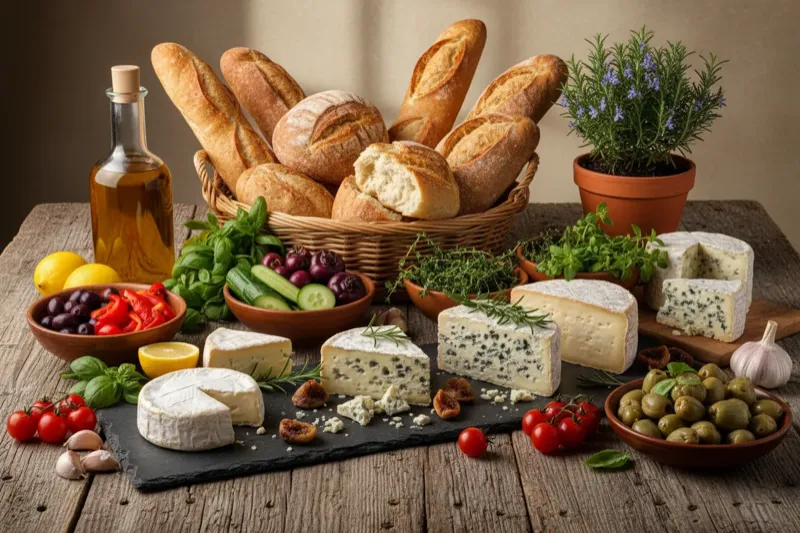
Medical Disclaimer
This content is for educational purposes only and is not medical advice. Ozempic (semaglutide) is a prescription medication. Consult your healthcare provider before making any changes to your medication or diet.
The French Alternative to Ozempic: How French Women Control Appetite Without Medication
The most effective natural alternative to Ozempic isn’t a supplement — it’s a way of life. French women have maintained healthy appetites and stable body composition for generations using eating rituals that, as modern science now reveals, activate the exact same satiety pathways that Ozempic targets artificially. No prescription. No injections. No $1,300 monthly price tag. Just a fundamentally different relationship with food that you can learn, practice, and make your own. This is the French alternative to Ozempic — and it’s been hiding in plain sight.
I’m Marion, and I’ve spent years watching from a uniquely French perspective as America’s relationship with appetite has grown more complicated, more expensive, and more medicalized. When Ozempic exploded onto the scene, I recognized something immediately: this drug is trying to do artificially what my culture does naturally.
That’s not a criticism of the drug. It’s an observation that changed everything for me.
The Ozempic Paradox America Doesn’t Talk About
Ozempic (semaglutide) works by mimicking a hormone your body already makes: GLP-1. This hormone tells your brain “you’re satisfied, stop thinking about food.” For millions of women, Ozempic has been genuinely life-changing.
But there are three problems nobody wants to discuss.
Problem one: You have to stay on it. Studies published in The New England Journal of Medicine (2022) show that approximately two-thirds of users regain the weight within a year of stopping. The appetite comes roaring back because the drug didn’t teach your body to produce its own satiety signals — it simply overrode them. I explore this in detail in the Ozempic weight regain problem.
Problem two: It costs a fortune. The average monthly cost without insurance is $900-$1,300. That’s $10,800-$15,600 per year — indefinitely. Many insurance plans don’t cover it for weight management alone.
Problem three: The side effects are real. Nausea, vomiting, diarrhea, gastroparesis, pancreatitis risk. A 2023 study in JAMA found that GLP-1 receptor agonist users had 9 times the risk of pancreatitis compared to non-users.
And here’s what strikes me as extraordinary: France has an obesity rate of 17%. America’s is 42%. French women are not on Ozempic. They’re not on any appetite-suppressing medication at scale. They’re just… eating differently.
What French Women Actually Do (It’s Not What You Think)
Let me dispel some myths right away.
French women do not have magical genetics. We do not starve ourselves. We do not survive on cigarettes and black coffee — that cliche makes me laugh every time.
What we do is operate within a food culture that was accidentally engineered to optimize human satiety. No one designed it this way. It evolved over centuries. But the result is a system that modern endocrinology would be hard-pressed to improve upon.
The Four Pillars of the French Appetite System
After years of studying why my French eating habits kept my appetite naturally regulated — while my American friends struggled with constant food thoughts — I identified four pillars that work together as a complete system.
Pillar 1: Structure Without Rigidity
French meals happen at consistent times: breakfast, lunch, dinner. There is a rhythm to the day that your body learns and trusts. When your body trusts the rhythm, it stops sending panic-hunger signals. It knows food is coming.
But this isn’t rigid dieting. If lunch is a long, leisurely affair that stretches to 2pm, that’s fine. If dinner happens at 9pm because you’re enjoying an aperitif, wonderful. The structure is a framework, not a cage.
Research confirms this: A study in Proceedings of the Nutrition Society (2016) found that regular meal patterns are associated with lower body mass index and better metabolic health markers, independent of what’s actually being consumed.
Pillar 2: Pleasure as a Biological Tool
This is where the French approach diverges most dramatically from American diet culture.
In France, food is supposed to be pleasurable. Not “earned.” Not a “reward.” Pleasure is the default setting of eating. We use real butter. We eat cheese. We have bread at every meal. Our coffee has cream. Our salads have oil.
And this pleasure is doing critical biological work.
When you eat food that genuinely satisfies you — food with flavor, texture, and adequate fat — your brain releases dopamine in a healthy, regulated pattern. This is called the hedonic satiation response. Your brain says: “That was wonderful. We’re done.”
When you eat food you don’t enjoy — diet food, “clean” food, food you’re eating because you “should” — the dopamine response is blunted. Your brain says: “That wasn’t satisfying. Keep looking.” And the food noise starts.
A 2018 study in Appetite journal found that meal satisfaction was a stronger predictor of subsequent snacking than meal size. People who enjoyed their meals ate less afterward. People who didn’t enjoy their meals ate more. Pleasure isn’t the enemy of appetite control — it’s the mechanism.
Pillar 3: Natural GLP-1 Boosting Through Food
Here’s where the science gets really interesting.
Your body makes its own GLP-1. The same hormone Ozempic mimics. And certain foods dramatically increase its production. Guess which cuisine is packed with these foods?
- Olive oil — The monounsaturated fats in olive oil are potent GLP-1 stimulators. A study in The Journal of Endocrinology found that oleic acid (the primary fat in olive oil) directly triggers GLP-1 release in the gut.
- Lentils and legumes — Les lentilles du Puy are a staple of French cooking. The fiber and resistant starch in lentils trigger sustained GLP-1 release for hours after eating.
- Fermented dairy — Yogurt, cheese, fromage blanc. The probiotics and short-chain fatty acids in fermented dairy enhance GLP-1 secretion. A 2020 study in Nutrients showed that regular fermented dairy consumption was associated with higher baseline GLP-1 levels.
- Artichokes — Rich in inulin, a prebiotic fiber that feeds the gut bacteria responsible for GLP-1 production.
- Red wine (in moderation) — Polyphenols in red wine, particularly resveratrol, have been shown to enhance GLP-1 secretion in several studies.
I go into much more detail on this in 7 French foods that work like Ozempic. But the key insight is this: a traditional French meal doesn’t just taste good — it’s a GLP-1 activation protocol.
Pillar 4: The Sacred Meal
French meals are events. We sit. We use proper tableware. Meals have courses — even simple weeknight dinners might have a small starter, a main, and cheese or fruit. We talk. We put our forks down between bites. A meal takes time.
This isn’t pretentiousness. It’s appetite science in action.
Eating slowly increases GLP-1 and PYY (peptide YY) secretion by 25-30% compared to eating quickly, according to research published in The Journal of Clinical Endocrinology & Metabolism (2010). When a French woman takes 40 minutes to eat lunch, she’s getting significantly more satiety hormone output from the same food than an American woman eating the same lunch in 12 minutes at her desk.
The courses serve a purpose too. Starting with a light vegetable starter (soup, salad) engages stretch receptors in the stomach that trigger an initial wave of satiety signaling. By the time the main course arrives, you’re already partially satisfied. You eat less of the calorie-dense main not because you’re trying to — but because you genuinely want less.
Why This Is Different From Every “Eat Like a French Girl” Blog Post
I want to be honest. There are hundreds of articles about “eating like a French woman.” Most of them are surface-level lifestyle content: eat croissants! drink wine! wear a beret!
That’s not what this is.
What I’m describing is a complete appetite regulation system that happens to be encoded in French culture. I’m not selling you French aesthetics. I’m showing you a framework that:
- Regulates the same hormones Ozempic targets (GLP-1, PYY, leptin)
- Eliminates food noise through structure and satisfaction rather than medication
- Is sustainable forever because it’s built on pleasure, not deprivation
- Costs nothing beyond normal groceries
- Has no side effects — unless you count enjoying your food as a side effect
This is also different from the clinical “intuitive eating” approach, which is therapeutic and often unstructured. The French approach gives you a framework — clear meal times, specific foods, a cultural template — while still honoring your body’s signals. Structure plus intuition. That’s the combination that works.
The Science Says This Should Work — And the Data Proves It Does
Let me lay out the epidemiological evidence.
France vs. United States — key statistics:
- Obesity rate: France 17% vs. US 42% (WHO, 2024)
- Average daily eating time: France 2h13min vs. US 1h02min (OECD)
- Snacking prevalence: France ~20% of adults snack daily vs. US ~90%+
- Dietary fat intake: Similar between countries — but French fat comes more from olive oil, butter, and cheese; American fat comes more from processed oils and processed foods
- Portions: French portions are 25-30% smaller on average, but the French do not perceive themselves as eating less. They perceive themselves as eating enough.
The “French Paradox” revisited: For decades, scientists puzzled over why French people had lower heart disease and obesity rates despite eating rich food. The answer isn’t a single nutrient or food. It’s the system: meal structure, eating speed, food quality, pleasure, and social eating context working together.
A landmark study in Psychological Science (2003) by Rozin et al. found that French people associate food with pleasure while Americans associate food with health concerns. The irony? The pleasure-focused eaters were healthier.
Your 5-Step French Appetite Reset
You don’t need to become French. You need to borrow our system. Here’s how to start.
Step 1: Define Your Three Meals
Pick times. Stick to them for two weeks. Your body needs about 10-14 days to recalibrate its circadian hunger signals. During this time, you may experience discomfort between meals — that’s your body adjusting, not starving.
Step 2: Make Each Meal Worth Sitting Down For
Use a real plate. Include something that genuinely delights you. Bread with good butter. A salad dressed with proper olive oil. Full-fat yogurt with honey. The meal must be sensorially complete, or your brain won’t register it as finished.
Step 3: Eat Slowly, Actually
Set a minimum of 20 minutes per meal. Put your fork down between bites. This single change increases your GLP-1 response significantly. You’ll feel fuller on less food — not because you’re restricting, but because your hormones finally have time to work.
Step 4: Stock Your Kitchen With GLP-1 Foods
Olive oil, lentils, yogurt, cheese, artichokes, leeks, nuts, dark bread. These are not expensive specialty items. They’re the foundation of French home cooking, and they’re available at any American grocery store.
Step 5: Stop Snacking for 72 Hours
This is the hardest step for most American women, and it’s the most transformative. If your three meals are truly satisfying (steps 2-4), you won’t need snacks. Give your body 72 hours to experience full satiety cycles between meals. Most women report that food noise drops dramatically by day three.
What About Women Currently on Ozempic?
If you’re currently taking Ozempic or another GLP-1 medication, the French approach is not your enemy — it’s your best ally.
Many women know they can’t stay on these drugs forever. The cost, the side effects, or personal choice will eventually lead to tapering off. And that’s where the real challenge begins: how do you maintain appetite control without the medication?
The French eating system gives you a natural infrastructure to replace what the drug was doing. By building these habits while you’re on medication — when appetite control is easier — you create a soft landing for when you taper off. Your body relearns its own GLP-1 production. Your meal structure maintains the satiety signals. The transition becomes manageable instead of devastating.
Please consult your doctor before making any changes to your medication.
This Is Not a Diet. This Is the Way Out of Dieting.
I want to end with this, because it matters.
The French approach is not another diet. It is the opposite of a diet. It is a way of eating that is built on pleasure, rhythm, and trust in your own body. It doesn’t ask you to eliminate foods, count anything, or feel deprived.
It asks you to eat better — not less. To enjoy more — not restrict. To trust your body’s signals — not override them.
And the remarkable thing is: when you eat this way, your body naturally finds its equilibrium. Not because you forced it. Because you finally gave it what it needed.
I know that sounds too simple. How can French women stay slim without dieting? It’s a question I get asked constantly. The answer is always the same: because we never started dieting in the first place. We just ate.
If you’re ready to experience this for yourself, download my free guide: “The French Alternative to Ozempic”. It’s the complete system — meal frameworks, food lists, timing protocols, and the science behind every step — so you can start your own French appetite reset this week.
Bisous, Marion
Want the full French approach?
Get my free guide: "The 7 Habits That Naturally Trigger GLP-1"
Frequently Asked Questions
What is a natural alternative to Ozempic?
The most comprehensive natural alternative to Ozempic is adopting French-style eating rituals: structured meal times, foods rich in natural GLP-1 triggers (olive oil, lentils, fermented dairy), slow and attentive eating, and the elimination of snacking. Together, these habits activate the same satiety pathways Ozempic targets.
What is the closest natural alternative to Ozempic?
The closest natural alternative to Ozempic is a combination of GLP-1-boosting foods (lentils, artichokes, olive oil, full-fat yogurt) eaten within a structured, pleasure-focused meal framework. Studies show this approach can increase natural GLP-1 production by 20-30%, mimicking the drug's appetite-suppressing effect.
How can I mimic Ozempic naturally?
You can mimic Ozempic naturally by eating foods that stimulate GLP-1 production, eating slowly to maximize satiety hormone release, maintaining consistent meal times, and eliminating grazing between meals. French women have practiced this system for generations without knowing the science behind it.
What can I take instead of Ozempic for weight loss?
Rather than a single pill or supplement, the most effective alternative to Ozempic is a lifestyle shift. French-style eating — with adequate fat, protein, and fiber at structured meals — naturally boosts GLP-1 and reduces appetite. No prescription, no side effects, and the results are sustainable long-term.