What Not to Eat During Perimenopause: A French Woman's Honest Guide
The French approach to perimenopause eating: what to reduce, not restrict. Learn why elimination fails and moderation works for hormonal balance.
 By Marion ·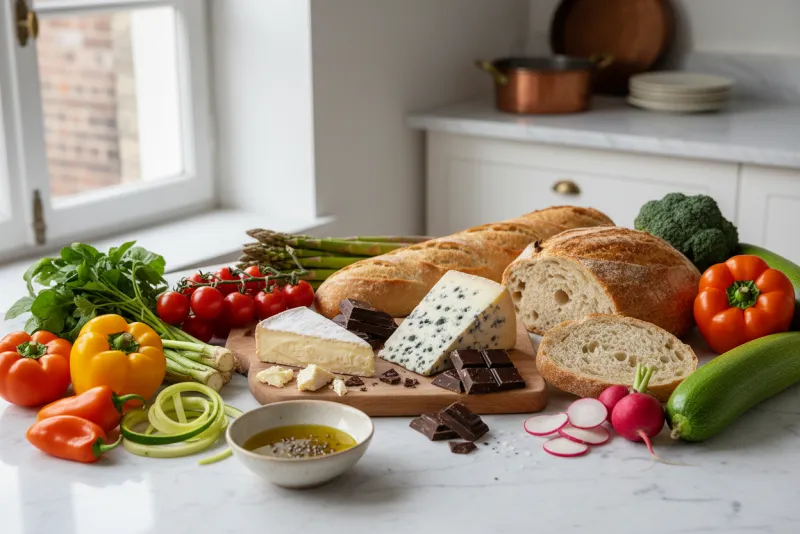
The question I hear most from American women in perimenopause isn’t “what should I eat?” It’s “what should I stop eating?”
This tells me everything about how differently Americans and French approach food during hormonal transitions.
In France, we don’t create forbidden food lists. We don’t eliminate entire food groups. We don’t fear specific ingredients because some wellness influencer called them “toxic.”
We reduce what doesn’t serve us. We eat less of what makes us feel worse. We pay attention to how our bodies respond.
This is not semantics. The difference between “never eat this” and “eat less of this” is the difference between sustainable change and another failed diet.
After watching American women struggle through perimenopause with elimination diets, detoxes, and increasingly restrictive food rules, I need to share what French women actually do during this transition.
Because the answer to “what not to eat during perimenopause” isn’t a list of banned foods. It’s understanding which foods create hormonal chaos when eaten frequently, in large amounts, or poor quality—and adjusting accordingly.
The American Problem with Food Elimination
American diet culture loves absolutes. Clean eating. Dirty foods. Good carbs. Bad fats. Foods to never touch. Foods that heal everything.
This black-and-white thinking intensifies during perimenopause when women are desperate for answers to weight gain, hot flashes, brain fog, and mood swings.
So they eliminate gluten. Then dairy. Then sugar. Then caffeine. Then lectins. Then oxalates. Then nightshades.
Until they’re eating six foods, feeling more stressed than ever, and their symptoms haven’t improved because stress and restriction are themselves hormonal disruptors.
Research published in Psychoneuroendocrinology shows that dietary restriction increases cortisol, which directly interferes with estrogen and progesterone balance—the exact hormones already fluctuating wildly in perimenopause.
I see this constantly: women eliminating more and more foods while feeling worse and worse, never questioning whether the elimination itself is the problem.
French women in their 40s and 50s aren’t doing elimination diets. They’re still eating bread, cheese, wine, and chocolate. Their perimenopause symptoms aren’t worse than American women’s—often they’re better.
The difference isn’t what they avoid. It’s how they eat what they eat.
What French Women Actually Reduce During Perimenopause
Let me be clear: French women do adjust their eating during perimenopause. We notice which foods trigger hot flashes, worsen bloating, or mess with sleep. We respond accordingly.
But we respond with moderation, not elimination.
Here’s what actually gets reduced—not banned, reduced—during the perimenopausal transition:
Ultra-Processed Foods (The Real Culprit)
When I moved to America, I was shocked by how much food comes in packages with ingredient lists I can’t pronounce.
In France, processed foods exist. But the degree of processing is different. French processed foods might have 8 ingredients. American equivalents have 28, including three types of corn syrup, modified starches, and industrial seed oils.
These ultra-processed foods are what should be reduced during perimenopause—not because they contain gluten or dairy or carbs, but because they contain ingredients that create systemic inflammation.
Research in The BMJ tracking over 100,000 people found that ultra-processed food consumption correlates with higher inflammatory markers, which directly worsen perimenopausal symptoms.
What counts as ultra-processed? If it has more than 10 ingredients, if you can’t picture its original form, if it’s engineered for shelf stability rather than nutrition—reduce it.
French women don’t eat protein bars for breakfast. We don’t snack on packaged crackers all afternoon. We don’t drink bottled coffee drinks with 40 ingredients.
Not because we’re virtuous. Because these foods don’t exist in the same way in France, and when they do, they’re treats, not daily staples.
This is the first thing to reduce when perimenopausal: the frequency of eating foods that didn’t exist 50 years ago.
Refined Sugar and Flour (Frequency Matters)
Here’s where Americans get confused: French women eat bread. We eat pastries. We eat dessert.
So how is sugar and refined flour on a “reduce” list?
The difference is frequency and context.
In France, you might have a croissant for Sunday breakfast. A slice of baguette with dinner. A small dessert after a meal twice a week.
In America, women eat refined carbohydrates all day: breakfast cereal, sandwich bread at lunch, crackers for snacks, pasta for dinner, cookies after. The cumulative impact is massive.
During perimenopause, when insulin sensitivity naturally decreases (documented in The Journal of Clinical Endocrinology & Metabolism), this constant refined carbohydrate consumption creates blood sugar chaos.
Blood sugar chaos triggers cortisol spikes. Cortisol interferes with already-fluctuating estrogen and progesterone. The result: worse hot flashes, more weight gain, terrible sleep, mood swings.
French women reduce the frequency of refined carbohydrates during perimenopause. Not by eliminating bread—by having it once daily instead of three times. Not by banning dessert—by having a small portion after dinner instead of snacking on cookies all afternoon.
We also eat refined carbohydrates with fat and protein, which blunts the blood sugar spike. Bread with cheese. Pastry with coffee and butter. Dessert after a meal, never alone.
This is completely different from the American approach of either eating refined carbs all day or eliminating them entirely. Both extremes fail.
Inflammatory Seed Oils (Quality Over Quantity)
French cooking uses butter, olive oil, duck fat. American cooking uses canola, soybean, corn, sunflower, safflower, grapeseed oils.
This isn’t about saturated versus unsaturated fat. It’s about industrial processing and omega-6 to omega-3 ratios.
Most seed oils are extracted using heat and chemical solvents, then deodorized to remove the rancid smell. The resulting oils are high in omega-6 fatty acids, which promote inflammation when consumed in excess.
Research in Nutrients shows that the modern Western diet has an omega-6 to omega-3 ratio of 16:1, when optimal is 4:1 or lower. This inflammatory imbalance worsens perimenopausal symptoms.
French women cook with fats that don’t require industrial processing: butter, olive oil, animal fats. When we use seed oils, they’re cold-pressed, unrefined, used sparingly.
During perimenopause, reducing inflammatory oils matters more than reducing saturated fat. Your grandmother’s butter won’t trigger hot flashes. Industrial soybean oil in every packaged food might.
The easiest change: stop buying packaged foods made with “vegetable oil” or “soybean oil.” Cook at home with butter, olive oil, or avocado oil. This single swap reduces systemic inflammation more than any supplement.
Alcohol (The Hardest Truth)
This is where American women don’t want to hear it. I understand. Wine is part of French culture, and I’m telling you to reduce it during perimenopause.
But the research is clear: alcohol directly worsens hot flashes, disrupts sleep, increases anxiety, and interferes with hormone metabolism.
A study in Menopause found that women who drank daily had significantly more severe hot flashes than women who drank occasionally. Another in Alcoholism: Clinical and Experimental Research showed that even moderate alcohol consumption disrupts the liver’s ability to metabolize estrogen.
Here’s the French approach: drink less often, drink better quality, never drink alone or to cope.
In France, wine accompanies meals. It’s a small glass with dinner, maybe twice a week. It’s enjoyed slowly, with food, in company.
In America, I see women drinking wine every night “to relax” after stressful days. This daily habit during perimenopause creates a terrible cycle: alcohol disrupts sleep, poor sleep increases stress, stress triggers drinking, drinking worsens hormones.
During perimenopause, reduce alcohol frequency. If you drink nightly, reduce to 3-4 times weekly. If you drink 3-4 times weekly, reduce to 1-2 times. If you drink 1-2 times weekly, you’re probably fine.
And when you drink, make it count: good wine, with food, with people you enjoy. Not mediocre wine alone on the couch because you’re exhausted.
This isn’t about virtue. It’s about the biological reality that alcohol tolerance decreases during perimenopause, and continuing pre-perimenopause drinking habits will make you feel worse.
Excess Caffeine (Context Is Everything)
French women drink coffee. Multiple times daily. So why is caffeine on this list?
Because American women often drink coffee wrong during perimenopause: on an empty stomach, all morning long, using it to compensate for terrible sleep.
Coffee consumed this way increases cortisol (already elevated in perimenopause), disrupts blood sugar (already unstable), and can trigger hot flashes in some women.
Research in The American Journal of Clinical Nutrition shows that caffeine consumed with food has minimal cortisol impact, while caffeine on an empty stomach spikes cortisol significantly.
French women have coffee with breakfast. With a mid-morning snack. After lunch. Never alone, never to replace meals, never past 2pm.
During perimenopause, reduce caffeine timing and context, not necessarily amount:
- Always have coffee with food
- Stop caffeine by early afternoon
- If you’re having sleep issues, reduce to one cup with breakfast
- Never use coffee to suppress hunger or compensate for poor sleep
Some women need to reduce caffeine more during perimenopause. Others don’t. Pay attention to your individual response rather than following blanket rules.
What French Women Don’t Reduce (And Why)
The flip side of reduction is equally important: what French women continue eating during perimenopause, despite American diet culture telling them not to.
Full-Fat Dairy
American women fear dairy during perimenopause because of hormones, inflammation, or digestive issues. French women eat cheese daily.
The difference? Quality and fermentation.
French dairy is mostly full-fat, unpasteurized, and fermented (cheese, yogurt, crème fraîche). American dairy is often low-fat, ultra-pasteurized, and sweetened.
Research in Food & Function shows that fermented full-fat dairy has anti-inflammatory properties and supports gut health, while low-fat sweetened dairy can promote inflammation.
French women don’t reduce dairy during perimenopause unless they have clear individual intolerance. We continue eating cheese, full-fat yogurt, and butter—all of which provide fat-soluble vitamins crucial for hormone production.
The caveat: quality matters immensely. If you’re eating American conventional dairy with added hormones, you might respond differently than to French fermier cheese from grass-fed cows.
I’ve written more about this in my guide to the best diet for perimenopause, which explains why the French-Mediterranean approach includes full-fat dairy.
Bread and Grains
I already mentioned that French women continue eating bread during perimenopause. But the deeper point: we don’t fear carbohydrates.
Carbohydrates support serotonin production, which decreases during perimenopause. Eliminating carbs can worsen mood, sleep, and anxiety—all already challenged during this transition.
What changes is type and timing: more whole grains, less refined flour. Carbs earlier in the day. Smaller portions. Always with protein and fat.
But the bread doesn’t disappear. The rice doesn’t vanish. The potatoes stay on the table.
Perimenopausal bodies still need carbohydrates. Just better quality, better timing, better combinations.
Soy (The Misunderstood Food)
Americans are terrified of soy during perimenopause because of phytoestrogens. French women are confused by this fear.
Research published in The Journal of Nutrition shows that soy phytoestrogens can actually help with hot flashes and bone density during perimenopause. Asian populations consuming traditional soy have lower rates of severe perimenopausal symptoms.
The key word: traditional soy. Fermented tofu, tempeh, miso, natto. Not soy protein isolate in protein bars. Not soy oil. Not soy lecithin in packaged foods.
French women don’t eat much soy because it’s not part of our cuisine. But when we do (Asian restaurants, certain health foods), it’s whole-food soy, not processed soy ingredients.
If you’re going to eat soy during perimenopause, eat it like Asian women do: fermented, whole-food forms, in moderate amounts. Not as a processed protein additive in American packaged foods.
Chocolate and Sweets
French women eat dessert during perimenopause. We eat chocolate. We don’t eliminate sweets.
What we do differently: small portions, high quality, after meals, not as emotional crutches.
Research in Appetite shows that rigid food restriction increases cravings and binge eating, while flexible moderation decreases both.
American women either eat no sweets (restriction that eventually fails) or eat sweets all day (blood sugar chaos). French women eat a small, high-quality sweet after dinner a few times weekly.
This approach maintains pleasure, prevents deprivation-driven binges, and doesn’t disrupt blood sugar when done in the context of a complete meal.
The elimination approach fails. The moderation approach succeeds. Especially during perimenopause when restriction increases stress hormones.
I’ve written about this psychological shift in breaking free from diet culture, which is crucial during perimenopause when your relationship with your body is already challenged.
The French Framework: Reduce Without Restriction
So what does this actually look like in practice? How do you “reduce without eliminating”?
Here’s the framework French women use during perimenopause:
1. The 80/20 Principle
80% of the time, eat foods that existed 100 years ago, prepared simply, from quality ingredients.
20% of the time, eat whatever you want without guilt.
This isn’t a cheat meal system. It’s a sustainable life system. It means most of your meals are whole foods, but some meals include pizza, birthday cake, airport food, or whatever the moment requires.
During perimenopause, this principle becomes even more important because consistency matters more than perfection.
2. The Quality Question
Before eating anything processed, refined, or potentially inflammatory, ask: “Is this high quality enough to be worth it?”
Bad chocolate from a vending machine? Probably not worth the blood sugar spike.
Excellent chocolate from a French chocolatier? Absolutely worth it.
Fast food burger? Rarely worth how you’ll feel.
Burger from a restaurant using grass-fed beef and real ingredients? Might be worth it.
Quality makes foods worth their physiological cost. Poor quality doesn’t.
3. The Frequency Audit
Most foods aren’t problems in isolation. They’re problems in frequency.
One glass of wine weekly: fine for most women in perimenopause. One glass nightly: hormonal chaos.
Pasta once weekly: completely manageable. Pasta four times weekly: blood sugar disaster.
Track frequency, not individual instances. The pattern matters more than the meal.
4. The Context Consideration
How you eat something changes its impact as much as what you eat.
Coffee with breakfast and a pastry: gentle blood sugar rise, minimal cortisol spike. Coffee alone at 6am on an empty stomach: cortisol spike, blood sugar crash, another coffee needed.
Bread with butter, cheese, and protein at lunch: balanced meal. Bread alone as a snack: blood sugar rollercoaster.
Context—timing, combinations, environment—changes everything.
5. The Body Conversation
This is the least American concept: listen to your actual body, not to wellness influencers.
Some women feel terrible after dairy. Others feel great. Some can’t tolerate any alcohol during perimenopause. Others handle moderate amounts fine.
Your body during perimenopause will tell you what it needs if you pay attention to signals instead of following generic rules.
Notice which foods trigger hot flashes. Notice which foods worsen bloating. Notice which foods disrupt sleep.
Then reduce those specific foods, not the entire internet’s forbidden food list.
I’ve written more about this body awareness in my article on French solutions for perimenopause bloating, which goes deeper into the digestive changes during this transition.
The Bigger Picture: What Matters More Than Any Food
Here’s what I wish American women understood about perimenopause and food:
No single food causes your symptoms. No single food will cure them.
Hot flashes aren’t caused by gluten. Weight gain isn’t caused by carbs. Brain fog isn’t caused by dairy.
These symptoms are caused by hormonal fluctuations that every woman experiences during perimenopause, regardless of diet.
What food can do is make these fluctuations worse (through inflammation, blood sugar chaos, stress) or make them more manageable (through stable blood sugar, anti-inflammatory eating, pleasure and satisfaction).
But the idea that you can eliminate hot flashes by eliminating certain foods? That’s diet culture selling you another solution that puts the burden on your personal choices rather than acknowledging the biological reality of perimenopause.
French women adjust eating during perimenopause to feel better, not to cure perimenopause. Because perimenopause isn’t a disease to be cured through dietary perfection.
The most important thing you can do during perimenopause isn’t eliminating foods. It’s:
- Reducing stress (which means not stressing about food)
- Sleeping well (which means not disrupting sleep with late caffeine or alcohol)
- Moving your body (which regulates blood sugar better than any diet)
- Maintaining pleasure (which means continuing to enjoy food)
Food is a supporting character during perimenopause, not the main character.
American diet culture wants you to believe that if you just eliminate enough foods, you’ll reverse perimenopause. French women know that’s nonsense.
We eat thoughtfully during this transition. We reduce what makes us feel worse. We continue enjoying what brings pleasure.
But we don’t turn perimenopause into another diet.
What About “Estrogen Foods”?
Since many women ask about estrogen-disrupting foods specifically, let me address this directly.
The concept of “estrogen foods to avoid” is mostly wellness marketing based on misunderstanding how phytoestrogens and xenoestrogens work.
Phytoestrogens (plant estrogens in soy, flax, legumes) are not the same as human estrogen. They can actually have beneficial effects during perimenopause by binding to estrogen receptors and providing mild estrogenic effects when your own estrogen is dropping.
Research in Climacteric shows that phytoestrogen consumption is associated with fewer hot flashes, not more.
Xenoestrogens (synthetic estrogen-like compounds in plastics, pesticides, personal care products) are legitimate concerns. But they’re in your environment, not primarily in your food.
The foods most often called “estrogen foods to avoid”—soy, flax seeds, legumes—are actually helpful during perimenopause when consumed in traditional, whole-food forms.
What you should actually reduce:
- Conventional meat and dairy (which contain actual animal hormones)
- Pesticide-heavy produce (buy organic for the Dirty Dozen)
- Food stored or heated in plastic containers
- Canned foods with BPA lining
- Non-organic processed foods with multiple chemical additives
These reduce xenoestrogen exposure more than eliminating soy or flax.
French women eat organic when possible, store food in glass, cook from scratch. Not because of specific estrogen fears, but because it’s traditional and makes sense.
The “estrogen foods to avoid” lists circulating online are mostly fear-based nonsense. Focus on reducing xenoestrogen exposure (plastics, pesticides, chemicals) rather than eliminating phytoestrogen foods (soy, flax, legumes).
Your Practical Starting Point
If you’re in perimenopause and want to adjust your eating without falling into restriction, start here:
This week, reduce frequency of:
- Ultra-processed packaged foods (aim for 80% whole foods)
- Alcohol (reduce by one drinking occasion per week)
- Refined sugar and flour eaten alone (always pair with protein/fat)
- Coffee on empty stomach (always have with food)
This week, maintain:
- Full-fat dairy if you tolerate it well
- Whole grains and quality bread in moderate amounts
- Small, high-quality sweets after meals
- Pleasure and enjoyment around food
This week, notice:
- Which specific foods trigger hot flashes for you
- Which foods worsen bloating for you
- Which foods disrupt your sleep
- Which foods you eat from stress versus genuine hunger
Then next week, adjust based on what you noticed. Not based on what some list told you. Based on your body’s signals during your perimenopause.
This is the French approach: attention, adjustment, moderation, quality, pleasure.
Not elimination, not restriction, not fear.
Because the goal isn’t to suffer through perimenopause with the smallest possible list of allowed foods.
The goal is to move through perimenopause feeling as good as possible while maintaining your relationship with food and pleasure.
And that requires reduction, not restriction.
Medical Note: This article reflects French cultural approaches to perimenopause and food, not medical advice. Every woman’s perimenopause is different. If you have severe symptoms, diagnosed conditions, or questions about your individual situation, consult with a healthcare provider. The suggestions here are general observations about how reducing certain foods might help symptom management, not prescriptive medical recommendations.
Ready to discover your perimenopause type and get personalized guidance? Take my free quiz at peri.frenchgirldiet.com to understand your specific symptoms and get a customized approach based on French principles. Because perimenopause doesn’t have to mean restriction—it can mean rediscovering what actually works for your body.
What's your perimenopause type?
Take the free quiz and get a personalized French approach for your symptoms.
Frequently Asked Questions
What foods should I avoid during perimenopause?
Rather than strict avoidance, reduce processed foods, excess sugar, inflammatory oils, and alcohol frequency. French women don't forbid foods—they eat smaller portions less often, focusing on quality over restriction.
What are 5 estrogen foods to avoid?
The concept of 'estrogen foods' is oversimplified. Instead, reduce foods that disrupt hormone balance: refined sugar, processed soy products, conventional dairy, inflammatory seed oils, and excess alcohol. Quality and context matter more than elimination.
What not to eat during perimenopause?
Focus on reducing, not eliminating: highly processed foods, refined carbohydrates, industrial seed oils, excessive caffeine, and frequent alcohol. The French way is moderation and quality, not restriction and fear.
What food to avoid for perimenopause?
Ultra-processed foods cause the most hormonal disruption during perimenopause. Focus on reducing frequency and portion sizes of processed snacks, refined sugars, and inflammatory fats rather than creating forbidden food lists.